Short Answer
The best way to set fence posts without concrete is to bury them at least one-third of their total length and tightly tamp the soil back in layers, using native soil or crushed gravel for drainage. In most farm conditions, properly tamped earth-set posts last longer and resist frost heave better than concrete-set posts.
Why This Question Matters
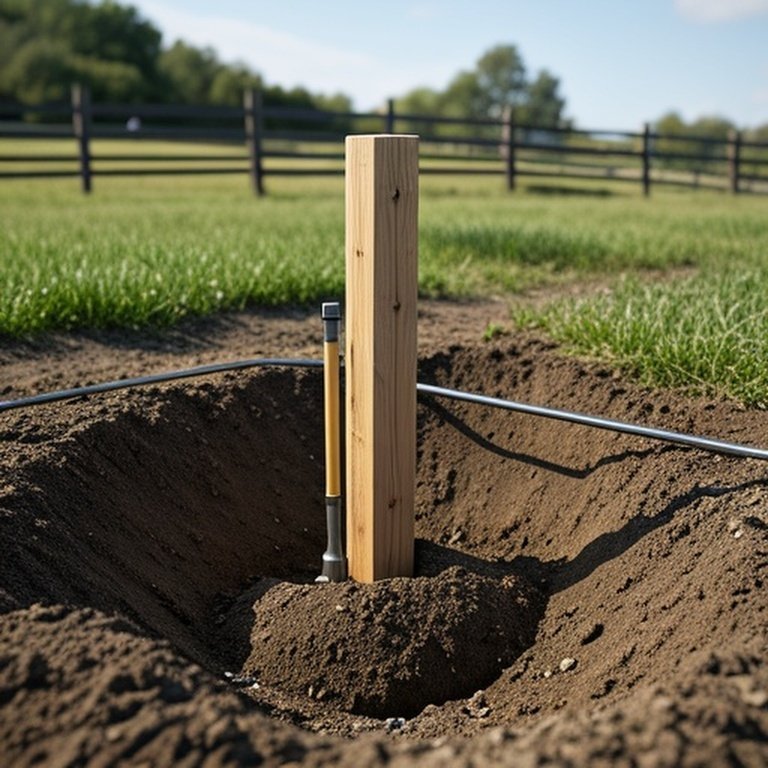
Many farm and ranch owners assume concrete makes fence posts stronger. In reality, concrete often traps moisture around wooden posts, accelerating rot and shortening lifespan. For livestock fencing, flexibility and drainage are more important than rigid anchoring.
Setting posts without concrete is faster, cheaper, and often more durable in agricultural environments. Earth-set posts also adjust better to soil movement and freeze-thaw cycles. Understanding proper tamping and drainage methods can mean the difference between a fence that lasts 10 years and one that lasts 25.
For large-scale fencing projects, skipping concrete can also significantly reduce material costs and labor time.
Key Factors to Consider
- Soil type and natural drainage capacity
- Frost depth and freeze–thaw cycles
- Post material (treated wood vs steel)
- Fence tension and livestock pressure
- Proper tamping technique and compaction
Detailed Explanation
The most reliable method for setting posts without concrete is the tamped earth method. After digging the hole to the correct depth—usually 2 to 3 feet—you position the post and backfill with either native soil or crushed gravel. The key is compacting the material in layers of 4–6 inches at a time using a heavy tamping bar.
Layered compaction creates dense soil pressure around the post, preventing movement. Unlike concrete, compacted soil allows slight flexibility under stress, which reduces cracking and loosening over time. This flexibility is especially beneficial for livestock fencing where animals may push or lean against the structure.
Gravel can improve drainage in clay-heavy soils. A few inches of gravel at the bottom of the hole helps prevent water pooling around the base of the post. Water accumulation is the primary cause of post rot—not lack of concrete.
In frost-prone climates, earth-set posts often outperform concrete because they move slightly with soil expansion instead of breaking away from a rigid concrete collar. As long as posts are buried below the frost line and firmly tamped, they remain stable and durable for decades.
For corner and gate posts under high tension, additional bracing—not concrete—is the correct solution.
How Cattle Behavior Affects This Choice
Cattle apply lateral force by leaning and rubbing. Properly tamped posts provide slight flex under pressure, reducing structural stress. Concrete-set posts, by contrast, may crack or loosen at the soil line under repeated force.
For high-pressure zones such as near feed areas or gates, deeper burial and brace assemblies are more effective than adding concrete.
Calves vs Mature Cattle Considerations
Calves exert less force, so standard earth-set posts are more than sufficient. Mature cattle require stronger corner bracing but not necessarily concrete.
Fence systems for sheep or goats benefit from stable line posts but rarely require concrete unless soil conditions are extremely unstable.
Terrain, Visibility, and Pressure Zones
On sloped ground, drainage is often better, making tamped soil highly effective. In flat or low-lying areas with poor drainage, gravel backfill improves longevity.
Wind-exposed areas benefit from deeper setting rather than concrete. Proper compaction prevents post wobble over time.
When This Works Well
- Agricultural fencing in well-draining soil
- Large pasture installations where cost matters
- Cold climates with significant frost movement
- High-tension wire systems with proper bracing
- Treated wood posts designed for ground contact
When This Is Not Recommended
- Extremely sandy soil without compaction strength
- Swampy or constantly saturated ground
- Temporary fencing requiring easy removal
- Decorative residential fencing needing rigid alignment
- Situations where shallow holes are used
Alternatives or Better Options
Crushed Gravel Backfill
Improves drainage while maintaining compaction strength. Ideal for clay soil.
Driven Posts (No Digging)
Steel or pressure-treated posts can be driven directly into soil, increasing stability without backfill.
Helical Anchors for Gate Posts
Instead of concrete, use ground anchors for heavy gate and corner assemblies.
Cost, Safety, and Practical Notes
Skipping concrete reduces material costs and speeds installation. Concrete also requires curing time, delaying fence tensioning.
Improper tamping is the most common mistake. Loose backfill leads to leaning posts within months. Always compact in layers and check vertical alignment during the process.
Wear gloves and eye protection when tamping gravel. Call utility services before digging.
In most farm conditions, properly tamped earth-set posts last longer than concrete-set posts because moisture can drain naturally.
Quick Takeaway
The best way to set fence posts without concrete is deep burial with layered soil or gravel compaction. Proper tamping, drainage, and bracing matter more than concrete. For most farm fencing, earth-set posts are stronger, more flexible, and longer-lasting.