Short Answer
Yes, barbed wire can be used as a perimeter fence, especially for cattle and large livestock on open land. It works best when properly designed with adequate strand count, strong corner bracing, and good fence visibility. However, it is not ideal for all livestock types or high-pressure boundaries without reinforcement.
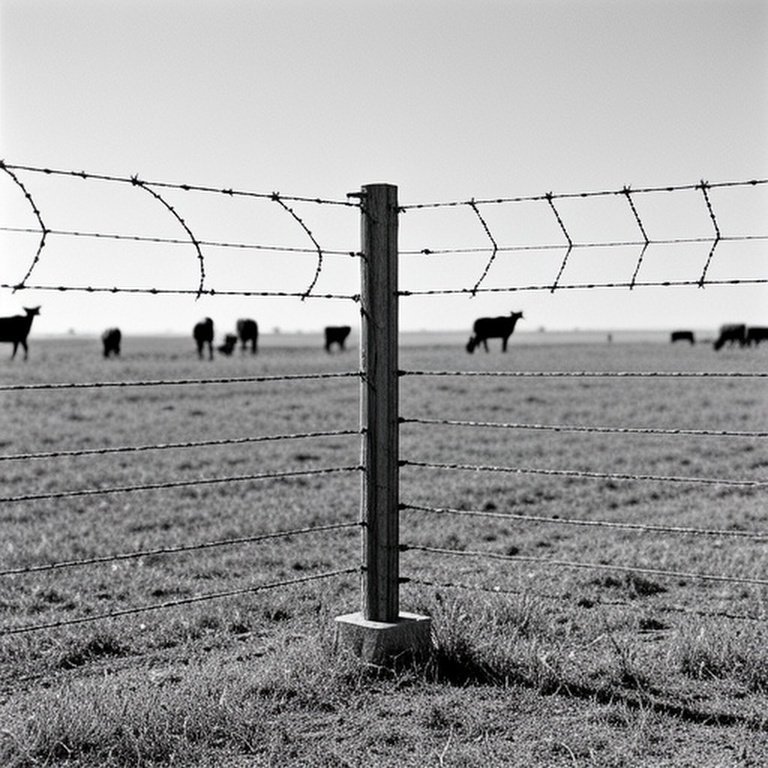
Why This Question Matters
The perimeter fence is the most important fence on any farm. If it fails, animals escape, neighbors are affected, and liability risks increase. Many producers choose barbed wire because it is affordable and widely available, but perimeter fences face more pressure than interior fencing.
Using the wrong fence type—or the right type built incorrectly—can lead to constant repairs and safety issues. Understanding whether barbed wire is suitable for a perimeter fence helps you balance cost, containment reliability, and long-term maintenance before committing to miles of fence.
Key Factors to Consider
- Livestock type and fence pressure level
- Number of strands and wire spacing
- Corner, end, and gate bracing strength
- Terrain variation along the boundary
- Neighboring land use and escape risk
Detailed Explanation
Barbed wire has long been used as a perimeter fence for cattle operations, and when built correctly, it can be effective. Its success depends less on the wire itself and more on the overall fence design. A perimeter fence must resist constant pressure, define property boundaries, and function reliably in all conditions.
For adult cattle, a four- or five-strand barbed wire fence is typically required for perimeter use. Fewer strands may work for interior fencing but often fail along boundaries where cattle congregate, rub, or challenge the fence. Proper spacing prevents animals from pushing through or stepping over wires.
Structural strength is critical. Perimeter fences require heavily braced corners, ends, and gates. Without proper bracing, wire tension loosens over time, causing sagging and failure. Many perimeter fence problems blamed on wire quality are actually bracing failures.
Terrain also affects performance. On uneven ground, barbed wire alone may leave gaps under the fence or inconsistent heights. Adding an extra strand or adjusting spacing helps maintain containment across dips and slopes.
While barbed wire can define boundaries effectively, it provides psychological deterrence rather than physical containment. Animals that respect fences stay in; animals under stress may still test them. This is why barbed wire perimeter fences often perform best when paired with good livestock management and, in some cases, electric offsets.
By the end of this evaluation, it’s clear that barbed wire can work as a perimeter fence—but only when designed for the pressure it will face.
Video Demonstration
How Cattle Behavior Affects This Choice
Cattle behavior plays a major role in whether barbed wire works as a perimeter fence. Calm, well-managed cattle with consistent access to feed and water apply minimal pressure to boundary fences. For these herds, barbed wire performs reliably for years.
Problems arise with high-pressure behavior. Crowding along boundaries, fence-line feeding, or curiosity toward neighboring livestock leads to leaning and rubbing. Once cattle learn they can push through, failures become frequent.
Perimeter fences are challenged more often than interior ones. If cattle regularly test boundaries, adding strands, improving bracing, or installing an electric offset becomes necessary.
Calves vs Mature Cattle Considerations
Barbed wire is poorly suited for calves on perimeter fences. Calves can slip between strands, get caught on barbs, or panic and injure themselves. Even with additional strands, barbed wire lacks the physical barrier needed for young animals.
If calves are present, perimeter fencing should include woven wire, electric fencing, or a hybrid design. Planning for the youngest and most vulnerable animals prevents injuries and costly fence modifications later.
Terrain, Visibility, and Pressure Zones
Perimeter fences often cross varied terrain, which increases risk. Slopes, gullies, and fence corners are pressure zones where cattle concentrate movement. Barbed wire fences in these areas require tighter spacing and stronger bracing.
Visibility also matters. Barbed wire alone is hard to see, increasing accidental contact. Fence flags or top wires improve visibility and reduce panic-driven damage, especially along roads or property lines.
When This Works Well
- Adult cattle operations
- Large, open properties with low pressure
- Flat or gently rolling terrain
- Well-braced corners and gate systems
- Clear boundaries without public access
When This Is Not Recommended
- Calves or mixed-age livestock
- High-traffic or confined boundaries
- Properties near roads or neighbors
- Steep or highly uneven terrain
- Operations needing maximum containment reliability
Alternatives or Better Options
Barbed wire with electric offset
An electrified wire inside or above the barbed wire greatly improves perimeter security.
Woven wire perimeter fence
Provides physical containment and higher safety, especially near neighbors or roads.
Hybrid fencing systems
Using barbed wire in low-pressure sections and stronger fencing in high-risk areas balances cost and performance.
Cost, Safety, and Practical Notes
Barbed wire is one of the lowest-cost perimeter fencing options, but savings disappear quickly if repairs are frequent. Investing in proper bracing, adequate strand count, and visibility improvements reduces long-term costs.
From a safety perspective, barbed wire carries higher injury risk than smooth or woven fencing. Perimeter fences should prioritize reliability and containment over minimal upfront cost, especially where escapes create liability.
Design the perimeter fence for worst-case conditions, not average days. That mindset determines whether barbed wire is a smart perimeter choice or a future headache.
Quick Takeaway
Barbed wire can be used as a perimeter fence for cattle, but only when built stronger than interior fencing. Adequate strands, solid bracing, and realistic pressure assessment determine whether it succeeds or fails.