Short Answer
Yes, many predators can and do dig under fences to access livestock. Common digging predators include coyotes, foxes, dogs, and bears. Preventing this requires extending barriers below ground, reinforcing the fence base, or adding deterrents that stop predators before digging begins, rather than relying on fence height alone.
Why This Question Matters
Fence breaches caused by digging are one of the most common reasons predator fencing fails, even when the fence appears intact from above ground. Livestock owners often focus on height or strength while overlooking what happens at ground level. A single successful dig teaches predators exactly where to return, leading to repeated losses in the same spot. This question reflects a real-world failure point: understanding whether predators dig—and how to stop it—can mean the difference between a fence that works quietly for years and one that becomes a predictable access route for predators.
Key Factors to Consider
- Predator species known for digging or tunneling behavior
- Soil type and how easily it can be excavated
- Fence base design and ground contact consistency
- Whether deterrence stops digging before excavation begins
- Terrain features that create natural digging points
Detailed Explanation
Digging is a natural and efficient strategy for many predators. Coyotes, foxes, and dogs often test fence lines at ground level, especially where soil is loose or vegetation hides activity. Once a shallow tunnel is started, repeated use widens the opening quickly. Physical fences that stop climbing or jumping frequently fail here because the predator never needs to challenge the fence vertically.
Bears approach digging differently. Rather than tunneling, they often pull, rake, or collapse soil along the fence line, especially at corners or soft ground. This means that even deep-set fences can fail if the base is not reinforced. In both cases, predators exploit the fact that most fences end exactly at ground level, creating a clear structural weakness.
Prevention works best when predators are stopped before they commit to digging. Barriers that extend below ground block excavation, but deterrents placed at ground level change behavior earlier in the sequence. When predators encounter resistance or discomfort while testing the fence base, they are far less likely to invest the effort required to dig underneath.
The key point is that digging is rarely random. Predators return to successful locations repeatedly. Effective prevention focuses on eliminating obvious dig points and removing the reward for persistent excavation rather than simply repairing holes after they appear.
Understanding Digging Prevention
Common Fence Failure Points at Ground Level
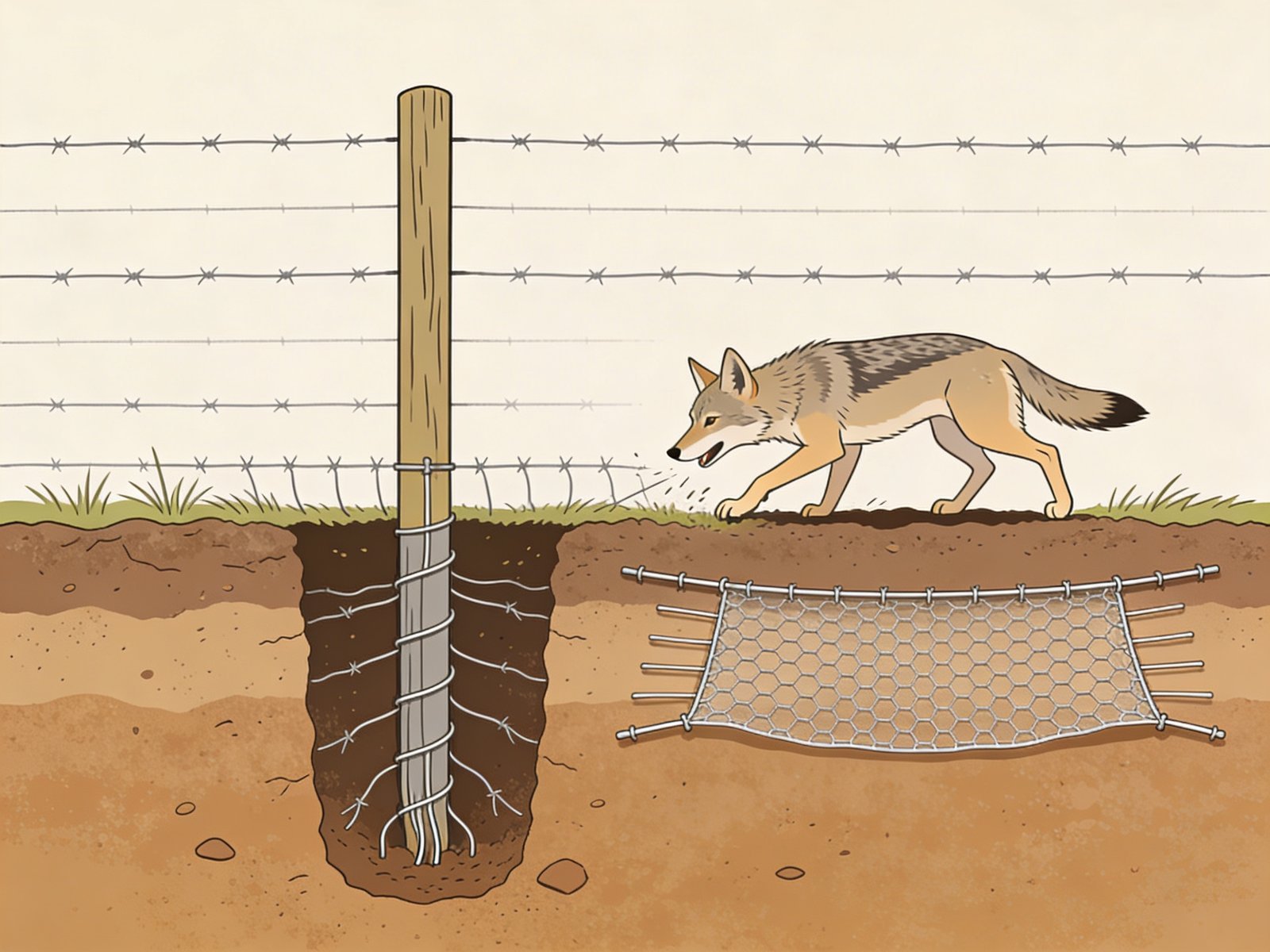
Most digging breaches occur at predictable locations: corners, gates, low spots, and areas with loose soil or erosion. These zones concentrate predator pressure because they offer leverage or concealment. Fences that are tight and effective along straight runs often fail at these transition points. Designing the fence base to remain continuous and resistant at ground level is more important than reinforcing random sections after damage occurs.
How Deterrence Changes Digging Behavior
Predators usually dig only after initial probing feels safe. When the fence base delivers resistance or discomfort immediately, digging attempts often stop altogether. This is why deterrents placed at ground level are so effective: they interrupt the behavior sequence early. Without that interruption, predators can spend hours excavating unnoticed, especially at night or in low-visibility areas.
Soil, Moisture, and Seasonal Effects
Soil conditions heavily influence digging success. Wet or sandy soil dramatically lowers the effort required to tunnel, increasing breach risk during rainy seasons or spring thaw. Dry, compacted soil slows excavation but does not eliminate it. Fence designs that rely only on soil hardness tend to fail seasonally, whereas structural or deterrent-based solutions remain effective year-round.
When This Works Well
- Fence bases reinforced before predators establish dig sites
- Areas with predictable pressure points that can be strengthened
- Systems combining physical barriers with behavioral deterrence
- Properties with regular inspection and maintenance routines
When This Is Not Recommended
- Relying solely on surface repairs after digging has occurred
- Ignoring soil movement, erosion, or seasonal moisture changes
- Expecting fence height alone to stop digging predators
- Using temporary fencing without base reinforcement in high-risk areas
Alternatives or Better Options
Buried Wire or Apron Systems
Extending wire underground or outward along the ground blocks tunneling directly. This is effective where soil conditions are stable and installation access is available.
Ground-Level Deterrent Wires
Adding deterrent elements near the soil surface discourages predators before digging begins, reducing the need for deep excavation barriers.
Concrete or Hard Base Sections
In extreme pressure zones, hard barriers prevent excavation entirely but increase cost and installation complexity.
Cost, Safety, and Practical Notes
Preventing digging is often cheaper than repairing repeated breaches. Buried barriers increase installation time and labor, while deterrent-based solutions reduce ongoing repair costs. Safety considerations include avoiding sharp edges near livestock and ensuring ground-level elements remain visible. Practically, the best approach targets known pressure points rather than reinforcing the entire fence line equally. Digging prevention is most effective when treated as a design feature, not a reactive fix.
Quick Takeaway
If predators can dig at your fence base without consequence, they will. Stop digging at ground level, and most fence failures disappear.