Short Answer
Yes, woven wire fence can stop many common predators such as coyotes, foxes, and stray dogs — but only when properly installed with tight mesh spacing, secure bottom contact, and adequate height. Standard field fence alone may not stop climbing or digging predators unless reinforced with electric offsets or buried wire.
Why This Question Matters
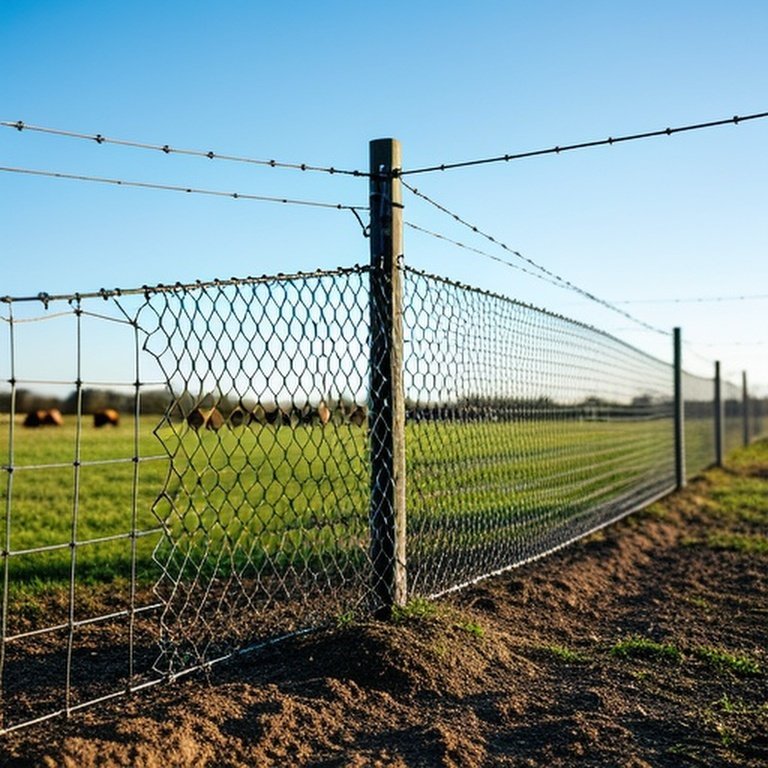
Predator pressure is one of the biggest threats to small livestock, poultry, and young animals. A single breach can result in severe financial and emotional losses. Many landowners assume that any fence will stop predators, but fencing designed for livestock containment does not automatically provide predator resistance. Understanding how woven wire performs against digging, climbing, and squeezing predators helps prevent costly mistakes and reduces the risk of repeated livestock loss.
Key Factors to Consider
- Mesh spacing, especially at the bottom of the fence
- Fence height relative to local predator species
- Whether the bottom is buried or secured to ground
- Use of electric offset wires for deterrence
- Quality of corner bracing and overall tension
Detailed Explanation
Woven wire fencing is effective against many medium-sized predators because of its continuous mesh structure. Unlike barbed or smooth wire, woven wire prevents animals from simply pushing between strands. Smaller vertical spacing near the bottom helps block entry from foxes and coyotes attempting to squeeze through. However, the effectiveness depends heavily on mesh design. Standard agricultural field fence with large bottom openings may not stop smaller predators unless upgraded.
Height is another major factor. A 4-foot fence may contain livestock but can be jumped by determined predators. Increasing fence height to 5 or 6 feet improves deterrence. Still, woven wire alone does not always stop climbing animals, especially raccoons or agile predators capable of scaling mesh.
The base of the fence is often the weakest point. Predators frequently dig under fencing rather than climb over it. If woven wire is loosely installed with gaps at ground level, predators can create entry points quickly. Burying the bottom 6 to 12 inches, adding a ground apron, or securing the base tightly to the soil significantly improves effectiveness.
In high-pressure areas, adding a single electric offset wire 6 to 8 inches from the ground dramatically increases predator deterrence. This discourages both digging and climbing attempts. Woven wire works best as a structural barrier combined with strategic reinforcement rather than as a standalone predator-proof system.
How Cattle Behavior Affects This Choice
Cattle themselves are not typically affected by predator fencing decisions unless calves are involved. Mature cattle are less vulnerable, but young calves may attract coyotes. If woven wire is chosen primarily for cattle containment, predator reinforcement may still be needed in calving pastures.
Cattle also lean and rub on fencing. Poor tension can create weak points that predators exploit. Proper installation and strong corner bracing ensure that livestock pressure does not compromise predator resistance.
Calves vs Mature Cattle Considerations
Calves are far more vulnerable to predator attacks than mature cattle. Smaller mesh spacing at the bottom of woven wire reduces the risk of predators reaching through or forcing entry.
For mixed herds, tighter woven wire or added electric deterrents are advisable. Standard wide-mesh field fence may contain cattle but may not adequately protect young animals in predator-heavy regions.
Terrain, Visibility, and Pressure Zones
Predators often exploit low spots, brush cover, and uneven terrain. If woven wire fencing follows uneven ground loosely, gaps form that allow entry.
Areas near tree lines, water sources, and wooded boundaries typically experience higher predator traffic. These zones may require additional reinforcement such as buried mesh or electric offsets.
When This Works Well
- Moderate predator pressure environments
- Farms protecting sheep, goats, or calves
- Perimeter fencing with buried bottom edge
- Installations using electric offset wires
- Flat terrain allowing tight ground contact
When This Is Not Recommended
- Heavy predator populations without electric reinforcement
- Areas with frequent digging predators like coyotes
- Locations with raccoon or climbing predator issues
- Extremely uneven or rocky terrain
- Temporary or lightly tensioned fence installations
Alternatives or Better Options
Electric Netting Fence
Highly effective for predator control in rotational grazing systems. Delivers shock deterrence and prevents climbing or digging when properly energized.
High-Tensile Electric Fence with Multiple Strands
Cost-effective large-perimeter solution. Strong deterrent when voltage is maintained and properly grounded.
Welded Wire with Buried Apron
Provides stronger small-mesh barrier. More expensive but effective in high predator pressure areas when installed correctly.
Cost, Safety, and Practical Notes
Upgrading woven wire for predator resistance increases cost. Taller fencing, tighter mesh, buried wire, and electric offsets add to material and labor expenses. However, livestock losses often cost more than reinforcement upgrades.
Safety considerations include preventing entanglement by maintaining proper tension. Loose woven wire can trap animals attempting escape from predators. Regular inspection is critical in predator-heavy regions.
In most cases, woven wire alone provides moderate protection. Combining structural mesh with electric deterrence creates a much more reliable system for predator control.
Quick Takeaway
Woven wire fence can stop many predators when properly installed and reinforced. For reliable protection, ensure tight bottom contact, adequate height, strong bracing, and consider adding an electric offset. In high-pressure areas, woven wire works best as part of a layered defense system.