Short Answer
The cheapest fencing that still works for livestock is typically basic electric fencing or simple woven wire, depending on use. Electric fencing has the lowest upfront material cost and works well when animals are trained. Woven wire costs more initially but provides reliable physical containment without power, making it a low-risk option for small or young livestock.
Why This Question Matters
This is a real-world question because fencing is often one of the largest upfront expenses for livestock owners, especially beginners. Many people assume the cheapest fence is always barbed wire or whatever material costs the least per roll, but that assumption often leads to escapes, injuries, or repeated repairs. Choosing the wrong “cheap” fence can quickly cost more in labor, replacements, or lost animals. The goal is not the absolute lowest price, but the lowest-cost fence that still performs its job reliably under real farm conditions.
Key Factors to Consider
- Initial material cost versus long-term maintenance and repairs
- Whether animals are trained to respect fencing boundaries
- Physical containment needs versus psychological deterrence
- Terrain size, layout, and installation complexity
- Risk tolerance for escapes, pressure points, and predator access
Detailed Explanation
When people ask for the cheapest fencing that still works, they are really asking where the minimum acceptable performance threshold is. Below that threshold, fencing becomes a recurring problem rather than a solution. In most real-world cases, that threshold is met by either basic electric fencing or entry-level woven wire.
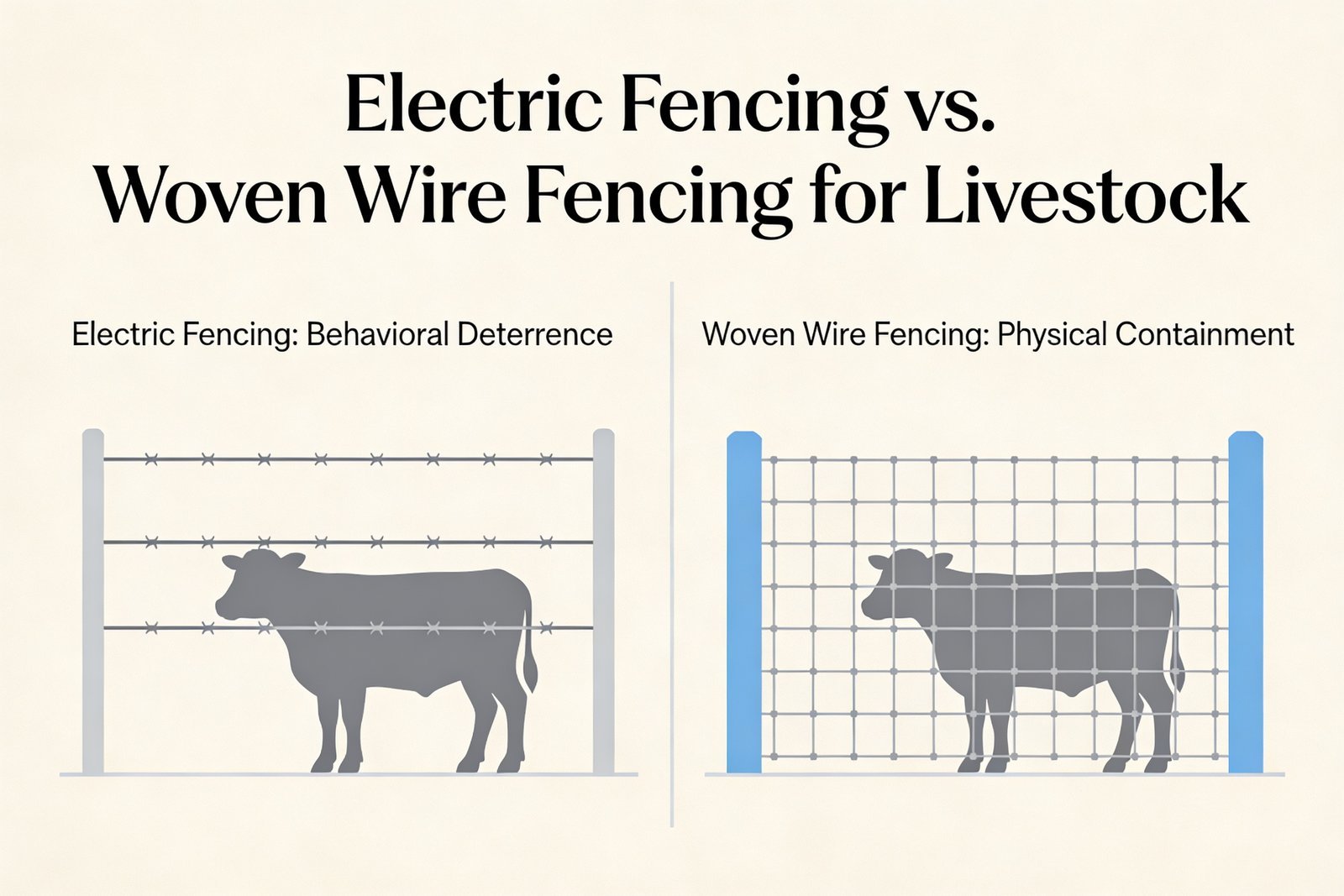
Electric fencing is often the lowest-cost option upfront. A simple setup using polywire or smooth high-tensile wire, basic posts, and a small energizer can fence a large area for relatively little money. Its effectiveness depends less on physical strength and more on animal behavior. Once animals learn to respect the shock, they tend to avoid the fence entirely, reducing wear and maintenance. However, if power fails, grounding is poor, or animals are untrained, effectiveness drops quickly.
Woven wire costs more initially but works through physical containment rather than behavior. It does not rely on electricity, training, or consistent monitoring. For young livestock or mixed-age groups, woven wire often represents the lowest-cost reliable option because it prevents animals from pushing through or slipping out. While the upfront expense is higher than electric fencing, it typically requires fewer emergency repairs and less daily oversight.
The reason barbed wire is often excluded from “cheapest that still works” discussions is that it is cheap only on paper. It performs poorly for young animals, offers no deterrent learning, and carries higher injury risk. Over time, escapes, veterinary costs, and repairs often exceed any initial savings.
Ultimately, the cheapest fence that still works is the one that matches animal behavior, management style, and acceptable risk—rather than the one with the lowest price tag per roll.
Behavioral and Practical Considerations
How Animal Behavior Affects Cheap Fencing
Cheap fencing succeeds or fails primarily based on how animals interact with it. Electric fencing works best when animals encounter it early, in a controlled environment, and learn quickly that contact is unpleasant. Once trained, animals tend to self-police their behavior, which keeps costs low. Problems arise when young, stressed, or newly introduced animals test boundaries repeatedly before learning.
Physical fencing like woven wire does not rely on behavior at all. Animals can push, lean, or panic without immediately escaping. This makes it more forgiving for beginners or operations with limited time for monitoring. However, physical fences must still be properly tensioned and anchored, or animals will exploit weak points regardless of material.
Cost vs Coverage: Small Areas vs Large Perimeters
The size of the area being fenced heavily influences what “cheap” actually means. For large pastures or temporary paddocks, electric fencing often wins because material costs scale slowly with distance. Posts, wire, and energizers remain relatively inexpensive per foot.
For small enclosures, barns, or permanent boundaries, woven wire often becomes the more economical choice over time. Even though the upfront cost is higher, it eliminates recurring issues like vegetation grounding, battery replacement, or voltage troubleshooting. In confined spaces, reliability often outweighs raw material cost.
When This Works Well
- You need to fence a large area with minimal upfront investment
- Animals can be trained or already respect electric fencing
- The fence is temporary, seasonal, or part of rotational grazing
- You can monitor voltage and maintenance regularly
When This Is Not Recommended
- Animals are very young, panicked, or unfamiliar with fencing
- You cannot reliably maintain power or grounding
- Predator pressure requires a physical barrier
- You need a permanent boundary with minimal oversight
Alternatives or Better Options
Low-Cost Electric + Physical Hybrid
Adding a single electric wire to a basic woven wire fence increases effectiveness while keeping costs moderate. This setup reduces leaning and fence wear.
Used or Salvaged Materials
Second-hand posts or wire can reduce upfront cost, but only if materials are structurally sound. Weak salvage often increases long-term expense.
Permanent Fence + Temporary Electric
Using woven wire for boundaries and cheap electric fencing for interior divisions balances reliability with flexibility.
Cost, Safety, and Practical Notes
The cheapest fencing option should always be evaluated in terms of total cost of ownership, not just materials. Electric fencing may cost less initially but requires time, attention, and consistent maintenance. Missed voltage checks or grounding issues can quickly result in escapes. Woven wire costs more upfront but offers predictable performance and fewer emergency interventions.
Safety also matters. Cheap fencing that causes injuries or repeated escapes is never truly cheap. Smooth wire and properly sized mesh generally reduce injury risk compared to barbed wire. Labor costs—both your time and potential repairs—should be included in any cost calculation.
In practice, the cheapest fence that still works is the one that minimizes surprises. A slightly higher upfront investment often saves money by preventing failures rather than reacting to them.
Quick Takeaway
If you need the absolute lowest upfront cost and can manage training and maintenance, basic electric fencing is usually the cheapest option that works. If reliability and low risk matter more than initial price, entry-level woven wire is often the smarter long-term choice.