Short Answer
The most common sheep fencing mistakes include using fencing designed for cattle, leaving ground gaps, spacing posts too far apart, relying solely on electric fencing, and underestimating lamb behavior. These errors cause escapes, fence failure, and repeated repairs, even when materials appear adequate.
Why This Question Matters
Most sheep fencing problems are not caused by bad materials—they are caused by predictable mistakes. Many producers build fences that look solid but fail within months once sheep pressure, terrain, or lambs are introduced. These mistakes lead to escapes, predator losses, damaged pasture, and costly retrofits. Once sheep learn a fence is passable, fixing behavior becomes harder than fixing wire. This question matters because avoiding a few common errors early is far cheaper than rebuilding fences after failure.
Key Factors to Consider
- Sheep behavior differs significantly from cattle and horses.
- Small gaps matter more for sheep than overall fence height.
- Fence failure often starts at the ground level.
- Lambs expose fencing weaknesses faster than adults.
Detailed Explanation
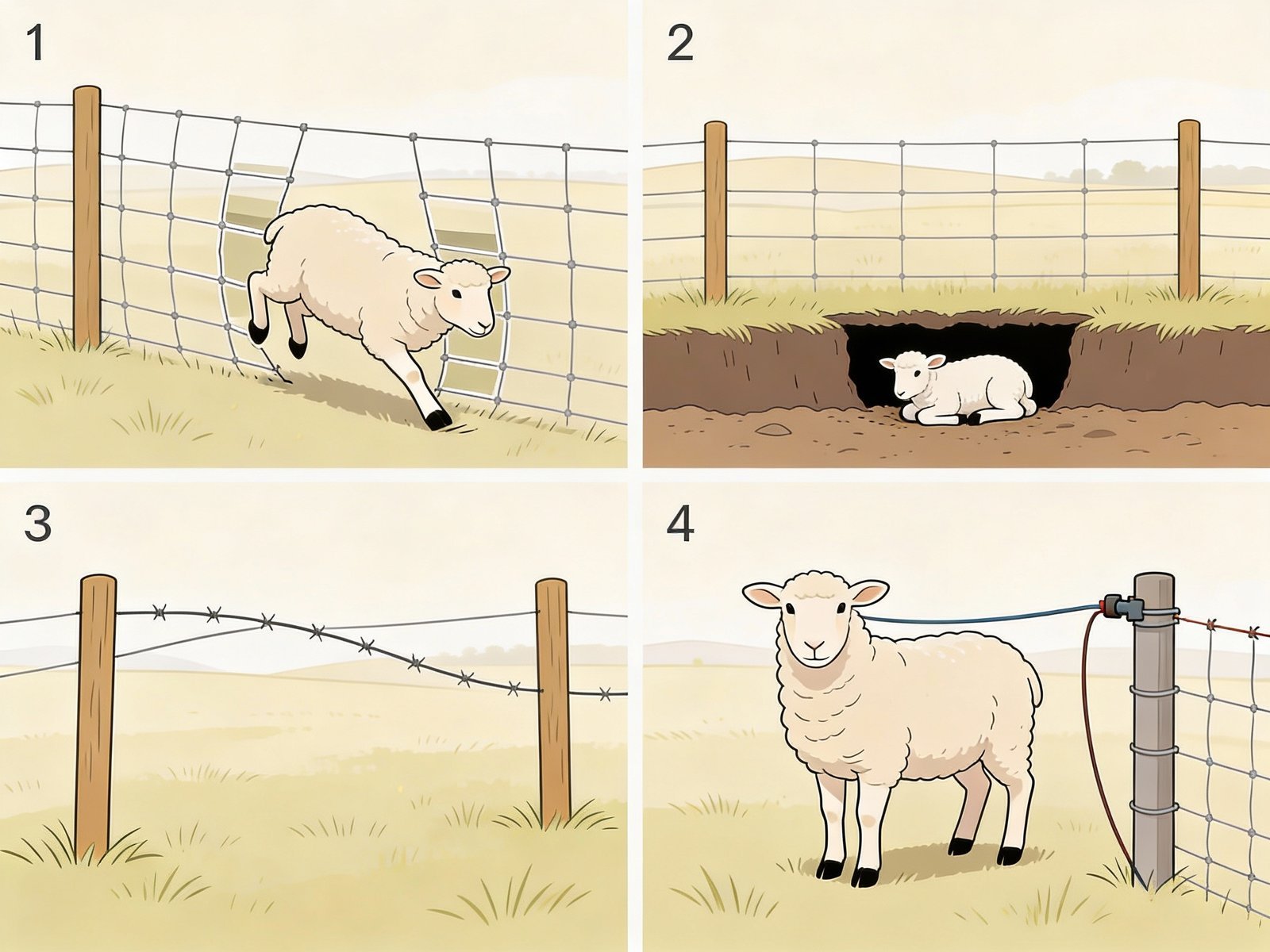
One of the most common sheep fencing mistakes is using standard livestock fencing designed for cattle or horses. These fences often have wide wire spacing and poor ground control, allowing sheep to slip through or crawl underneath. What works well for larger livestock frequently fails immediately with sheep, especially once pressure increases or lambs are present.
Another major mistake is ignoring ground contact. Sheep exploit small gaps under fences far more readily than other livestock. Uneven terrain, erosion, or rushed installation can leave crawl-under spaces that are difficult to spot but easy for sheep to use. Once a few animals escape, others quickly follow, turning a minor flaw into a persistent problem.
Post spacing is also frequently underestimated. Posts placed too far apart allow wire to sag, lift, and lose tension over time. This creates openings that did not exist on installation day. Wider spacing may reduce upfront cost but often increases long-term maintenance and failure risk.
Finally, many producers rely too heavily on electric fencing alone. While electric fencing can work under ideal conditions, sheep do not always receive consistent shocks due to wool insulation and poor grounding. When electric systems fail, they often fail completely. The most reliable sheep fencing avoids single points of failure and prioritizes physical containment first.
Critical Mistakes to Avoid
Designing for Lambs Instead of Adults
A critical mistake is designing fences only for adult sheep. Lambs are smaller, more curious, and far more likely to find gaps. Fences that “mostly work” for adults often fail immediately once lambs are present. Designing for lamb containment from the beginning prevents seasonal rebuilds and emergency fixes later.
Terrain Amplifies Small Errors
Minor fencing mistakes are magnified on uneven or sloped ground. Straight-line fencing across dips creates ground gaps, while wide post spacing allows wire to lift downhill. These issues may not be obvious at first but worsen with soil movement and sheep pressure. Terrain-aware installation significantly reduces failure rates.
Maintenance Assumptions vs Reality
Many fencing plans assume perfect ongoing maintenance. In reality, vegetation grows, soil shifts, and voltage drops. Systems that require constant adjustment often fail due to human fatigue rather than poor design. Reliable sheep fencing is designed to tolerate imperfect maintenance.
When This Works Well
- New fencing projects planned specifically for sheep behavior.
- Permanent installations with proper post spacing and ground contact.
- Operations that design fences to lamb standards.
- Areas where fencing layout is planned before installation.
When This Is Not Recommended
- Reusing cattle fencing without modification.
- Relying on electric fencing as the only containment method.
- Wide post spacing carried over from other livestock systems.
- Ignoring terrain and soil movement during installation.
Alternatives or Better Options
Sheep-specific woven wire fencing avoids many common mistakes by controlling spacing and ground contact. Hybrid systems combine physical fencing with electric offsets to reduce testing and pressure. Targeted reinforcement strengthens known weak points instead of rebuilding entire fence lines.
Cost, Safety, and Practical Notes
Avoiding common fencing mistakes usually costs less than correcting them later. Retrofitting fences after sheep escapes often requires more labor, additional materials, and downtime. Safety concerns include sheep becoming trapped in poorly sized openings. In practice, most producers report that underbuilding fences is more expensive long term than building conservatively at the start. Designing for predictable sheep behavior is the most cost-effective approach.
Quick Takeaway
Most sheep fencing failures come from repeatable mistakes—not bad luck. Designing for sheep behavior from the start prevents nearly all of them.