Yes, composite and flexible fencing can be used on uneven or sloped terrain, often more effectively than rigid fencing. Their ability to flex and adapt allows them to follow ground contours without creating excessive stress points. However, success depends on correct post spacing, tension control, and reinforcement in high-stress slope transitions.
Why This Question Matters
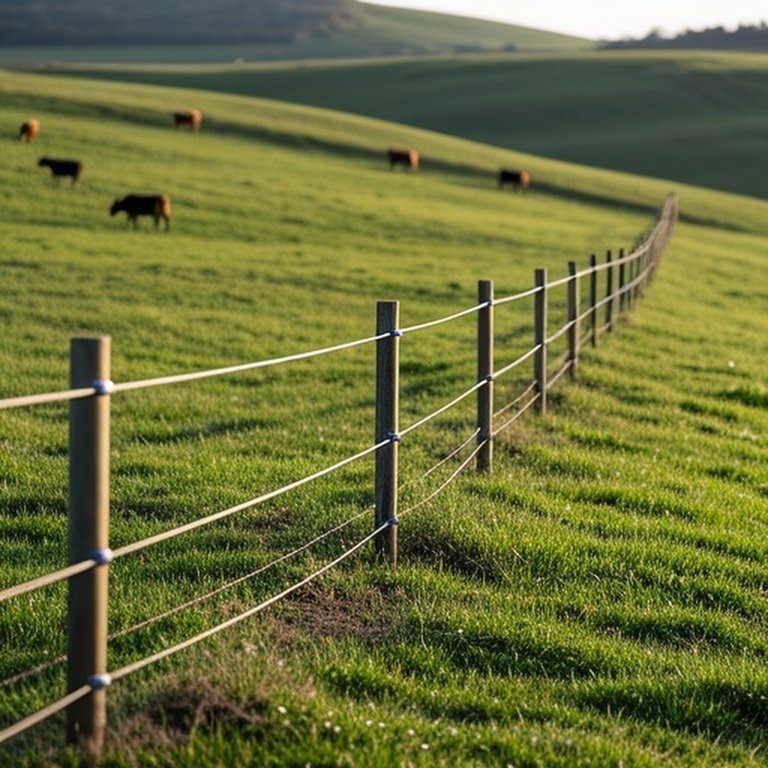
Uneven and sloped terrain is one of the most common reasons fencing systems fail prematurely. Rigid fences tend to lift off the ground, concentrate stress, or break at slope transitions. Composite and flexible fencing are frequently recommended as solutions, but improper installation can still lead to sagging, gaps, or uneven tension.
This question matters because terrain-related failures are often misattributed to material choice rather than system design. Understanding how flexible systems actually behave on slopes helps prevent costly rework, livestock escapes, and long-term maintenance problems.
Key Factors to Consider
- Slope severity: gradual elevation changes versus abrupt drops
- Post spacing adjustments: closer spacing on slopes to manage tension
- Tension distribution: avoiding uneven load along the fence line
- Ground clearance control: preventing gaps under the fence
- Pressure concentration: livestock movement patterns on slopes
Detailed Explanation
Composite and flexible fencing perform well on uneven terrain because they are designed to accommodate movement and variation rather than resist it rigidly. Unlike wood or rigid metal panels, flexible systems can follow changes in elevation without forcing the material to absorb excessive structural stress. This adaptability reduces cracking, lifting, and joint failure on slopes.
On gradual slopes, flexible fencing can be tensioned to maintain consistent height and ground contact. Composite materials maintain shape while allowing controlled deflection, preventing the fence from appearing uneven or visually confusing to livestock. This is particularly important for safety, as animals are less likely to test fences they can clearly see.
Challenges arise on steep or irregular terrain where elevation changes abruptly. In these cases, flexible fencing still works, but only when post spacing is reduced and tension is managed carefully. Without these adjustments, the fence may sag in low points or become overly tight at high points, increasing wear and reducing lifespan.
The key reason composite and flexible fencing succeed on slopes is not material strength alone, but system responsiveness. When posts, anchors, and tension points are planned to match the terrain, flexible systems distribute stress evenly rather than concentrating it at slope breaks. This makes them one of the most practical options for uneven ground when installed with terrain-specific design in mind.
How Cattle Behavior Affects This Choice
Cattle behavior on slopes differs from flat ground. Animals tend to travel along contour lines, congregate at mid-slope areas, and apply pressure downhill. Flexible fencing performs well in these scenarios by absorbing leaning pressure without creating rigid failure points.
However, downhill pressure can concentrate force at specific posts. If spacing is too wide, stress accumulates unevenly and increases maintenance needs. Well-managed herds with predictable movement patterns are best suited for flexible fencing on slopes, as they apply steady rather than chaotic pressure.
Calves vs Mature Cattle Considerations
Calves navigate uneven terrain more cautiously and apply relatively low force. Flexible fencing adapts well to their exploratory behavior, maintaining safety and containment even on slopes.
Mature cattle exert significantly more force when moving uphill or downhill, especially when grouped. Composite and flexible fencing can still perform well, but post spacing and anchoring must be designed for adult weight and momentum. Terrain magnifies force, making system design more important than material choice alone.
Terrain, Visibility, and Pressure Zones
Visibility becomes more important on slopes, where animals approach fencing at angles. Flexible fencing that maintains a consistent visual line reduces accidental contact and testing behavior.
Pressure zones commonly appear at slope transitions, gates placed on inclines, and water or feed locations on uneven ground. These areas require reinforcement regardless of fencing type. Flexible systems handle terrain variation well, but only when pressure zones are anticipated and strengthened during installation.
When This Works Well
- Gradual or rolling terrain with consistent elevation changes
- Operations willing to adjust post spacing on slopes
- Livestock with predictable movement patterns
- Fencing layouts prioritizing visual continuity
- Systems designed with reinforced slope transitions
When This Is Not Recommended
- Extremely steep or unstable terrain without reinforcement
- Installations using uniform post spacing regardless of slope
- Poorly tensioned systems that allow sagging
- High-pressure containment on downhill runs
- Situations requiring perfectly rigid fence lines
Alternatives or Better Options
High-tensile wire fencing adapts well to slopes when properly tensioned, though maintenance increases on uneven ground.
Woven wire fencing can follow terrain but may create gaps on sharp elevation changes.
Hybrid systems combining flexible rails with closer post spacing or ground-following wire often perform best on complex terrain.
Cost, Safety, and Practical Notes
Using composite or flexible fencing on uneven terrain often increases upfront installation cost due to additional posts and planning. However, it can significantly reduce long-term repair costs compared to rigid fencing that fails at slope transitions.
From a safety perspective, flexible fencing reduces injury risk by avoiding hard impact points on uneven ground. Practically, terrain-specific design is essential. When slope behavior is planned for during installation, composite and flexible fencing provide reliable containment and long service life even on challenging landscapes.
Quick Takeaway
Composite and flexible fencing are well suited for uneven or sloped terrain when post spacing, tension, and pressure zones are designed to match the landscape rather than forcing the fence to remain rigid.