Fence Cost & Budgeting

Fence cost and budgeting guidance for livestock fencing projects. This section covers material costs, labor considerations, cost per foot or acre, budgeting strategies, and ways to plan fencing projects efficiently.

Is more expensive fencing worth the cost?

Short Answer In many cases, more expensive fencing is worth the cost over time. Higher-quality materials usually last longer, require fewer repairs, and reduce livestock escape or injury risks. While the upfront price is higher, long-term ownership costs are often lower when durability, maintenance, and reliability are considered together. Why This Question Matters Fencing is […]

Is more expensive fencing worth the cost? Read More »

Fence Cost & Budgeting
How much does it cost to maintain a fence each year?

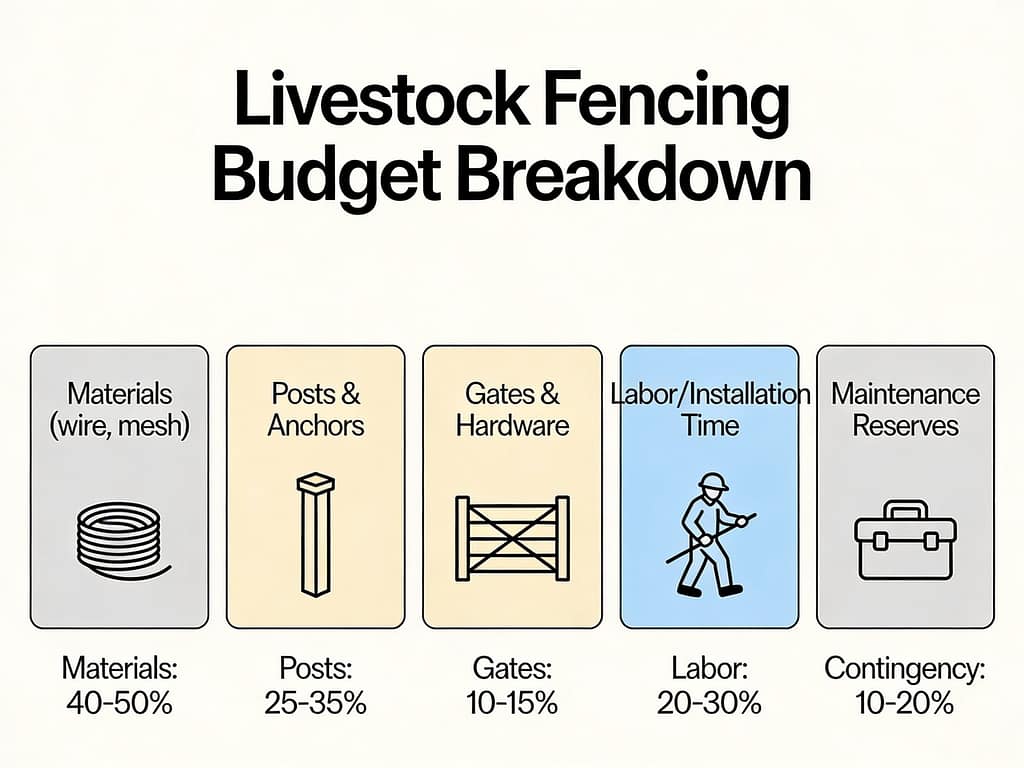
Short Answer Most livestock and property fences cost $2–$8 per linear foot per year to maintain, or roughly 5–15% of the original installation cost annually. This typically covers minor repairs, hardware replacement, vegetation control, and weather-related damage. Well-built fences with durable materials tend to stay near the lower end of this range, while neglected or

How much does it cost to maintain a fence each year? Read More »

Fence Cost & Budgeting

What hidden costs should I expect when building a fence?

Short Answer When building a fence, hidden costs often include tools, extra materials from mistakes, site preparation, permits, maintenance, and future repairs. These expenses are rarely included in initial estimates but can significantly increase the total cost. Budgeting only for materials and labor often leads to underestimating the true long-term expense of a fence. Why

What hidden costs should I expect when building a fence? Read More »

Fence Cost & Budgeting

Is DIY fencing really cheaper than hiring a professional?

Short Answer DIY fencing is often cheaper upfront because it avoids labor costs, but it is not always cheaper overall. While materials may cost less initially, mistakes, tool purchases, time investment, and future repairs can erase those savings. Hiring a professional usually costs more at the start but often delivers longer-lasting results with fewer unexpected

Is DIY fencing really cheaper than hiring a professional? Read More »

Fence Cost & Budgeting
Fence material cost comparison over time | Fence material cost comparison: which option is most cost-effective?

Fence material cost comparison: which option is most cost-effective?

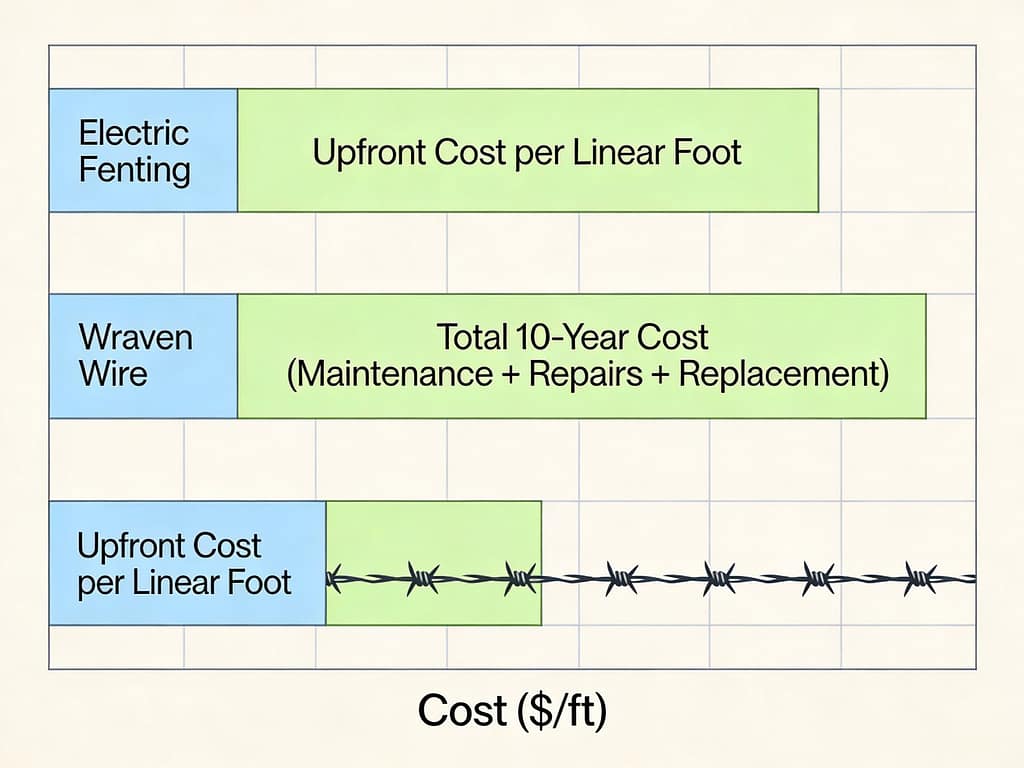
Short Answer The most cost-effective fencing material depends on how long it needs to last and how much maintenance you can handle. Electric fencing usually has the lowest upfront cost, while woven wire often delivers better long-term value due to durability and low failure rates. The cheapest material is not always the most economical once

Fence material cost comparison: which option is most cost-effective? Read More »

Fence Cost & Budgeting
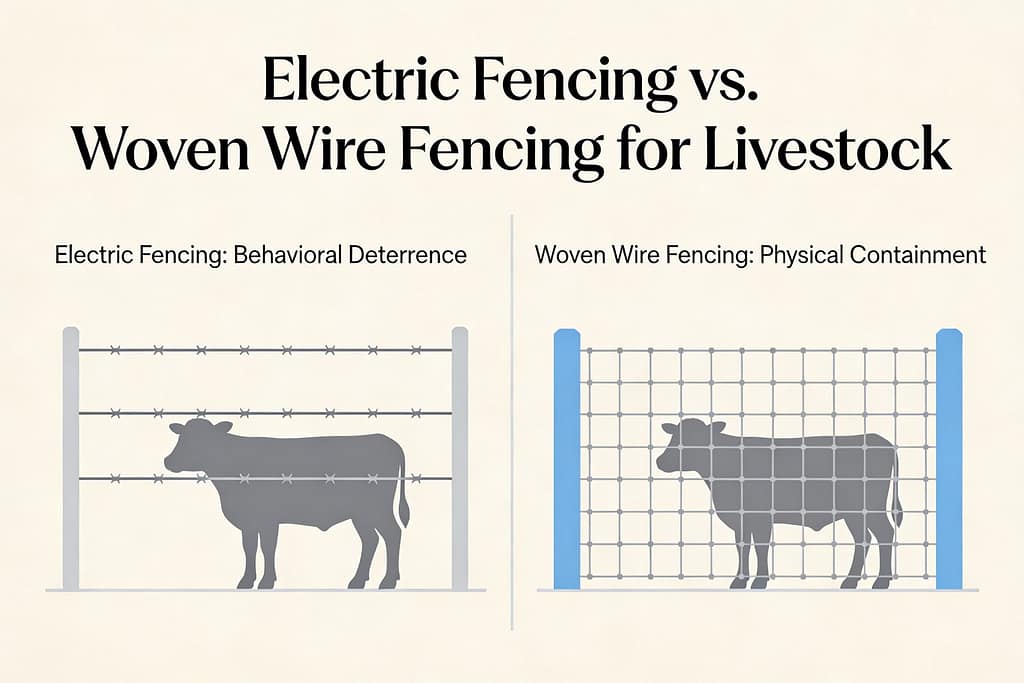
Electric fencing versus woven wire fencing comparison | What is the cheapest type of fencing that still works?

What is the cheapest type of fencing that still works?

Short Answer The cheapest fencing that still works for livestock is typically basic electric fencing or simple woven wire, depending on use. Electric fencing has the lowest upfront material cost and works well when animals are trained. Woven wire costs more initially but provides reliable physical containment without power, making it a low-risk option for

What is the cheapest type of fencing that still works? Read More »

Fence Cost & Budgeting
Scroll to Top