
Is DIY fencing really cheaper than hiring a professional?
Is DIY fencing really cheaper than hiring a professional? Read More »
Fence Cost & BudgetingThis section covers the financial, legal, and safety considerations of livestock fencing.
Explore fence budgeting strategies, material cost comparisons, liability responsibilities, local regulations, animal safety standards, and human safety best practices. Whether planning a new installation or upgrading an existing system, understanding these factors helps reduce risk and avoid costly mistakes.
Explore cost breakdowns, budgeting strategies, and long-term value planning for livestock fencing projects. Fence Cost & Budgeting provides comprehensive guidance on how much you should budget for a farm fence project and detailed fence cost breakdown covering materials vs labor.
Compare fencing materials by price, lifespan, and maintenance requirements to determine the most cost-effective solution for your property. Material Cost Comparison includes detailed wire fence cost comparison and identifies the cheapest fencing materials that last 10+ years.
Understand who is legally responsible for fence damage, livestock escape, and shared boundary repairs to protect yourself from liability. Fence Liability & Responsibility answers critical questions like who is responsible if livestock escape and explains what is a lawful fence in legal terms.
Learn how fence type, spacing, and design affect livestock safety and injury prevention across different species. Fence Safety for Animals identifies the safest fence for livestock and addresses whether barbed wire can injure animals.
Review installation safety practices, tool risks, and injury prevention strategies to protect workers during fence construction and maintenance. Human Safety & Tool Use covers how to prevent fencing installation injuries and what protective gear for fence installation is essential.
Understand permits, property line rules, zoning differences, and local fencing laws that vary by jurisdiction and property type. Property Boundaries & Neighbors answers do I need a permit to build a fence and clarifies how close to a property line can I build a fence.
If you are comparing fencing materials by price → See Material Cost Comparison for detailed analysis of upfront costs, lifespan, and total ownership expenses across wire, wood, and specialty materials.
If you are unsure how much to budget → Start with Fence Cost & Budgeting to understand per-acre costs, hidden expenses, and strategies to reduce installation costs without sacrificing quality.
If livestock escape could create legal risk → Review Fence Liability & Responsibility to understand your legal obligations, shared fence responsibilities, and potential liability if animals cause property damage or accidents.
If animal injuries are your concern → See Fence Safety for Animals to learn which fence types prevent injuries, proper height and spacing requirements, and how poorly maintained fences create hazards.
If you need permit or property guidance → Check Property Boundaries & Neighbors for permit requirements, setback rules, property line disputes, and differences between rural and residential fencing regulations.
If installation safety is a concern → Visit Human Safety & Tool Use to understand tool-related injury risks, proper protective equipment, and safe practices for wire stretching and post installation.
Effective fence cost management and safety planning requires coordination with broader project considerations. Planning & Design covers fence layout, height requirements, terrain challenges, and rotational grazing systems. Electric Fencing provides specialized guidance on chargers, installation, voltage, and safety for electric systems. Fencing Types & Materials compares barbed wire, woven wire, high-tensile, wood, and specialty materials. Installation & Maintenance offers step-by-step guides for post installation, wire stretching, and preventive maintenance.
Fence costs vary widely by material, terrain, and labor requirements. Costs often range from lower-end electric systems to higher-end woven wire or specialty materials, depending on perimeter length and terrain. Material choice, post spacing, soil conditions, and whether you hire professionals or install yourself significantly impact total project costs.
Responsibility depends on local lawful fence standards and negligence rules. In most jurisdictions, landowners are liable if their fencing fails to meet minimum legal requirements or if poor maintenance allows livestock escape. Shared boundary fences may have split responsibility, while road accidents caused by escaped animals can result in significant legal and financial liability for property owners.
Permit requirements vary significantly by location and zoning classification. Agricultural zoning often has fewer restrictions than residential areas, but setback rules, height limits, and property line regulations typically apply regardless of zoning. Electric fencing may have additional safety and signage requirements in some jurisdictions, particularly near roads or mixed-use areas.
Properly installed electric fencing is designed to deter animals and people without causing injury through low-amperage, high-voltage pulses. Voltage levels between 2,000-10,000 volts with proper grounding provide effective deterrence while remaining safe. Compliance with local safety regulations, appropriate signage, and proper grounding systems are essential for both effectiveness and legal safety standards.
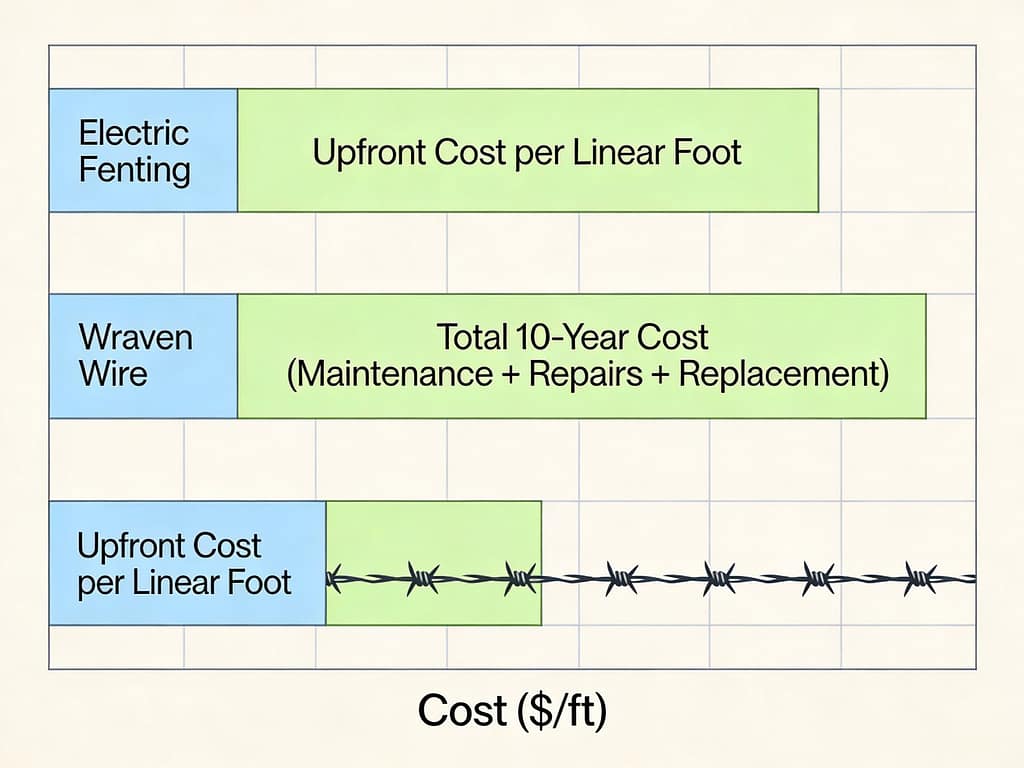
Short Answer The most cost-effective fencing material depends on how long it needs to last and how much maintenance you can handle. Electric fencing usually has the lowest upfront cost, while woven wire often delivers better long-term value due to durability and low failure rates. The cheapest material is not always the most economical once
Fence material cost comparison: which option is most cost-effective? Read More »
Fence Cost & Budgeting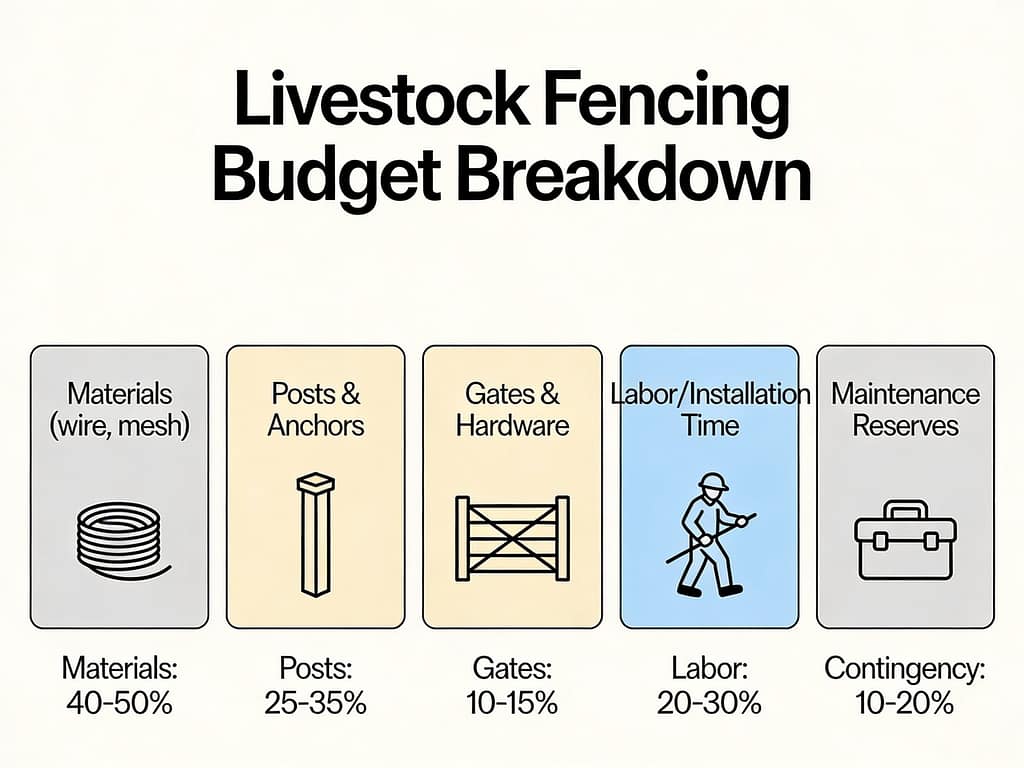
Short Answer Most livestock owners should budget $1.50 to $6.00 per linear foot for fencing, depending on materials, terrain, and installation method. Simple electric fencing sits at the low end, while woven wire or permanent systems cost more upfront. A realistic budget accounts not only for materials, but also posts, gates, labor, and future maintenance.
How much should I budget for livestock fencing? Read More »
Fence Cost & Budgeting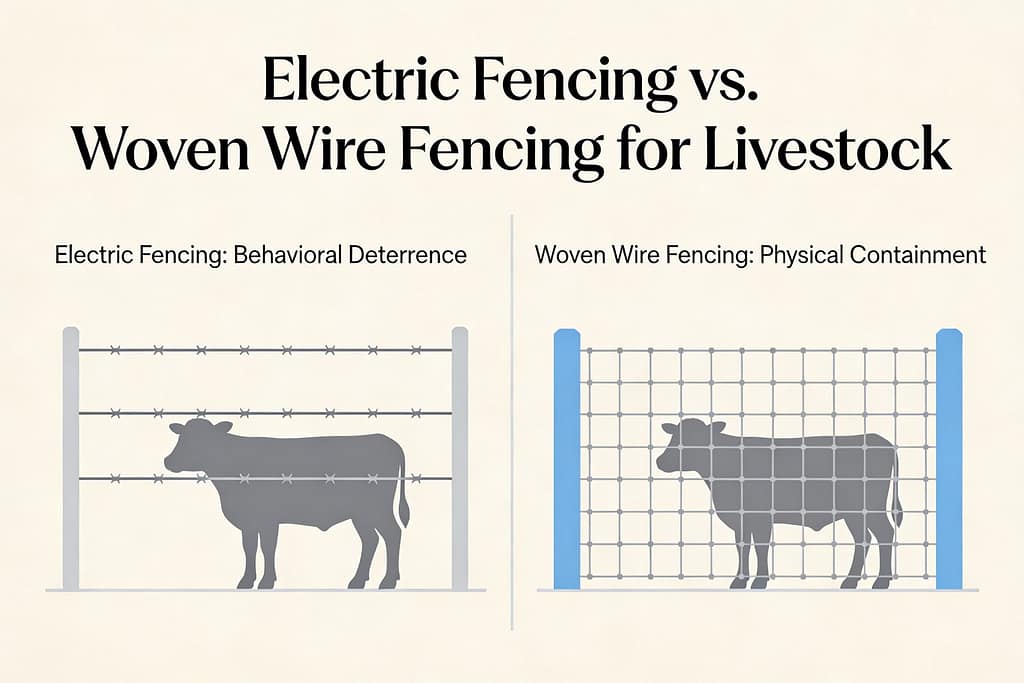
Short Answer The cheapest fencing that still works for livestock is typically basic electric fencing or simple woven wire, depending on use. Electric fencing has the lowest upfront material cost and works well when animals are trained. Woven wire costs more initially but provides reliable physical containment without power, making it a low-risk option for
What is the cheapest type of fencing that still works? Read More »
Fence Cost & Budgeting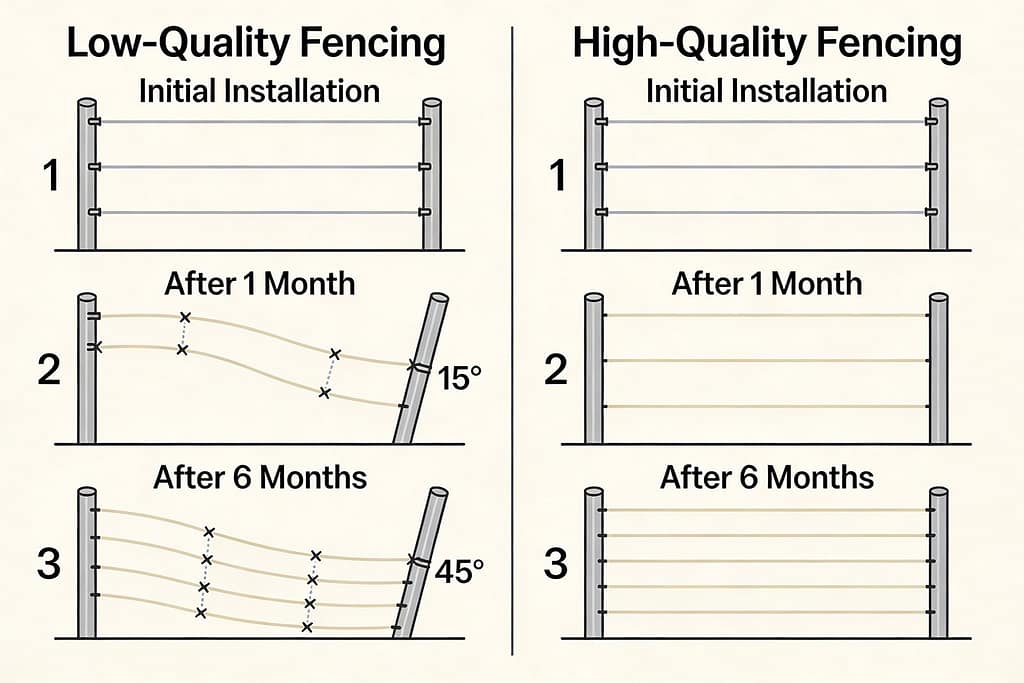
Short Answer Yes, more expensive fencing is often worth the cost when it reduces failures, escapes, and long-term maintenance. Higher-quality fencing provides better spacing control, structural stability, and durability, especially under repeated pressure. For young or vulnerable livestock, the added upfront cost frequently pays for itself by preventing losses and constant repairs. Why This Question
Is more expensive fencing worth the cost? Read More »
Fence Cost & Budgeting