🟢 Short Answer
Most chickens do not strictly need electric fencing for containment, but electric fencing is one of the most effective ways to protect them from predators. Chickens can stay inside non-electric fencing, yet electric fencing dramatically reduces losses by deterring raccoons, foxes, and other common threats before they reach the coop or run.
🟢 Why This Question Matters
This question usually comes up after a predator attack or when someone is deciding how much fencing is “enough.” Many chicken keepers assume electric fencing is overkill or unsafe, while others believe it is mandatory for keeping chickens contained. Both assumptions lead to problems. Skipping electric fencing can result in repeated losses that far exceed the cost of installation, while installing it for the wrong reason can add unnecessary complexity. Understanding what electric fencing actually does—and what it does not—helps people make realistic, cost-effective decisions that match their risk level and management style.
🟢 Key Factors to Consider
- Electric fencing protects chickens from predators more than it controls chicken movement
- Predator pressure varies widely by location and time of year
- Coop security and fence bottoms matter more than fence height
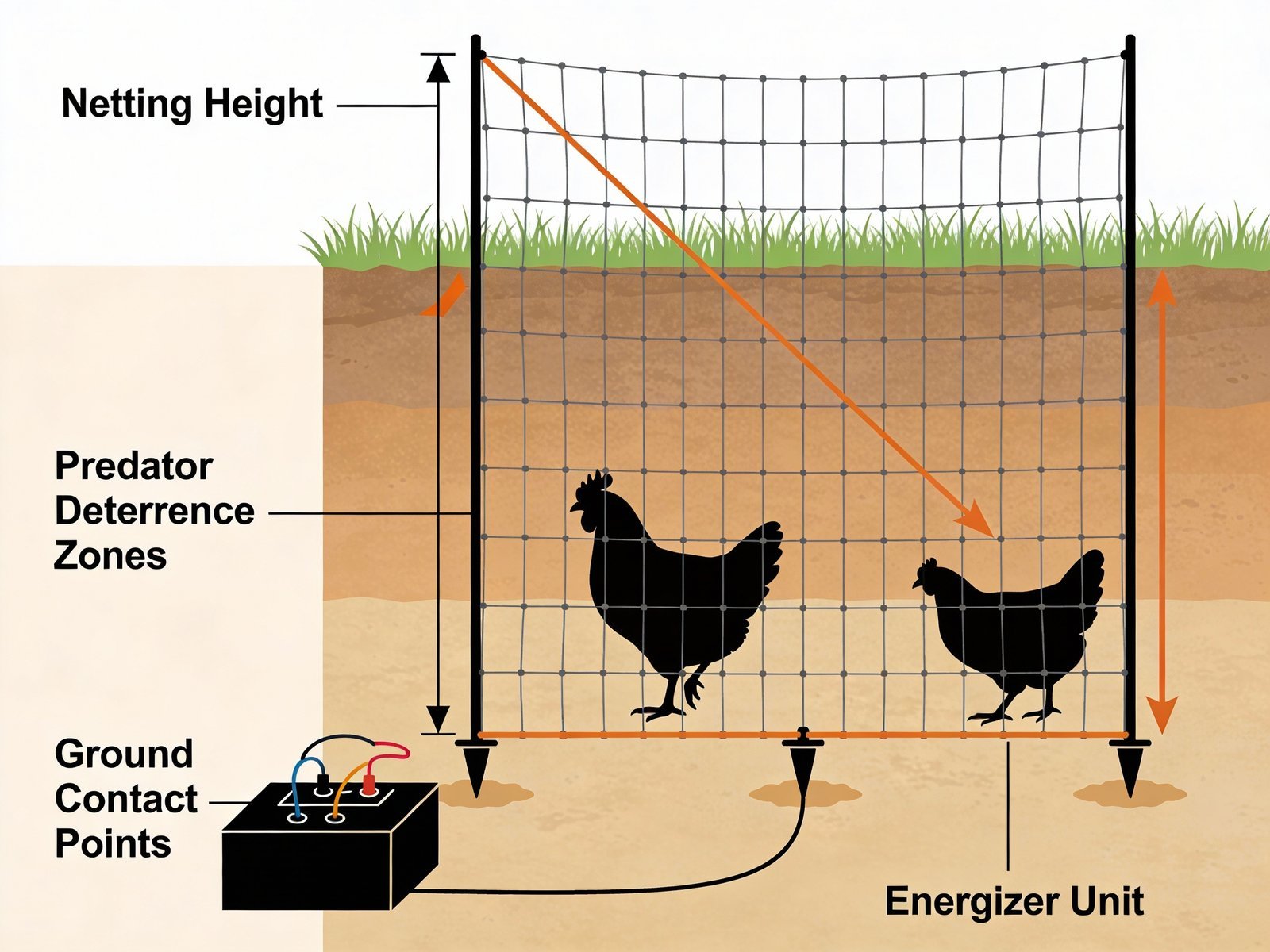
- Electric fencing effectiveness depends on proper grounding and maintenance
- Management style influences whether electric fencing is practical long-term
🟢 Detailed Explanation
Electric fencing and chicken containment solve two different problems. Chickens themselves are usually easy to contain with basic physical fencing. Most breeds are not strong flyers, and many will remain inside a fence simply because food, water, and shelter are inside the enclosure. From a pure containment perspective, electric fencing is rarely necessary to keep chickens from wandering.
Where electric fencing excels is predator control. Many chicken losses happen at night or during early morning hours when raccoons, foxes, coyotes, and dogs actively patrol fence lines. These predators are skilled climbers and diggers, and they quickly learn to exploit weak points in non-electric fencing. Electric fencing creates a psychological barrier that stops predators before they test the fence repeatedly.
Another important distinction is that electric fencing works best as a perimeter defense, not as a replacement for a secure coop. Chickens still need a solid coop that closes at night. Electric fencing reduces pressure on that coop by preventing predators from approaching closely and spending time investigating entry points. This layered approach dramatically lowers the risk of losses.
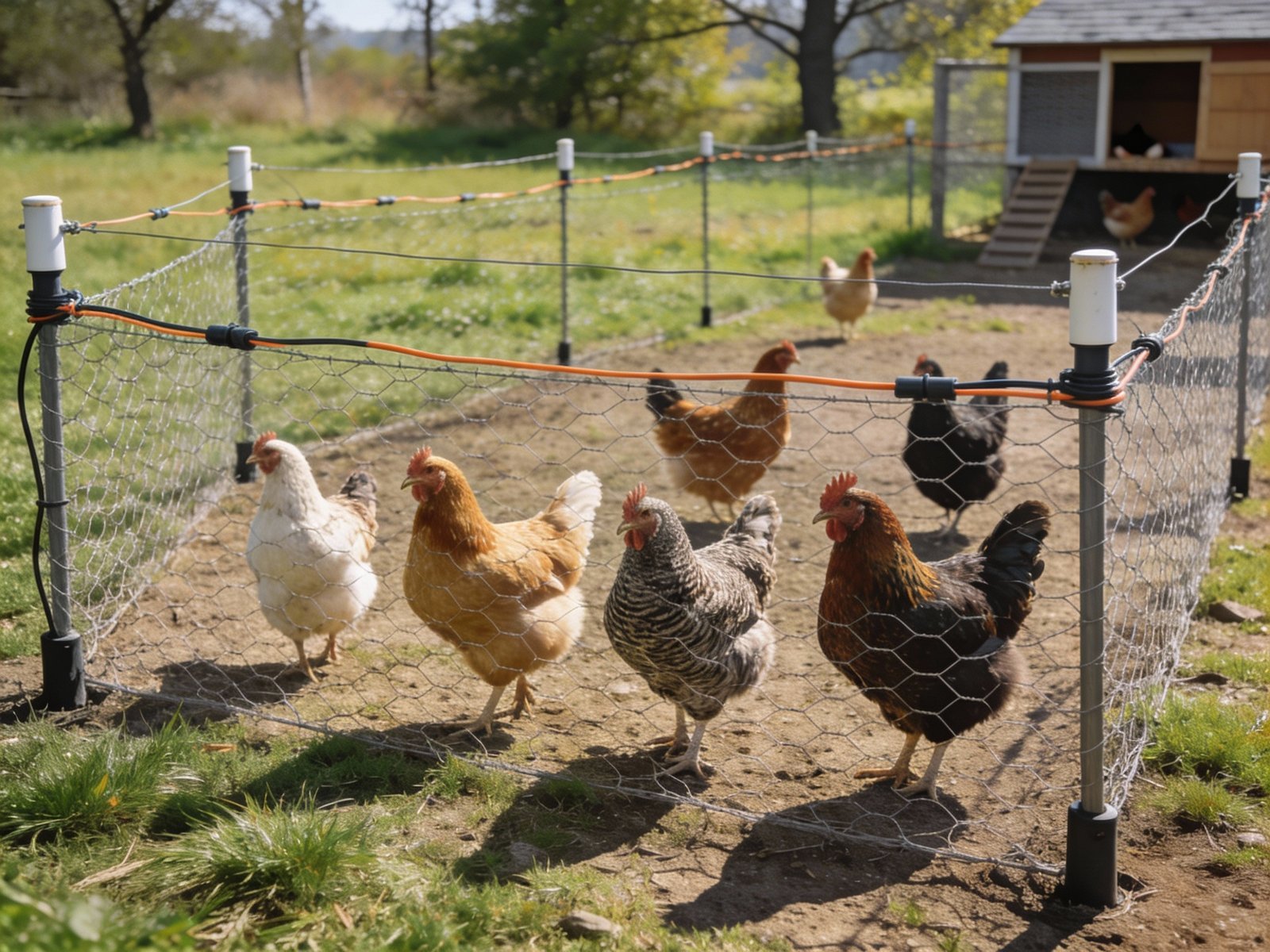
It is also important to note that electric fencing does not need to be extreme or complicated. For chickens, low electric strands or electric poultry netting are typically enough. When installed correctly, electric fencing is safe for chickens, people, and pets, while providing a level of protection that is difficult to achieve with physical fencing alone.
🟡 Second Layer: Extended Understanding
How predator pressure changes the answer
In low-predator environments, many chicken keepers succeed for years without electric fencing. However, predator populations shift, and a single new predator can change the situation overnight. Areas with raccoons, foxes, or coyotes see the biggest benefit from electric fencing, especially once predators discover a food source. Electric fencing prevents repeated attacks by teaching predators to avoid the area entirely.
Fixed runs vs pasture or free-range systems
Chickens kept in fixed runs near buildings may face less predator pressure due to human activity. Pasture-raised or mobile systems expose chickens to more open terrain, where predators feel safer approaching. In these systems, electric fencing becomes far more valuable as a flexible, movable defense that travels with the birds.
🟡 When This Works Well
- Predator pressure is moderate to high and losses have occurred or are likely
- Chickens are raised in pasture or mobile systems
- Electric fencing is properly grounded and regularly checked
- The coop is secure and electric fencing acts as a perimeter defense
- The keeper wants strong protection without building heavy permanent fencing
🟡 When This Is Not Recommended
- Predator pressure is extremely low and stable
- The coop itself is not secure at night
- Electric fencing cannot be maintained or monitored regularly
- Power sources or grounding conditions are unreliable
- The system relies on electric fencing alone without physical barriers
🔵 Third Layer: Decision Support
Alternatives or Better Options
Secure coop with physical fencing only
For very low-risk areas, a predator-proof coop combined with standard wire fencing can be sufficient, especially if birds are locked in at night.
Electric poultry netting
This combines physical and electric barriers in one system and works well for mobile or rotational chicken setups.
Predator-specific electric strands
Low, well-placed electric wires outside an existing fence can deter diggers and climbers without rebuilding the entire enclosure.
Cost, Safety, and Practical Notes
Electric fencing is often cheaper than repeated predator losses. While initial setup costs vary, most chicken keepers recover the investment after preventing just one or two attacks. Safety concerns are common but largely unfounded when equipment is installed correctly. Modern energizers are designed to deliver short, non-lethal pulses. In practice, electric fencing reduces stress by lowering nighttime disturbances and predator pressure around the coop. The key trade-off is maintenance: electric fencing requires regular inspection to remain effective.
🔵 Quick Takeaway
Chickens don’t need electric fencing to stay inside a fence, but electric fencing is one of the most reliable tools for keeping predators out. It works best as part of a layered system that combines a secure coop, physical fencing, and active deterrence.