Short Answer
Electric fencing can be enough for a hobby farm in limited situations, but it is rarely sufficient as the only fencing system long term. It works best when livestock pressure is low, maintenance is consistent, and escape consequences are minimal. For most hobby farms, electric fencing performs better as a supplement rather than a standalone solution.
Why This Question Matters
Electric fencing is often marketed as a low-cost, flexible solution—making it very attractive to hobby farm owners. Many people install electric fencing expecting it to replace traditional fencing entirely. In reality, inconsistent power, vegetation growth, weather, and animal behavior often undermine performance. When electric fencing fails, escapes tend to be sudden and widespread. This question matters because hobby farms usually have limited time and attention for daily fence checks, and repeated failures quickly turn “cheap and easy” fencing into a constant frustration.
Key Factors to Consider
- Livestock species respond differently to electric shock.
- Consistent voltage depends on grounding, power supply, and vegetation control.
- Escape consequences vary by location, predators, and neighbors.
- Maintenance time strongly affects electric fence reliability.
Detailed Explanation
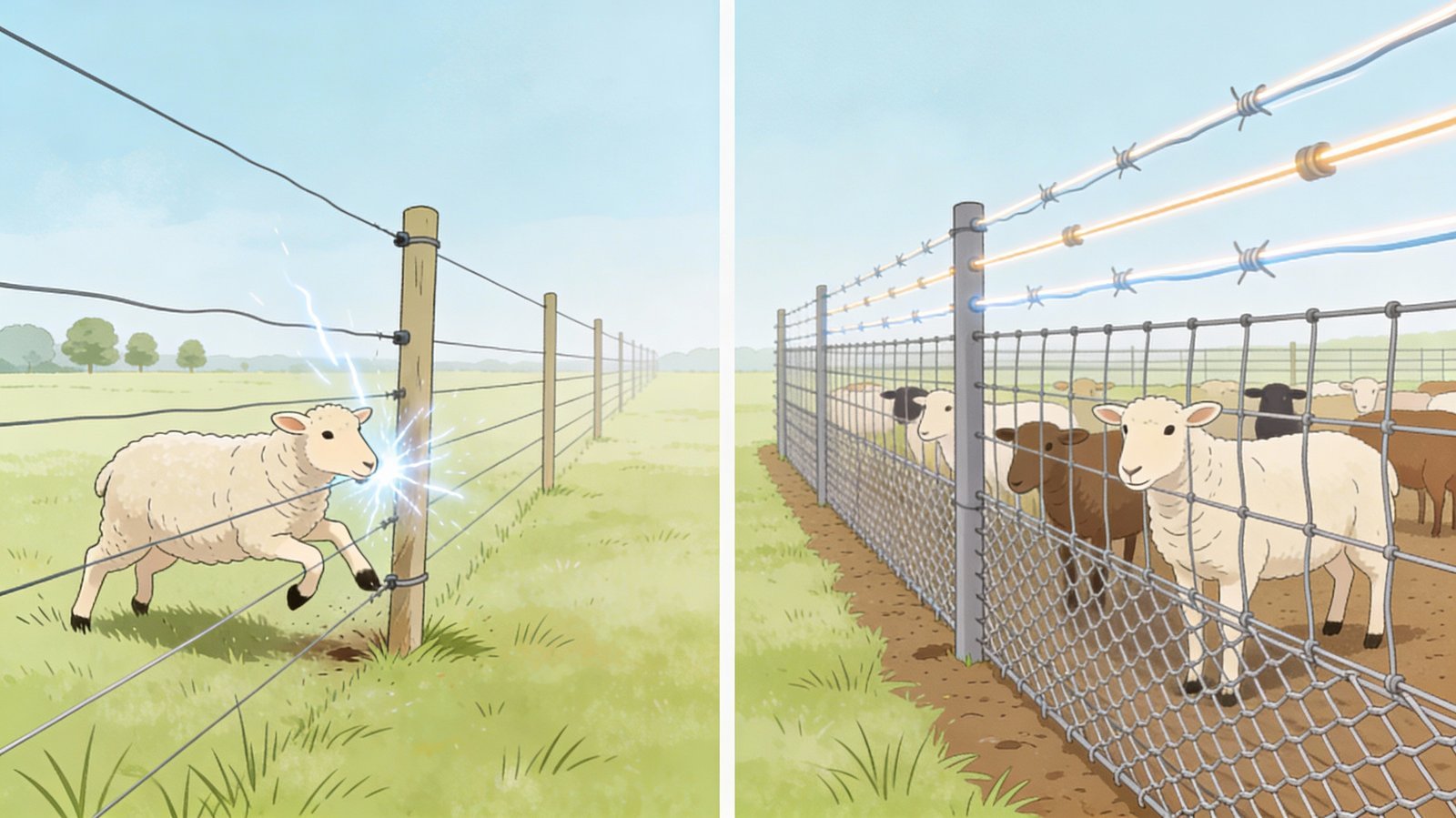
Electric fencing works by training animals to avoid contact, not by physically blocking movement. This distinction is critical on hobby farms. Animals must experience consistent, uncomfortable shocks to learn respect for the fence. However, wool, hair, feathers, and body size all affect how reliably animals feel the shock. Sheep and goats, for example, often receive weaker shocks than cattle due to insulation from fleece or hair.
Another limitation is reliability. Electric fences depend on constant voltage. Vegetation touching the wire, dry soil affecting grounding, or minor equipment failures can drop voltage below effective levels without being immediately obvious. When this happens, animals quickly learn the fence can be pushed through or ignored. Once fence respect is lost, retraining animals is difficult.
Electric fencing also fails abruptly. A physical fence usually degrades gradually—wire sags or posts loosen—giving time to notice and repair problems. Electric fencing often appears functional until it suddenly is not. On hobby farms, where fences may not be checked daily, this failure mode increases risk.
That said, electric fencing is not useless. It excels in controlled environments, temporary grazing, and as reinforcement. Used alongside physical fencing, electric lines reduce pressure, discourage testing, and extend fence life. The key is understanding that electric fencing alone requires near-perfect conditions to work consistently—conditions that many hobby farms cannot maintain.
Understanding Electric Fence Limitations
Animal Behavior and Fence Respect
Different animals learn electric fence boundaries at different speeds—and forget them just as quickly when shocks weaken. Curious or food-motivated animals are more likely to test fences repeatedly. On hobby farms with mixed livestock, this inconsistency often leads to uneven containment success across species.
Maintenance Reality on Hobby Farms
Electric fencing assumes regular voltage checks, weed control, and grounding inspection. In practice, hobby farms juggle many responsibilities. When maintenance slips, fence performance degrades rapidly. Systems that require constant attention often fail not because they are poorly designed, but because they are poorly suited to real-life time constraints.
Electric Fencing as a Reinforcement Tool
Electric fencing performs best when it supports physical containment. Offset electric wires discourage climbing, leaning, and predator testing. In this role, electric fencing reduces stress on physical fences instead of replacing them. This hybrid approach aligns better with hobby farm realities.
When This Works Well
- Temporary or rotational grazing systems.
- Single-species farms with animals trained to electric fencing.
- Flat terrain with minimal vegetation pressure.
- Farms able to check voltage and grounding frequently.
When This Is Not Recommended
- Permanent perimeter fencing.
- Farms with sheep, goats, or poultry as primary livestock.
- Areas with predators or nearby roads and neighbors.
- Situations with inconsistent maintenance capacity.
Alternatives or Better Options
Electric fencing combined with woven wire provides physical containment with behavioral reinforcement. Electric net fencing improves containment over single-wire systems but requires vigilant maintenance. Physical fencing with selective electric offsets offers the most reliable long-term balance for hobby farms.
Cost, Safety, and Practical Notes
Electric fencing has low upfront material costs but higher ongoing maintenance costs. Chargers, grounding systems, and vegetation control add time and expense over years. Safety considerations include proper signage and shock strength near people or pets. In practice, most hobby farm owners who rely solely on electric fencing eventually add physical fencing after repeated escapes. Electric fencing saves money only when it is used within its limits.
Quick Takeaway
Electric fencing can work—but only when conditions are ideal. On most hobby farms, it is best used as support, not as the only line of defense.