Short Answer
Yes, electric fencing is both safe and effective for wildlife control when properly installed and maintained. It delivers a brief, non-lethal shock that deters animals through behavior conditioning rather than injury, making it suitable for controlling wildlife movement while minimizing harm to animals, people, and livestock.
Why This Question Matters
Electric fencing is often misunderstood as dangerous or harmful, leading many landowners to avoid it even when wildlife pressure is high. Others assume it is universally effective without understanding its limits. Both assumptions create risk. Overestimating danger can result in ineffective barriers and repeated wildlife damage, while overconfidence can lead to poor installation and false security. This question reflects a real concern shared by farmers, conservation managers, and rural property owners: whether electric fencing can control wildlife responsibly without creating safety hazards or ethical problems.
Key Factors to Consider
- Wildlife species targeted and their sensitivity to deterrents
- Fence voltage consistency and grounding quality
- Human, pet, and livestock exposure to the fence
- Placement that discourages contact without causing panic
- Ongoing inspection and maintenance practices
Detailed Explanation
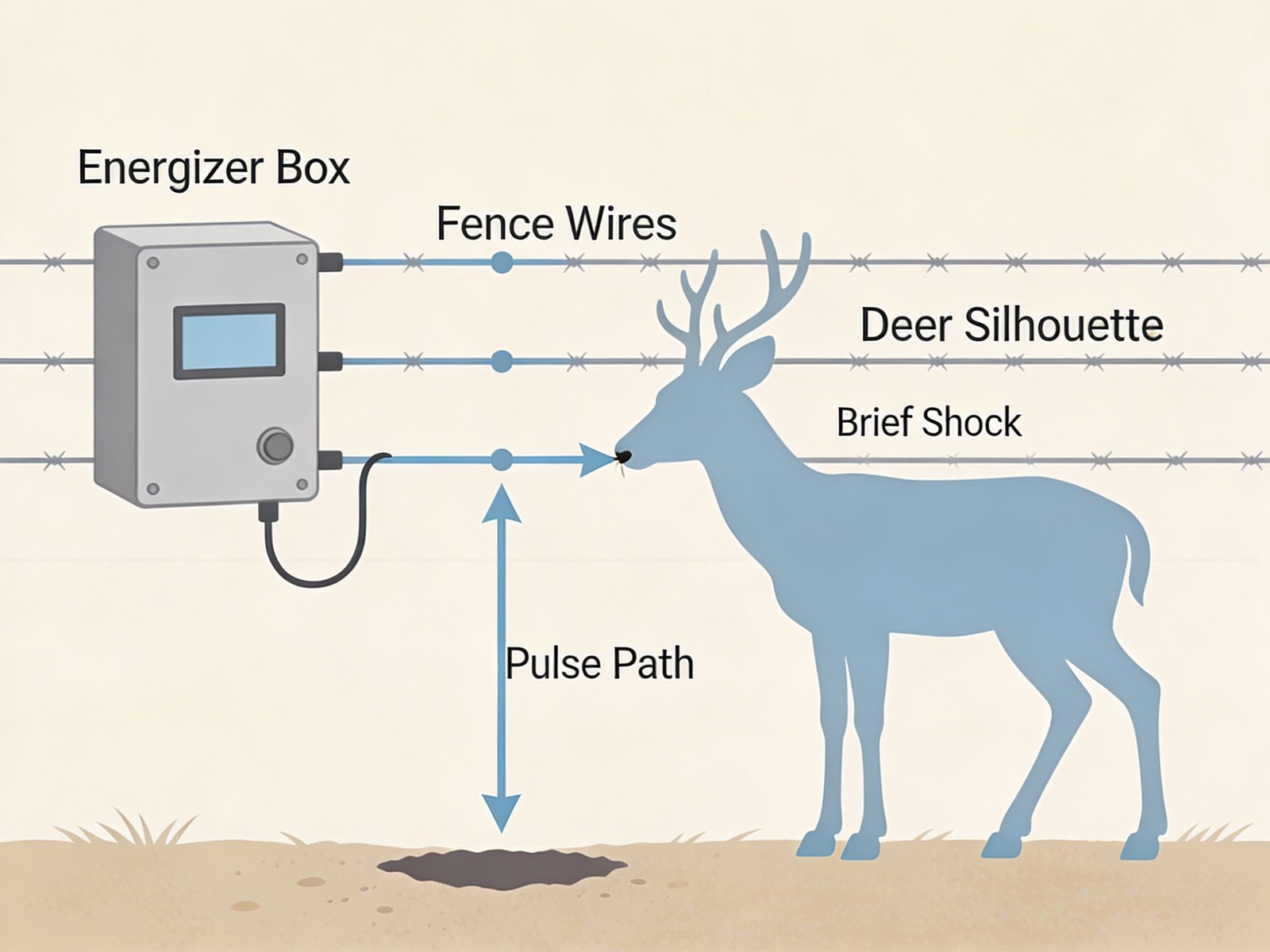
Electric fencing controls wildlife primarily through psychological deterrence rather than physical restraint. When an animal touches the fence, it receives a short-duration shock designed to startle, not injure. This creates an immediate association between the fence and discomfort, causing most animals to avoid the boundary entirely after one or two encounters. Because the shock is brief and non-lethal, electric fencing is widely used in wildlife management without causing lasting harm.
Safety depends largely on correct installation. Modern energizers regulate pulse duration and current, preventing continuous exposure. When installed to recommended standards, electric fences are safe for large wildlife, smaller animals, humans, and livestock. Accidental contact may be unpleasant but does not cause burns or long-term injury. Problems typically arise only when systems are improperly grounded, poorly maintained, or modified outside intended use.
Effectiveness varies by species and motivation. Electric fencing works best for animals that test boundaries cautiously, such as deer, coyotes, bears, and wild pigs. These species learn quickly and tend to avoid areas where they have been shocked. Animals driven by extreme hunger or panic may still breach fences occasionally, but repeated attempts drop sharply once deterrence is established.
Importantly, electric fencing influences behavior rather than relying on brute force. This makes it especially valuable in wildlife control, where the goal is often to redirect animals rather than trap or harm them. When expectations are realistic and maintenance is consistent, electric fencing offers a balanced solution that aligns safety, effectiveness, and ethical wildlife management.
Wildlife Interaction and Safety
How Wildlife Interacts With Electric Fencing
Wildlife typically encounters electric fencing during exploratory behavior. Most animals investigate new barriers with their nose or whiskers, making contact brief and localized. This is ideal for electric deterrence, as the shock is strongest during initial probing. Afterward, animals tend to avoid the fence line altogether rather than attempting repeated contact. This avoidance behavior is what makes electric fencing effective even when it appears physically minimal.
Safety Considerations for People, Pets, and Livestock
Electric fencing systems are designed to balance deterrence with safety. Proper signage, visibility, and training reduce accidental contact. Livestock generally learn fence boundaries quickly and experience fewer injuries compared to physical fencing. Pets may be startled initially but adapt similarly. Human safety risks are minimal when energizers meet regulatory standards and fences are installed as intended. Most safety concerns arise from poor design rather than from electric fencing itself.
When Wildlife Pressure Changes Fence Performance
Electric fencing is most effective when wildlife encounters are occasional or moderate. In areas with intense pressure, such as migration corridors or food-scarce environments, animals may test fences more aggressively. While electric fencing still reduces damage significantly, it may need reinforcement or design adjustments to maintain effectiveness. Understanding pressure levels helps set realistic expectations and avoid misuse.
When This Works Well
- Controlling deer, bears, coyotes, or wild pigs near crops or livestock
- Situations requiring wildlife deterrence without physical harm
- Areas with reliable power and routine fence inspection
- Properties aiming to redirect wildlife rather than exclude permanently
When This Is Not Recommended
- Locations without ability to maintain voltage and grounding
- Areas where public access makes accidental contact likely
- Situations requiring absolute containment rather than deterrence
- Wildlife species unaffected by brief shock-based deterrents
Alternatives or Better Options
Physical Wildlife Exclusion Fencing
Tall, non-electric fences provide permanent exclusion where deterrence alone is insufficient. These systems are effective but costly and less flexible.
Habitat Modification
Reducing attractants such as food sources can lower wildlife pressure and reduce reliance on fencing altogether.
Hybrid Systems
Combining electric fencing with physical barriers increases reliability in high-pressure environments while maintaining safety benefits.
Cost, Safety, and Practical Notes
Electric fencing is generally cost-effective compared to heavy physical barriers, but effectiveness depends on consistent maintenance. Initial costs include energizers, grounding systems, and installation labor, while ongoing costs are relatively low. Safety regulations vary by region, so compliance is essential. Practically, electric fencing should be viewed as a management tool rather than a permanent wall. Its strength lies in shaping animal behavior over time, not eliminating wildlife presence entirely.
Quick Takeaway
Electric fencing is safe and effective when used correctly, but its success depends on behavior, not force.