
Fence Cost & Budgeting Guide
Overview
Fence cost planning is one of the most important stages in any livestock or property fencing project. Material selection, post spacing, terrain, labor requirements, and long-term maintenance all directly affect total project cost per foot or per acre.
This guide explains how to estimate fencing costs accurately, compare different fence systems including woven wire, barbed wire, electric, and wood fencing, calculate labor and equipment expenses, and plan for long-term maintenance budgeting.
It is designed for farmers, ranchers, and landowners planning new fence installations or upgrading existing systems. This page focuses on budgeting strategy and cost comparison—not step-by-step installation details.
YouTube search query: “how to calculate livestock fence cost per acre”
What This Guide Covers
Cost Per Acre Calculator Basics
Fence cost per acre calculations begin with determining perimeter length based on property dimensions—a square 40-acre parcel has approximately 5,280 feet (1 mile) of perimeter, while irregular shapes require actual boundary measurement. Post spacing directly impacts total cost—wider spacing (12–15 feet for barbed wire or 40–60 feet for high-tensile systems) reduces material and labor expenses.
Total cost per acre divides total project cost by acreage, providing useful comparison metrics. However, economies of scale apply—larger properties typically achieve lower per-acre costs because corner assemblies and gates represent fixed costs spread across more linear footage. For calculation tools and perimeter estimation methods, see the Cost Per Acre Calculator guide.
Cost Per Acre Calculator Basics
Woven Wire Fence Cost Breakdown
Woven wire fence cost typically ranges from $1.50–$3.50 per linear foot for materials (wire mesh, posts, staples, bracing) plus $1.50–$4.50 per foot for professional installation, totaling $3.00–$8.00 per foot installed. A 1-mile perimeter fence costs approximately $15,000–$42,000 depending on height, mesh specifications, and terrain complexity.
Material costs include woven wire mesh ($0.80–$2.00 per foot), line posts every 8–12 feet ($3–$8 each), corner assemblies ($150–$400 each), gates ($200–$800 each), and fasteners. Labor represents 40–60% of total project cost for woven wire systems. For detailed cost breakdowns and estimating tools, see the Woven Wire Fence Cost guide.
Woven Wire Fence Cost Breakdown
Barbed Wire Fence Cost
Barbed wire fence cost represents one of the most economical livestock fencing options, typically ranging from $0.50–$1.50 per linear foot for materials and $0.75–$2.50 per foot including installation—total installed costs of $1.25–$4.00 per foot. A 1-mile cattle fence costs approximately $6,600–$21,000.
Low material costs result from simple wire strands ($0.08–$0.15 per foot per strand), fewer posts required (typically 10–15 foot spacing), and basic corner bracing. However, barbed wire requires more frequent maintenance and poses injury risks for some livestock. For cost comparison calculators and specification options, see the Barbed Wire Fence Cost guide.
Electric Fence Cost Comparison
Electric fence cost varies significantly between permanent high-tensile systems ($1.50–$4.00 per foot installed) and portable polywire setups ($0.25–$1.00 per foot). Total cost includes wire or polywire conductors, posts or step-in stakes, insulators, energizer ($100–$600), and grounding components ($50–$200).
Permanent systems cost more initially but last 20+ years with minimal maintenance. Portable systems offer lower upfront investment but require frequent monitoring and conductor replacement every 3–7 years. For lifecycle cost analysis and system comparisons, see the Electric Fence Cost guide.
Electric Fence Cost Comparison
High-Tensile Wire Cost Analysis
High-tensile fence cost typically ranges from $1.50–$3.50 per linear foot installed, offering economical long-distance fencing through reduced post requirements (posts every 40–80 feet versus 8–12 feet for woven wire). Material costs include high-strength wire ($0.10–$0.20 per foot per strand), fewer line posts, substantial corner bracing ($200–$500 per assembly), and tensioning equipment.
The wide post spacing and durable galvanized wire create favorable economics for large acreage—a 5-strand high-tensile system for 100 acres costs approximately $20,000–$45,000 compared to $45,000–$100,000 for equivalent woven wire coverage. For cost calculators and material specifications, see the High-Tensile Cost Analysis guide.
High-Tensile Wire Cost Analysis
Wood Fence Cost Guide
Wood fence cost for livestock applications typically ranges from $3.00–$12.00 per linear foot installed depending on design complexity, wood species, and board spacing. Post-and-rail systems using 3–4 rails cost $3.00–$8.00 per foot, while board fencing with closely spaced horizontal boards reaches $6.00–$12.00 per foot.
Material costs include treated posts ($15–$40 each), rails or boards ($2–$6 per foot), fasteners, and finish treatments. Wood fencing requires ongoing maintenance including staining every 2–4 years ($0.50–$1.50 per foot) and board replacement. For lifecycle cost projections and wood species comparisons, see the Wood Fence Cost guide.
PVC & Vinyl Fence Pricing
PVC and vinyl fence pricing ranges from $12–$35 per foot for materials and $8–$15 per foot for installation, totaling $20–$50 per foot installed—significantly higher than barbed wire or woven wire but competitive with quality wood board fencing.
Higher upfront costs are offset by virtually no maintenance requirements—no staining, painting, or board replacement needed. PVC fencing lasts 20–30+ years with only occasional cleaning. For horse properties and high-visibility applications, lifecycle cost analysis often favors PVC despite premium initial investment. For cost breakdowns and material specifications, see the PVC Fence Pricing guide.
Predator-Proof Fence Cost
Predator-proof fence cost typically adds 30–80% to base fencing expenses through additional materials including buried mesh aprons ($1.50–$3.00 per foot), offset electric wires ($0.50–$1.50 per foot), taller posts and more robust bracing, and higher-output energizers ($300–$800).
Complete predator control systems combining physical barriers with electric deterrence cost $5.00–$15.00 per foot installed depending on threat level and protection requirements. For small livestock operations, these investments prevent losses that quickly exceed fencing costs. For design specifications and cost estimating tools, see the Predator Fence Cost guide.
Labor & Equipment Costs
Labor and equipment costs represent 40–70% of total project expenses depending on fence type and installation complexity. Professional installation rates typically range from $1.50–$5.00 per linear foot for labor alone, with woven wire and wood fencing demanding higher labor rates than barbed wire or electric systems.
Equipment expenses include post drivers ($100–$300 rental or $1,500–$5,000 purchase), wire stretchers ($50–$300), augers for difficult soil ($150–$400 rental), and trenching tools for buried mesh. DIY installation saves labor costs but requires time investment and skill development. For labor rate comparisons and equipment planning, see the Labor Cost Estimate guide.
Maintenance & Lifecycle Cost
Maintenance and lifecycle cost significantly impacts total ownership expenses over 15–30 year fence lifespans. Wood fencing requires staining every 2–4 years ($0.50–$1.50 per foot) and board replacement ($2.00–$5.00 per foot every 10–15 years). Barbed wire needs periodic re-tightening and strand replacement.
High-tensile and PVC systems require minimal maintenance beyond occasional inspections and vegetation control. Electric fencing demands regular voltage testing and vegetation management but minimal structural repairs. For lifecycle cost calculators and maintenance planning tools, see the Fence Maintenance Cost guide.
Gate & Access Point Costs
Gate and access point costs add $200–$2,000 per opening depending on width, materials, and automation requirements. Standard walk-through gates cost $200–$500, while vehicle gates range from $400–$1,200 for manual versions and $1,500–$5,000 for automated electric operators.
Cattle guards provide gate-free access at $800–$3,000 installed including excavation and structural components. Gate quantity significantly impacts total project cost—minimizing access points while maintaining operational efficiency reduces expenses. For gate selection and cost planning, see the Gate Cost guide.
Surveying & Planning Costs
Surveying and planning costs range from $300–$2,000 depending on property size, boundary complexity, and legal requirements. Professional boundary surveys cost $300–$1,000 for small properties and $1,000–$3,000+ for large acreage with unclear boundaries.
Planning services including layout optimization, material recommendations, and permit acquisition add $200–$800. These upfront expenses prevent costly mistakes including boundary disputes, improper material selection, and code violations requiring expensive corrections. For planning guidance, see the Surveying & Planning Cost guide.
Terrain Impact on Fence Costs
Terrain impact on fence costs can increase project expenses by 20–100% on rocky, steep, or heavily wooded land. Rocky soil requires specialized equipment for post installation ($2–$5 additional per post), while steep slopes demand closer post spacing and enhanced bracing.
Clearing vegetation adds $0.50–$3.00 per linear foot depending on density. Flexible systems like high-tensile wire or electric fencing adapt better to challenging terrain than rigid woven wire. For terrain-specific estimating, see the Terrain Impact guide.
Financing & Grant Options
Financing and grant options help landowners fund fencing projects through various programs. USDA programs including EQIP (Environmental Quality Incentives Program) provide cost-share funding for conservation fencing projects, typically covering 50–75% of approved costs up to program limits.
Agricultural lenders offer equipment loans and operating lines of credit for fencing infrastructure at competitive rates. State and local conservation districts may offer additional grants for specific applications including predator control or riparian protection. For program eligibility and application guidance, see the Financing & Grants guide.
DIY vs Professional Installation Cost
DIY versus professional installation presents significant costtrade-offs. Professional installation costs $1.50–$5.00 per foot for labor but ensures proper technique, faster completion, and warranty protection. DIY saves labor costs but requires time investment (typically 20–40 hours per mile for experienced installers, longer for beginners).
Equipment rental ($200–$800 for typical projects) and learning curve mistakes add to DIY costs. Complex systems like woven wire benefit more from professional expertise than simpler barbed wire installations. For decision guidance and cost comparisons, see the DIY vs Professional guide.
DIY vs Professional Installation Cost
Seasonal Cost Variations
Seasonal fence cost variations affect both material availability and labor rates. Spring and summer represent peak installation seasons with higher contractor rates and longer lead times but optimal working conditions. Fall installations often capture lower rates as contractors seek winter work.
Winter installations in temperate climates may secure 10–25% discounts but face weather delays and frozen ground challenges. Material costs fluctuate with steel and lumber markets—timing large purchases during market lows reduces expenses. For seasonal planning strategies, see the Seasonal Cost Variations guide.
Common Decision Scenarios
If You Need a Low-Cost Perimeter Fence
Barbed wire or multi-strand high-tensile systems reduce upfront costs to $1.25–$4.00 per foot installed compared to $3.00–$8.00 for woven wire. For large acreage cattle operations, these economical options provide reliable containment.
Consider lifecycle costs—high-tensile systems require less maintenance than barbed wire over 20+ year lifespans. For cost optimization strategies, see the Barbed Wire Cost guide.
If Predator Pressure Is High
Woven wire with electric offsets increases costs by 40–80% over basic fencing but provides essential protection for valuable sheep, goat, or poultry operations. Prevention of even one significant predator loss often justifies the investment.
Calculate potential livestock losses versus additional fencing expenses to determine cost-effectiveness. For predator control strategies and budget planning, see the Wildlife & Predator Fencing guide.
If Terrain Is Uneven
Extra posts and bracing increase costs by 20–100% on rocky or sloped land compared to flat terrain. Flexible high-tensile or electric systems adapt better than rigid woven wire, potentially reducing terrain-related cost increases.
Professional surveys and planning prevent costly mistakes on challenging properties. For terrain-specific budgeting, see the Fence Planning Basics guide and Terrain Impact guide.
If You Want Minimal Maintenance
High-tensile and properly braced systems reduce long-term maintenance expenses through superior durability and minimal adjustment requirements. While initial costs may be 10–30% higher than barbed wire, lifecycle savings through reduced repairs and re-tensioning justify the investment.
PVC fencing eliminates staining and board replacement costs despite premium initial pricing. For lifecycle cost analysis, see the Maintenance Cost guide.
If You Run Rotational Grazing
Portable electric netting reduces permanent installation costs while providing flexible paddock management. Initial investment of $0.25–$4.00 per foot for portable systems allows phased infrastructure development as grazing systems evolve.
Combine permanent perimeter fencing with portable subdivision systems to optimize costs. For rotational grazing budgeting, see the Temporary & Portable Fencing guide.
Key Design & Planning Considerations
Fence Height & Spacing
Taller fences require more material and stronger bracing, increasing costs proportionally. A 5-foot woven wire fence costs 15–25% more than 4-foot versions. Tight post spacing increases post count and installation labor—optimizing spacing for terrain and livestock needs controls expenses.
Species-specific height requirements balance containment effectiveness with budget constraints. For height and spacing guidance, see the Wire Spacing Chart.
Safety Factors
Barbed wire may be cheaper but creates injury risks for some livestock—veterinary expenses from wire injuries can exceed the savings from low-cost materials. Electric fencing requires energizer investment ($100–$600) and grounding components ($50–$200).
Balance initial costs against potential livestock injury expenses and liability risks. For safety considerations, see the Electric Fence Safety guide.
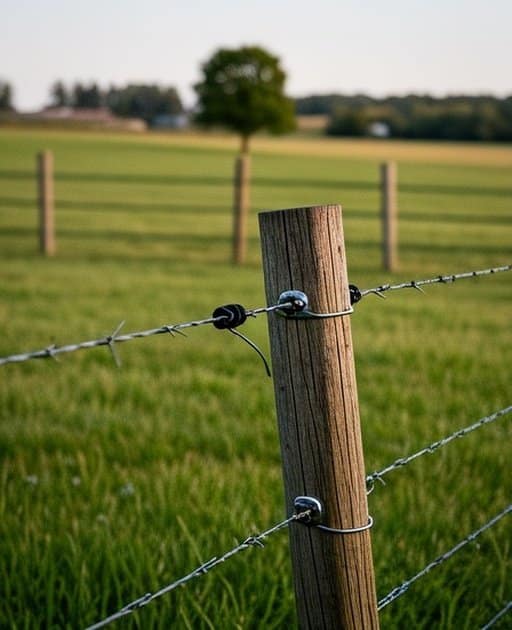
Cost & Maintenance
Initial installation represents only 50–70% of total ownership costs over 20–30 year fence lifespans. Long-term vegetation control ($100–$500 annually), periodic repairs ($200–$1,000 every 5–10 years), and eventual component replacement significantly impact lifecycle budgets.
Low-maintenance systems like high-tensile wire or PVC fencing cost more initially but reduce ongoing expenses. For comprehensive cost planning, include 15–30 year projections.
Installation Complexity
Woven wire and wood fencing require more labor and technical skill compared to high-tensile or electric systems. Complex installations increase labor costs by 30–100% and extend project timelines.
Evaluate DIY capabilities realistically—mistakes on complex projects often cost more to repair than professional installation would have cost initially. For installation planning, see the DIY vs Professional guide.
Legal & Boundary Considerations
Boundary disputes and zoning regulations can increase planning and surveying expenses by $500–$3,000. Professional surveys prevent costly fence relocation if boundary errors are discovered after installation.
Permit fees ($50–$500) and regulatory compliance requirements vary by jurisdiction. Budget for these administrative costs during project planning to avoid surprises. For legal planning, see the Local Fence Laws guide.
Related Fence Systems
- Woven Wire / Field Fence Guide – Durable livestock mesh systems
- Barbed Wire Fencing Guide – Low-cost cattle fencing
- Electric Fence Installation Guide – Electric system setup
- Fence Planning Basics Guide – Layout and boundary planning
- High Tensile Wire Guide – Long-distance fencing systems
Frequently Asked Questions
How much does fencing cost per acre?
Costs vary by material and terrain, typically ranging from $800–$2,000 per acre for low-cost barbed wire systems to $2,500–$6,000 per acre for woven wire or wood fencing.
What is the cheapest livestock fence option?
Multi-strand barbed wire or high-tensile electric fencing generally has the lowest material cost at $1.25–$4.00 per foot installed.
Is woven wire more expensive than electric fencing?
Yes, woven wire usually has higher upfront costs ($3.00–$8.00 per foot) compared to electric systems ($1.50–$4.00 per foot) but lower reliance on energizers and power sources.
How do I reduce fence installation cost?
Optimize post spacing for terrain and livestock needs, choose cost-efficient materials appropriate for your application, consider DIY installation for simpler systems, and implement phased installation spreading costs across multiple seasons.
What affects long-term fence maintenance cost?
Vegetation control, wire tension adjustments, broken post replacement, and weather damage all influence lifecycle expenses—high-tensile and PVC systems require less maintenance than wood or barbed wire.
Final Recommendations
Fence budgeting requires balancing upfront material costs with long-term maintenance, durability, and livestock safety. While low-cost systems like barbed wire reduce initial investment, they may require more frequent maintenance or upgrades compared to high-tensile or PVC systems.
Choose materials based on livestock type (cattle, sheep, goats), predator pressure, terrain conditions, and labor availability. Consider financing options and seasonal timing to optimize project economics.
Use this guide as your budgeting foundation before selecting a specific fencing system. Calculate costs per acre, compare DIY versus professional installation, and include gates and planning expenses for accurate total project estimates.