YouTube search queries: “farm fence layout planning tutorial”, “how to plan livestock fence layout”, “rotational grazing fence layout design”
What This Guide Covers
How to Plan a Fence Layout
Effective fence planning starts with a scaled sketch of the property showing existing structures, water sources, terrain features, and the livestock species to be contained. Walk the proposed fence line before planning on paper — terrain features that appear minor on a map (seasonal drainage areas, rocky outcrops, steep slopes) significantly affect post spacing, wire type, and installation approach. Mark proposed gate locations at natural travel paths rather than arbitrary points.
Calculate total fence length by measuring each run on the sketch and summing. Add 10% for material waste, corners, and splices. Identify corner post locations (every change in direction), end post locations, and brace post locations for any run longer than 300 feet. These structural posts require heavier material and deeper installation than line posts and must be planned and budgeted separately.
Determining Fence Type by Livestock
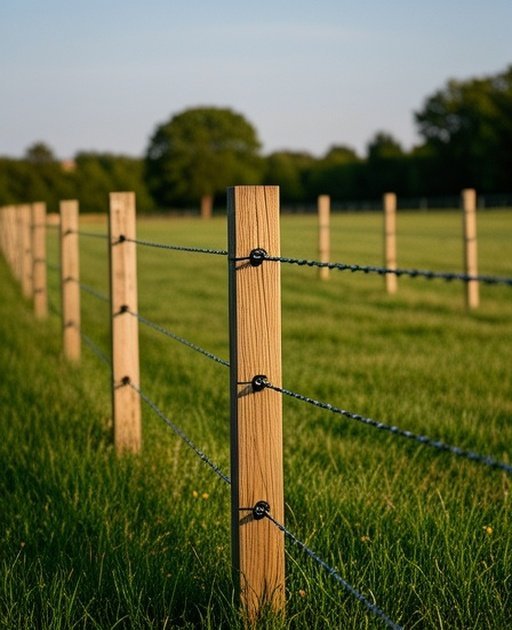
Match fence specifications to the livestock being contained. Beef cattle: 4-strand barbed wire or 3-strand high-tensile electric, 48–54 inches tall. Dairy cattle: similar but often lower at 42–48 inches due to more manageable temperament. Horses: board fence or high-visibility electric tape/braid, 54–60 inches minimum. Sheep: woven wire 48 inches minimum with tight bottom spacing. Goats: no-climb woven wire 48–54 inches with electric offset inside. Mixed species: design for the most demanding animal in the group.
Interior cross-fencing that separates pasture into paddocks can often be lighter-duty than perimeter fencing — the perimeter handles escape containment while interior fencing manages livestock movement between areas. Portable electric cross-fencing on step-in posts is sufficient for interior division in many rotational grazing systems, reducing the cost of permanent interior cross-fencing significantly.
Gate Planning and Placement
Gates are the most-used and most failure-prone elements of any fence system. Plan gate locations at natural livestock movement corridors — where you already walk, where water or feed sources require access, and at field corners where turning equipment is easiest. Main equipment gates should be 16 feet wide minimum for tractors with implements; 12 feet is adequate for smaller equipment; 4 feet serves pedestrian-only access.
Budget gates generously in the planning phase — quality gate hardware (hinges, latches, gate posts) costs $150–$400 for a standard 12-foot gate. Plan for at least one gate per paddock for livestock access and one additional gate per pasture section for equipment entry. Gates at fence corners require careful bracing design because gate swing and fence tension loads combine at these high-stress points.
Water Access Planning Within Fence Layout
Water availability in every paddock is the most critical infrastructure element of rotational grazing systems — cattle won't graze evenly when water is only available in one corner. Plan fence layouts so that water sources (ponds, streams, water troughs) fall within or adjacent to paddock boundaries. Alternatively, plan mainline water pipe routes before installing fence so that trenching can occur without crossing permanent fence lines.
Exclusion fencing around streams and ponds with off-stream watering reduces water quality problems and bank erosion while giving you flexibility in fence layout. A main water line running through the property center with branch connections to each paddock is more flexible than relying on natural water sources that may not be evenly distributed across the property.
Matching Fence Specifications to Budget
After determining ideal fence type and layout, compare the estimated cost to available budget. If the gap is significant, consider: phasing the project (perimeter first, cross-fencing later), using lighter-duty specifications for interior runs, substituting portable electric fencing where permanent cross-fencing was planned, or applying for USDA EQIP cost-share funding for qualifying projects.
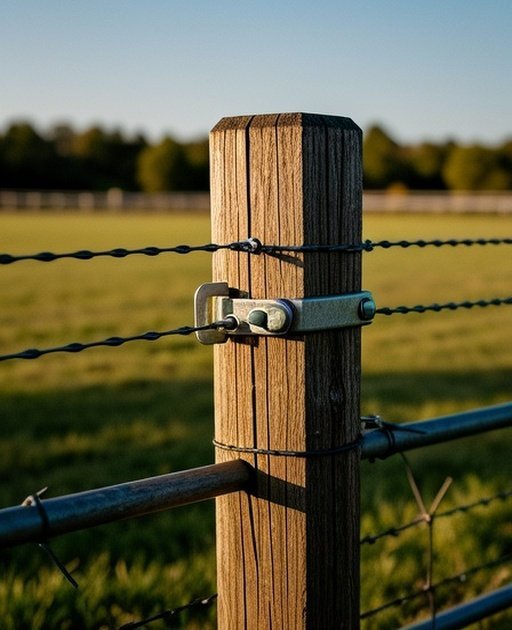
Prioritize spending on structural elements — corner posts, bracing systems, and energizers — that are expensive to fix if undersized. Economize on line post spacing (wider spacing with high-tensile wire) and wire type for interior cross-fencing where the consequences of fence failure are lower. A well-built corner holding adequate tension is more important than expensive wire in the line.
How to Plan a Livestock Fence Layout
Planning a livestock fence layout begins with mapping property boundaries using accurate survey data, identifying natura
Handling facility integration connects working corrals, chutes, and loading areas with fence systems for efficient livestock processing.
Read more →
📏
Seasonal Planning Considerations
Seasonal planning factors include optimal installation timing (typically spring or fall avoiding temperature extremes),
Read more →
🌾
Multi-Species Planning Requirements
Planning fencing for multiple livestock species requires accommodating the most demanding containment needs—typically go
Read more →
Common Decision Scenarios
If you're starting a new farm or property
New property fencing should address the perimeter first, then develop interior cross-fencing over time as the operation grows. Before any installation, identify all buried utilities (call 811), review the property survey for easements and boundary locations, and check local permit requirements. These preliminary steps prevent expensive rework after installation begins.
Walk the property boundary following the survey description before committing to a fence line — survey lines sometimes run through inconvenient terrain. A slight deviation from the legal boundary to improve fence practicality (avoiding a gully, following a ridge) may be worth a boundary agreement with the neighbor. Consult your attorney before deviating from survey lines.
If you're upgrading an existing fence system
Upgrading an existing fence system is often more economical than replacement when the structural elements (corner posts, bracing) are sound. Assess each section: posts that hold firm when pushed, bracing that shows no rot or movement, and wire that maintains reasonable tension are worth keeping. Wire that sags, breaks repeatedly, or fails to deter livestock is cheaper to replace than repair repeatedly.
Prioritize upgrades by risk: sections adjacent to roads or neighboring properties first, sections in areas with the highest livestock value or most active use second. An existing fence that's marginal but functional can often serve one more season while improvements are planned and budgeted properly.
If You Are Starting With a Small Budget
Starting with limited budgets requires prioritizing secure perimeter fencing over interior divisions, establishing criti
Organic certification fence planning must accommodate grazing requirements, pasture access mandates, separation from con
Read more →
Key Design & Planning Considerations
Fence Height & Spacing
Proper fence height prevents escape attempts and jumping injuries while maintaining effective containment. Recommended heights vary by species—cattle require 48-54 inches, horses need 54-60 inches, sheep demand 48+ inches, and goats require 48-60 inches with tight spacing.
Underestimating height causes repeated escapes, increased stress behavior, and fence damage from jumping attempts. Wire spacing standards prevent entrapment and injury. Height must also satisfy lawful fence definitions in your jurisdiction.
Soil type determines post stability and installation methodology. Clay soils provide excellent holding power but challenge installation during wet conditions. Sandy soils require deeper posts or concrete footings. Rocky ground demands specialized equipment or alternative installation techniques.
Clay, sand, and rocky ground all require different installation depth strategies and post selection. Terrain considerations extend to drainage patterns affecting post longevity, slope stability, and erosion control. Conduct soil testing before finalizing fence placement.
Planning efficiently reduces long-term expense by minimizing maintenance requirements, preventing reconstruction, and optimizing material selection for each application. Phased approaches spread costs while maintaining functionality. For cost planning methodology, see the Fence Cost & Budgeting guide.
Lane width planning ensures efficient livestock movement without crowding. Adequate width accommodates equipment passage while preventing escape opportunities. Balance gate quantity with cost—each gate adds $200-$2,000 depending on size and type.
How many paddocks do I need for rotational grazing?
Paddock numbers depend on desired rest periods, stocking density, and forage growth rates. Most operations start with 4-8 divisions, expanding as management experience develops and budget allows for additional cross fencing.
A structured planning phase reduces cost, improves durability, and prevents future layout failures. Invest time in thorough planning before purchasing materials or beginning installation. Consider consulting experienced livestock farmers or agricultural extension specialists for site-specific guidance.
Short Answer To plan a livestock fence layout, start by mapping your property boundaries, water sources, terrain features, and access points. Establish a secure perimeter…
Short Answer Avoid common farm fencing mistakes such as skipping boundary verification, underbuilding the perimeter, ignoring livestock behavior, overcomplicating layout design, and failing to plan…
Explore More Fencing Guides
Find the right fence for your farm — browse by livestock type, material, or project need.