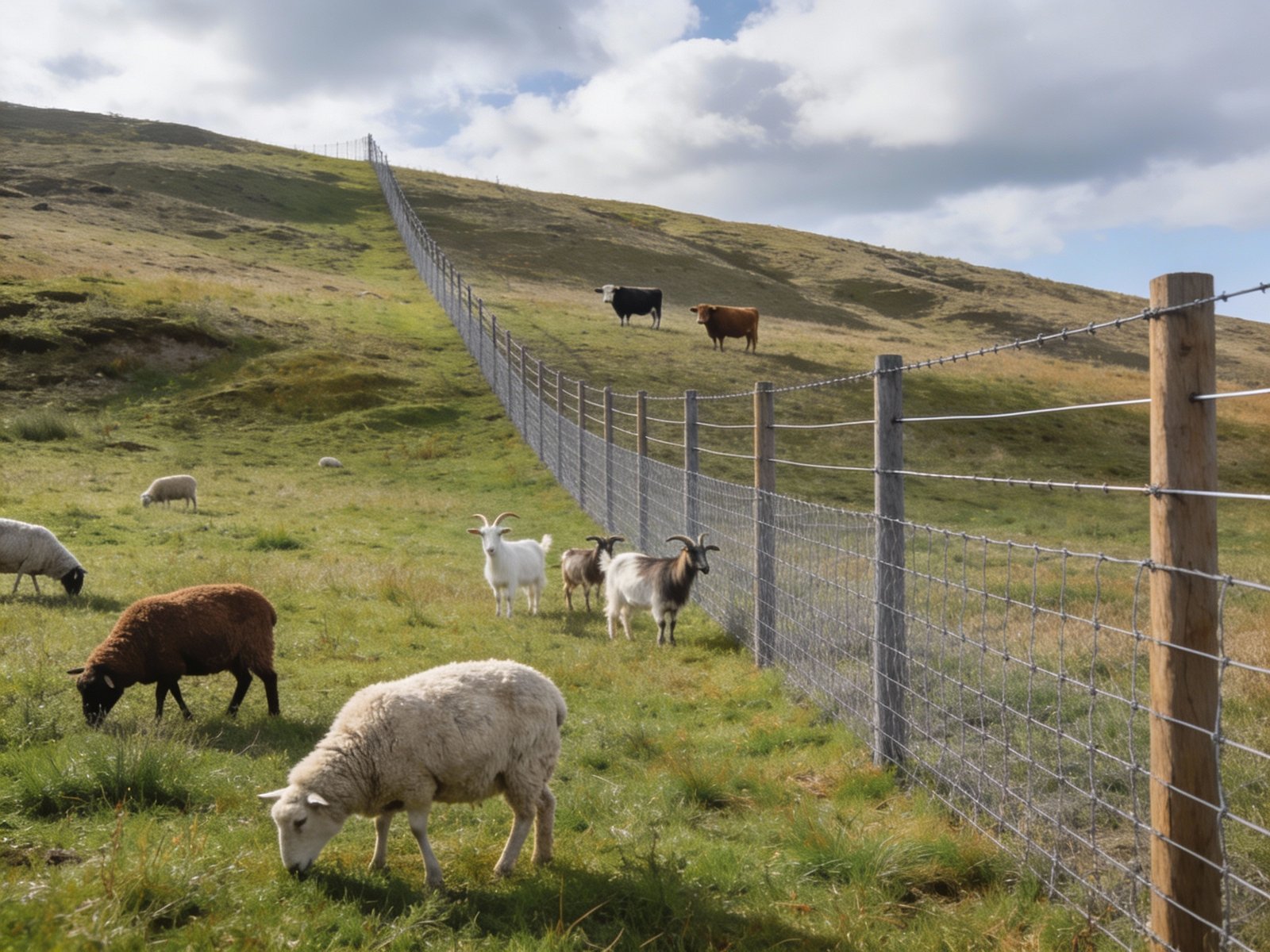
To fence predators out while containing mixed livestock, use a tight perimeter system that combines woven wire or net fencing with properly powered electric deterrent strands. The fence must prevent digging, climbing, and pushing while remaining safe and visible for different livestock sizes. A layered barrier approach is the most reliable solution.
Why This Question Matters
Predator pressure is one of the most common reasons mixed livestock operations fail. Goats, sheep, poultry, and calves are especially vulnerable, while larger animals like cattle or horses often give a false sense of security. Many producers assume that a fence strong enough to hold livestock will also stop predators, which is often untrue. Gaps, weak ground clearance, or poorly energized electric lines can turn fencing into a liability. A single predator breach can result in repeated losses, stress-related health issues, and long-term behavioral changes in livestock.
Key Factors to Consider
Predator species and behavior in your region (digging, climbing, jumping, testing fences). Differences in livestock size, pressure, and fence interaction. Ground clearance and soil conditions affecting dig-under risk. Fence visibility and shock effectiveness for deterrence. Long-term maintenance and vegetation control needs.
Detailed Explanation
Fencing predators out while containing mixed livestock requires solving two problems at the same time: physical exclusion and psychological deterrence. Predators such as coyotes, foxes, and dogs exploit weaknesses differently than livestock. They test fence bottoms, look for loose corners, and repeatedly challenge barriers once a weakness is found. Livestock, on the other hand, apply steady pressure, lean, rub, or attempt to push through gaps. A single fencing system must address both behaviors.
A woven wire or fixed-knot fence provides the physical barrier needed to stop predators from squeezing through or climbing. Mesh spacing near the bottom should be tight enough to prevent small predators from entering while still remaining safe for smaller livestock. However, wire fencing alone often fails at ground level or along corners, where predators attempt to dig or pry. This is why electric deterrent strands are critical in mixed livestock systems.
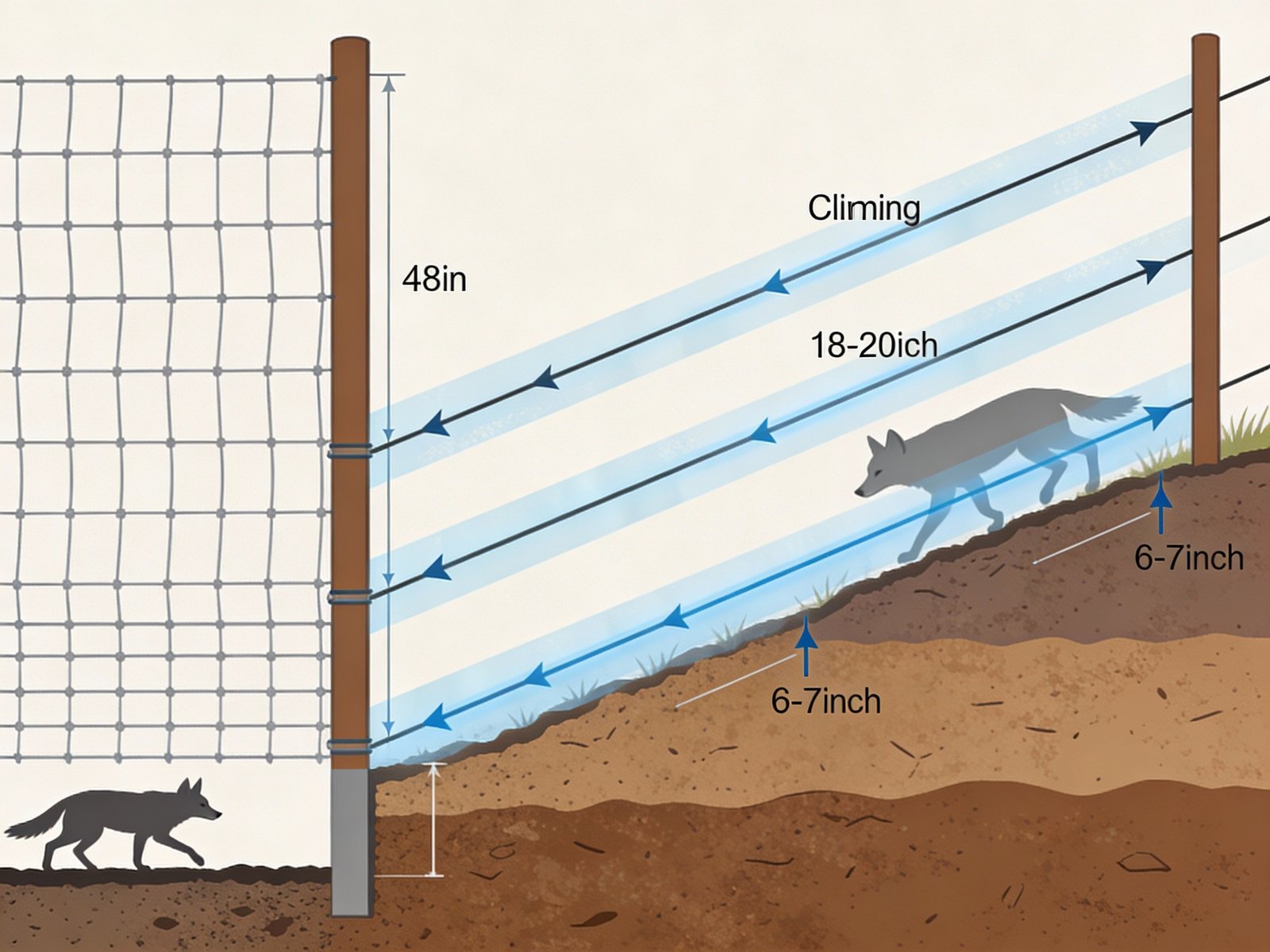
An offset electric wire placed low on the outside of the fence discourages digging, while additional electric strands at nose or chest height prevent climbing and fence testing. For mixed livestock, electric lines must be positioned so they deter predators without creating entanglement risks for smaller animals. Proper grounding and consistent voltage are essential; a weak shock teaches predators that the fence is safe to challenge.
Finally, fence layout matters as much as materials. Straight runs, tight corners, and clearly defined perimeter fencing reduce pressure points. Internal cross fencing should never compromise the predator-resistant outer boundary. When designed correctly, the fence becomes both a physical wall and a psychological barrier that predators avoid after initial contact.
How Predator Behavior Shapes Fence Design
Different predators interact with fences in different ways. Coyotes typically test fence bottoms and corners, while dogs often push or dig repeatedly in one location. Foxes and smaller predators look for gaps in mesh spacing. Understanding these behaviors helps determine where reinforcement is needed. In mixed livestock fencing, failure usually occurs at predictable weak points rather than across long straight sections. Bears require higher voltage and multiple wire strands spaced closely together. Mountain lions may attempt to jump or climb over fences. Each species brings different challenges that must be addressed through proper wire spacing, height, and voltage levels.
Balancing Predator Control With Livestock Safety
A predator-resistant fence must not create new risks for livestock. Tight mesh spacing should not trap heads or legs, and electric strands must be positioned to discourage contact without causing panic. Smaller animals require protection near ground level, while larger animals need visible boundaries that prevent leaning or pushing. For operations with sheep and goats, an interior hot wire placed approximately 18 inches off the ground prevents animals from rubbing against the woven wire and shorting out the exterior electric strands. The fence must be clearly visible to livestock to prevent accidental collisions while remaining intimidating to predators through both physical and psychological barriers.
When This Works Well
Operations with mixed species grazing within a clearly defined perimeter. Areas with consistent predator pressure rather than random incursions. Producers willing to maintain electric charge and vegetation control. Farms prioritizing long-term loss prevention over lowest upfront cost. Situations where guardian animals can supplement perimeter fencing. Properties with adequate power access for reliable fence energizers.
When This Is Not Recommended
Situations with no reliable power source for electric fencing. Extremely rocky or unstable soil preventing secure fence anchoring. Temporary or short-term livestock setups with frequent layout changes. Operations unwilling to inspect and maintain fence lines regularly. Locations with excessive vegetation growth that constantly shorts out electric wires. Extremely small enclosures where livestock may be forced into contact with hot wires.
Alternatives or Better Options
In high-risk predator regions, some operations use full electrified net fencing for smaller livestock combined with stronger perimeter fencing for larger animals. Others rely on guardian animals alongside fencing to reduce pressure. In extreme cases, double fencing with a clear buffer zone provides maximum deterrence but increases cost and land use. Livestock guardian dogs, llamas, or donkeys can patrol the perimeter and deter predators before they reach the fence. Night penning of vulnerable animals in reinforced enclosures offers additional protection during peak predator activity hours.
Cost, Safety, and Practical Notes
Predator-resistant mixed livestock fencing typically costs more upfront than standard containment fencing, but losses from repeated attacks often exceed installation costs within a single season. Expect higher material and labor expenses due to additional wire, energizers, and grounding systems. Safety inspections are critical after storms, vegetation growth, or animal pressure events. Regular voltage checks and fence line walkthroughs significantly reduce failure risk. Budget for a quality low-impedance fence charger capable of maintaining 4,000 to 5,000 volts on the fence line, especially in areas with thick-coated predators like wolves or coyotes. Proper grounding with multiple ground rods is essential in dry or rocky soil conditions. Many successful operations use a hot/ground wire alternating system rather than an all-hot design to ensure consistent shock delivery regardless of soil moisture.
This short video shows how predator deterrent fencing works in real mixed livestock conditions:
Quick Takeaway
A successful mixed livestock fence keeps predators out by combining physical barriers with consistent electric deterrence, while remaining safe and functional for animals of different sizes.