
Fence Safety Guide
Overview
Fence safety is one of the most overlooked yet critical parts of livestock management. This guide covers animal safety, human safety, legal responsibility, and electric fence risk management.
If you own cattle, goats, horses, pigs, sheep, or mixed livestock, improper fence design can lead to injuries, escapes, liability issues, and costly repairs.
This hub does not focus on fence materials selection or cost planning—those are covered in separate guides. Instead, this page centralizes everything related to injury prevention, safe installation, voltage control, and regulatory compliance.
YouTube search query: “livestock fence safety tips electric fence safety for animals and people”
What This Guide Covers
Animal Fence Injury Risks
Common livestock injuries from fencing result from entrapment, laceration, impact trauma, and electric shock complications. Barbed wire creates cutting hazards particularly dangerous for horses and sheep, while improperly spaced woven wire can trap heads and legs.
Prevention strategies include proper wire spacing, appropriate fence height, regular maintenance inspections, and material selection matching livestock temperament and size. Young animals face heightened risk from gaps that adults cannot access. For comprehensive injury prevention strategies, see the Animal Fence Injury guide.
Barbed Wire Safety Concerns
Barbed wire injury risks escalate with improper tension, sharp rust edges, broken strands creating wire whips, and low-visibility placement where animals run into fencing during flight responses. Horses suffer particularly severe lacerations requiring veterinary intervention, while goats and sheep risk fleece entanglement.
Safe barbed wire installation requires proper tension preventing sag, regular inspection for broken barbs, appropriate strand spacing, and visibility enhancement through flagging in high-traffic areas. Cattle operations tolerate barbed wire better than other livestock types. For species-specific safety protocols, see the Barbed Wire Safety guide.
Electric Fence Safety for Animals
Electric fence safety for animals depends on appropriate voltage levels (typically 2,000–5,000 volts for livestock), proper grounding system installation, correctly sized energizers, and training periods allowing livestock to learn psychological boundaries without panic.
Safety concerns include heart stress in young or pregnant animals, panic-induced collision injuries during initial exposure, tangling in portable netting, and inadequate grounding creating unpredictable shock delivery. Permanent electric systems generally prove safer than temporary portable installations when properly maintained. For voltage standards and training protocols, see the Electric Fence Animal Safety guide.
Electric Fence Safety for Animals
Fence Spacing and Injury Prevention
Proper fence spacing prevents head entrapment, leg injuries, and escape attempts while allowing effective containment. Goats and sheep require maximum 4-inch horizontal spacing to prevent head entrapment, while cattle tolerate 6-inch spacing safely.
Vertical spacing affects injury risk differently—bottom wire placement prevents crawling underneath while minimizing leg entrapment. Young livestock require tighter spacing than adults. Fence height and spacing standards vary by species, age class, and containment purpose. For species-specific spacing requirements, see the Fence Spacing Safety guide.
Fence Spacing and Injury Prevention
Electric Fence Safety for Humans
Electric fence safety for humans requires understanding that while properly installed systems rarely cause serious injury to healthy adults, individuals with pacemakers or heart conditions face elevated risk. Standard livestock energizers deliver high voltage but low amperage, creating painful but typically non-lethal shocks.
Safety protocols include warning signage installation, teaching children about shock risks, avoiding contact during wet conditions increasing conductivity, and using insulated tools during maintenance. Children and pets require special consideration due to lower body mass and unpredictable behavior. For human safety protocols and first aid, see the Electric Fence Human Safety guide.
Electric Fence Safety for Humans
Safe Voltage Levels
Dangerous voltage levels on electric fences result from improper energizer selection, poor grounding creating voltage spikes, or non-compliant equipment exceeding livestock safety standards. Properly functioning systems deliver 2,000–5,000 volts for most livestock, with voltage dropping to safe levels within milliseconds of pulse delivery.
Risk factors include continuous current systems (illegal for livestock in most jurisdictions), inadequate grounding rod installation, wet conditions, and contact duration. Energizer sizing must match fence length and vegetation load to maintain consistent safe voltage. For voltage testing and safety standards, see the Safe Voltage Levels guide.
Legal & Liability Risk
Legal liability for fence injuries depends on jurisdiction, fence type, livestock escape consequences, and demonstrated negligence in installation or maintenance. Property owners face potential civil liability when unsafe fencing causes injuries to animals, people, or property damage from escaped livestock.
“Lawful fence” standards vary by state and county, defining minimum construction requirements that affect legal responsibility. Escaped livestock liability depends on fence law jurisdiction (fence-in versus fence-out states) and whether fencing met legal standards. Insurance coverage varies significantly. For jurisdiction-specific liability information, see the Fence Liability & Responsibility guide.
Local Fence Regulations
Fence permit requirements vary dramatically by jurisdiction, property zoning classification, and fence height/type. Agricultural fencing regulations typically differ from residential requirements, with rural properties often exempt from permits that urban/suburban areas require.
Electric fence legality varies by zone—some residential areas prohibit visible electric fencing while agricultural zones permit it freely. Setback requirements mandate minimum distances from property lines, varying by jurisdiction. Unpermitted fencing may require costly removal or modification. For local compliance guidance, see the Local Fence Regulations guide.
Fence Maintenance Safety
Common fence maintenance accidents include wire recoil injuries during tension release, hand injuries from wire handling without proper gloves, post driver rebound impacts, ladder falls during tall fence work, and electric shock from inadequately de-energized systems.
Safe maintenance protocols require protective equipment including heavy gloves, safety glasses, and steel-toed boots, plus proper tool selection reducing injury risk. Always disconnect energizers before maintenance work. For maintenance safety protocols, see the Fence Maintenance Safety guide.
Installation Safety Practices
Installation injury prevention requires proper tool selection and training, understanding wire tension dangers, safe post driving techniques, team coordination during wire stretching, and environmental hazard awareness including overhead power lines.
Wire stretching without proper tools creates severe injury risk from recoil when wire breaks under tension. Improper tool use causes cumulative hand, wrist, and back injuries. For comprehensive installation safety, see the Installation Safety Practices guide.
Temporary Fence Safety
Temporary fence safety presents unique challenges including lower structural stability, tangling risk in netting systems, visibility issues, and inadequate grounding in portable electric systems. Portable electric fencing requires careful livestock introduction to prevent panic injuries.
Temporary installations demand more frequent inspection than permanent systems due to ground stake loosening, vegetation interference, and component degradation. For temporary fencing safety protocols, see the Temporary Fence Safety guide.
Predator Fence Safety Balance
Predator-proof fencing must balance security with livestock safety—buried mesh aprons prevent digging but create tripping hazards, while offset electric wires deter predators but increase shock exposure. Wildlife fencing often requires taller heights increasing installation danger.
Design considerations include maintaining livestock safety while maximizing predator deterrence, proper electric wire positioning preventing accidental livestock contact, and regular inspection for damage creating new hazards. For predator fencing safety design, see the Predator Fence Safety guide.
Young Livestock Safety
Young livestock fencing safety requires tighter spacing than adult systems, lower bottom wire placement preventing crawling, smooth wire surfaces eliminating snag points, and careful electric fence introduction due to unpredictable panic responses in young animals.
Baby goats and lambs require maximum 4-inch spacing to prevent escape and entrapment. Young animals lack learned fence boundaries, increasing injury risk during initial containment. For age-specific safety standards, see the Young Livestock Safety guide.
Weather Impact on Fence Safety
Weather impacts fence safety through increased electric conductivity during rain (intensifying shocks), ice accumulation causing wire breakage and recoil hazards, wind damage creating loose wire whips, and snow load causing structural failure.
Lightning strikes can damage energizers and create dangerous voltage spikes. Flood conditions compromise grounding systems. For weather-specific safety protocols, see the Weather Impact Safety guide.
Weather Impact on Fence Safety
Multi-Species Safety Considerations
Mixed livestock fencing safety requires accommodating the most vulnerable species—design safe for horses typically protects other livestock, while systems adequate for cattle may injure sheep or goats.
Size disparities create safety challenges—large animals may damage fencing while small animals risk entrapment in gaps. Electric systems must balance effective deterrence for the least sensitive species without excessive shock to more sensitive animals. For multi-species safety design, see the Mixed Livestock Safety guide.
Multi-Species Safety Considerations
Common Decision Scenarios
If You Own Horses
Barbed wire poses extreme danger to horses due to flight response behavior causing severe lacerations, tendon damage, and life-threatening injuries. Horse-safe fencing options include smooth board, PVC, flexible polymer rail, or properly installed high-tensile smooth wire with appropriate visibility enhancement.
Avoid sharp tension systems and prioritize visibility so horses don’t run through fencing. Use breakaway systems where possible. For comprehensive horse fencing safety, see the Horse Fencing Safety guide.
If You Use Electric Fencing
Proper electric fence grounding proves critical for both effectiveness and safety—inadequate grounding creates unpredictable voltage spikes dangerous to livestock and humans. Install minimum three 6-foot grounding rods spaced 10 feet apart in moist soil for optimal performance.
Voltage control requires correctly sized energizers, regular voltage testing, and vegetation management preventing power drain. Always use warning signage. For complete electric safety protocols, see the Electric Fence Safety Hub.
Electric Fencing Safety Requirements
If You Have Children or Visitors
Electric fence safety for children and pets requires education about shock danger, visible warning signage at property entrances and along fence lines, consideration of lower-voltage systems in high-traffic areas, and potentially physical barriers preventing accidental contact in play areas.
Young children cannot reliably interpret warnings. Consider non-electric alternatives near homes and recreational areas. Always supervise children around livestock fencing. For family-safe fencing design, see the Children & Visitor Safety guide.
If Predator Pressure Is High
Predator-proof fencing must balance security with livestock safety—aggressive predator deterrence systems using buried mesh and offset electric wires can create additional injury risks if improperly designed. Wildlife fencing requires careful integration of physical and psychological barriers.
Design considerations include maintaining adequate livestock movement clearance, preventing wire entanglement, proper electric wire positioning, and regular inspection for damage. For predator fencing safety integration, see the Predator Protection Safety guide.
Predator Pressure Safety Balance
If Installing Fencing Yourself
DIY fence installation safety requires proper tool selection including safety equipment (heavy gloves, eye protection, steel-toed boots), understanding wire tension mechanics, safe post driving technique, and awareness of underground utilities and overhead power lines.
Wire stretching hazards cause severe injuries when wire breaks under tension. Never use makeshift tools. For comprehensive installation safety, see the Installation Safety guide.
Key Design & Planning Considerations
Fence Height & Spacing
Incorrect height increases jumping injuries and escape attempts, creating safety hazards when animals attempt to clear inadequate fencing. Proper fence height varies by species—cattle require 48-54 inches, horses need 54-60 inches, and goats require 48+ inches with close spacing.
Wire spacing prevents head entrapment and leg damage—maximum 4-inch horizontal spacing for small livestock, 6 inches for larger species. Vertical spacing affects crawl-under attempts and predator access.
Voltage & Grounding
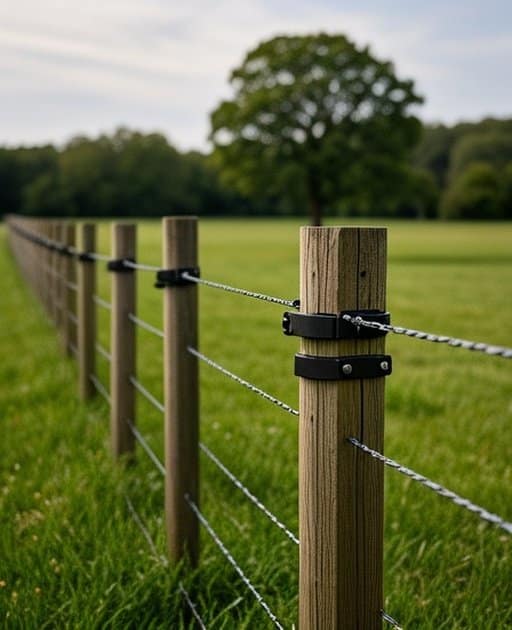
Low voltage increases escape attempts as animals learn the fence delivers ineffective deterrence. Excessive voltage creates unnecessary pain and potential health complications. Proper voltage levels range 2,000–5,000 volts depending on livestock type and coat thickness.
Grounding quality directly affects safety—poor grounding causes voltage spikes and unpredictable shock delivery. Install adequate grounding rods in moist soil, test regularly, and maintain vegetation clearance.
Maintenance & Inspection
Loose wires create whipping hazards when animals contact fencing. Broken staples allow wire movement causing entanglement. Rust deterioration creates sharp edges increasing laceration risk. Regular maintenance inspection reduces emergency injury events.
Establish inspection schedules—monthly for high-traffic areas, quarterly for remote sections. Address damage immediately. Document maintenance for liability protection.
Material Safety
Some fencing types flex safely under impact, others create rigid barriers causing severe injuries. Flexible materials like polymer rail absorb impact, while rigid materials like welded panels can fracture bones. Barbed wire cuts, woven wire entraps.
Material selection affects long-term injury risk more than initial cost. Consider livestock temperament—flighty horses need forgiving materials, while calm cattle tolerate rigid systems.
Legal Responsibility
Injury caused by unsafe fencing creates civil liability exposure for property owners. Demonstrable negligence in installation, maintenance, or material selection strengthens injury claims. Legal vulnerability increases with non-compliant electric systems, inadequate warning signage, or known hazards left unaddressed.
Insurance coverage varies significantly—verify your policy covers fence-related incidents. Document safety compliance and maintenance records. Understand your jurisdiction’s fence laws.
Related Fence Systems
- Electric Fence Safety Hub – Comprehensive voltage, grounding, and shock safety protocols
- Fence Liability & Responsibility Hub – Legal obligations and injury liability
- Material Cost Comparison Hub – Balancing safety with budget constraints
- Fence Height & Spacing Hub – Species-specific safety dimensions
- Fence Safety for Animals Hub – Livestock injury prevention strategies
Frequently Asked Questions
What is the safest fence type for livestock?
Woven wire and properly installed electric fencing are generally safest when spacing and tension are correct for the specific livestock species. Horses require smooth, visible fencing, while cattle tolerate wider material variety.
How many volts are dangerous on an electric fence?
Voltage becomes dangerous when grounding is poor causing extended contact duration, energizers exceed recommended livestock ranges, or continuous current systems are used. Properly functioning pulse systems deliver 2,000–5,000 volts safely with adequate grounding.
Can electric fences injure humans?
Yes, electric fences can injure humans, especially individuals with pacemakers or heart conditions. While standard livestock energizers rarely cause serious injury to healthy adults, always follow regulated energizer standards and install proper warning signage.
Is barbed wire safe for horses?
Generally no. Barbed wire significantly increases laceration risk for horses due to their flight response causing them to run through or become entangled in fencing during panic. Safer alternatives include board, PVC, or smooth wire systems.
How often should fences be inspected for safety?
Inspect high-traffic areas and electric fence systems monthly, remote perimeter sections quarterly, and after severe weather events. Document inspections for liability protection.
Are temporary fences as safe as permanent fences?
Temporary fences present unique safety challenges including lower stability, tangling risk in netting, and inadequate grounding in portable electric systems. They require more frequent inspection than permanent installations.
Final Recommendations
Fence safety is not just about containment—it is about injury prevention, liability reduction, and long-term durability for both livestock and property owners.
If you are using electric fencing, prioritize proper grounding and regulated voltage with appropriate energizer sizing. Install warning signage and test voltage regularly.
If you use wire fencing, ensure spacing prevents entrapment and maintain proper tension.Inspect regularly for rust, broken wires, and loose fasteners.
If you own horses, avoid barbed wire entirely and select smooth, highly visible fencing materials. Consider flexible systems that absorb impact.
Next step: Review the specific cattle, horse, sheep, goat, or mixed livestock fencing guide that applies to your operation, and consult your local fence regulations for compliance requirements.