Yes, high-tensile wire can be used effectively on uneven or sloped terrain when it is designed and installed correctly. Its strength and elasticity allow it to maintain tension across changes in elevation. Success depends on adjusted post spacing, strong bracing, and careful tension management—terrain-friendly design matters more than the wire itself.
Why This Question Matters
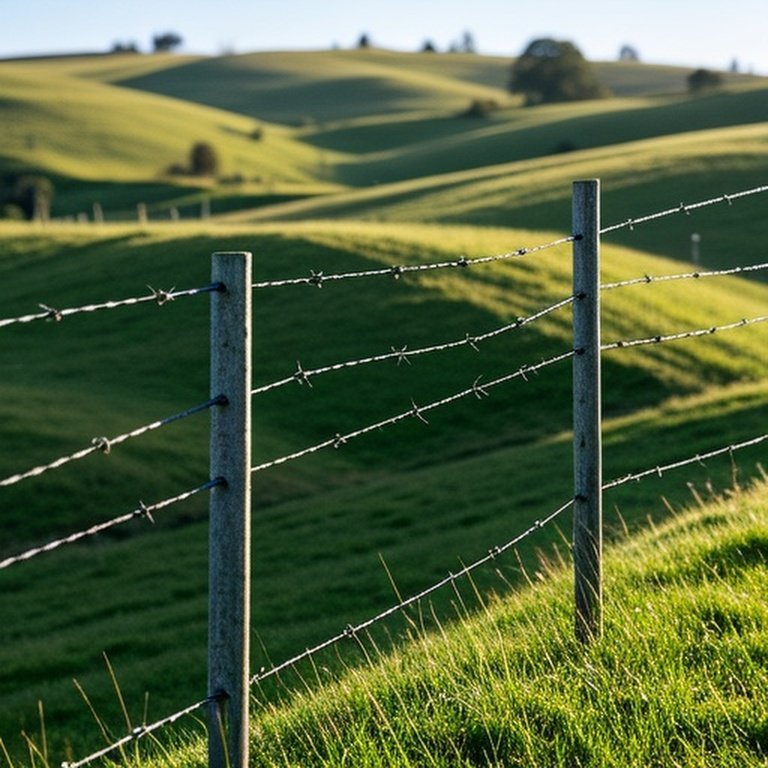
Uneven ground is where many fencing systems fail first. Slopes change how force is distributed, create gaps under wires, and increase stress on posts and anchors. High-tensile wire is often recommended for challenging terrain, but it is also less forgiving of poor layout than traditional wire.
This question matters because terrain-related failures are usually blamed on materials instead of design. Knowing whether high-tensile wire truly works on slopes—and under what conditions—helps prevent sagging fences, repeated repairs, and livestock escapes on difficult ground.
Key Factors to Consider
- Slope severity: gentle grades versus sharp elevation changes
- Post spacing adjustments: closer spacing on slopes reduces stress
- Brace and anchor strength: downhill tension concentrates force
- Wire height control: preventing gaps under the fence line
- Livestock movement patterns: pressure increases on slopes
Detailed Explanation
High-tensile wire performs well on uneven or sloped terrain because it is designed to stay under constant tension rather than relying on weight or rigidity. This allows the wire to follow ground contours more naturally than many traditional fencing systems. On gradual slopes, high-tensile wire can maintain consistent height and tension with minimal adjustment when post spacing is planned correctly.
The challenge arises where elevation changes abruptly. Slopes concentrate tension at downhill posts and corner assemblies, increasing structural demand. In these locations, high-tensile wire itself is rarely the failure point; posts, braces, or anchors usually fail first. This is why terrain-friendly design is essential. Reducing post spacing, strengthening braces, and isolating tension at slope transitions prevents long-term problems.
Another issue on slopes is ground clearance. As terrain drops away, wire height relative to the ground increases, creating gaps livestock may attempt to pass through. This is addressed by adjusting strand spacing or adding ground-following wires in critical areas. Simply tightening the wire does not solve this problem and can increase structural stress.
When installed with terrain in mind, high-tensile fencing offers excellent performance on uneven ground. When installed as if the land were flat, it exposes its limitations quickly. The wire is capable—but only when the system is designed to work with the landscape rather than against it.
How Cattle Behavior Affects This Choice
Cattle behavior changes on slopes. Animals often travel along contour lines, congregate mid-slope, and apply downhill pressure when moving toward water or feed. This increases force on lower posts and anchors. High-tensile wire handles steady pressure well, but repeated downhill leaning can overload weak structures.
Electrification greatly improves performance on slopes by reducing physical contact. Without electricity, cattle may test fences more aggressively on inclines, especially where footing is uneven. Predictable movement patterns and proper pressure-zone reinforcement are key to long-term success.
Calves vs Mature Cattle Considerations
Calves navigate slopes cautiously but are more likely to explore gaps created by elevation changes. Proper strand spacing is critical to prevent pass-through attempts on uneven ground.
Mature cattle apply more force when moving uphill or downhill. High-tensile wire can withstand this pressure, but post spacing and brace depth must be designed for adult weight and momentum. Most slope-related failures with adult cattle are structural, not material-related.
Terrain, Visibility, and Pressure Zones
Visibility becomes more important on uneven ground. Slopes change sightlines, increasing accidental contact with thin wires. Markers or electric offsets reduce panic responses and fence testing.
Pressure zones on slopes—such as gates placed on inclines or water points below grade—require extra reinforcement. These areas experience repeated stress regardless of fencing type. High-tensile systems perform best when these zones are anticipated and strengthened during installation.
When This Works Well
- Rolling or moderately sloped terrain
- Electrified high-tensile systems
- Adjusted post spacing on inclines
- Reinforced downhill anchors and braces
- Predictable livestock movement patterns
When This Is Not Recommended
- Extremely steep terrain without structural reinforcement
- Installations using uniform post spacing regardless of slope
- High-pressure livestock without electrification
- Poor soil conditions lacking anchor stability
- Layouts ignoring ground clearance issues
Alternatives or Better Options
Woven wire fencing can follow terrain but often creates gaps on sharp slopes and requires more posts.
Hybrid systems combining high-tensile wire with ground-following wires or electric offsets often perform best on uneven land.
Flexible fencing systems may offer improved adaptability on highly irregular terrain but usually at higher cost.
Cost, Safety, and Practical Notes
Using high-tensile wire on uneven terrain can increase upfront cost due to closer post spacing and stronger anchors. However, this investment often reduces long-term repairs compared to rigid systems that fail at slope transitions.
From a safety standpoint, controlled tension and good visibility reduce injury risk. Practically, terrain-specific planning is non-negotiable. High-tensile wire works exceptionally well on slopes—but only when the landscape dictates the design rather than convenience.
Quick Takeaway
High-tensile wire can be used successfully on uneven or sloped terrain when post spacing, bracing, and strand layout are adjusted to match elevation changes rather than treating the ground as flat.