Short Answer
High-tensile wire fencing is best for large-scale, low-maintenance systems where flexibility, long runs, and cost efficiency matter. Woven wire fencing is better for mixed livestock, uneven terrain, and situations requiring consistent physical containment. The better choice depends on livestock behavior, terrain, installation skill, and whether containment relies on strength or behavioral control.
Why This Question Matters
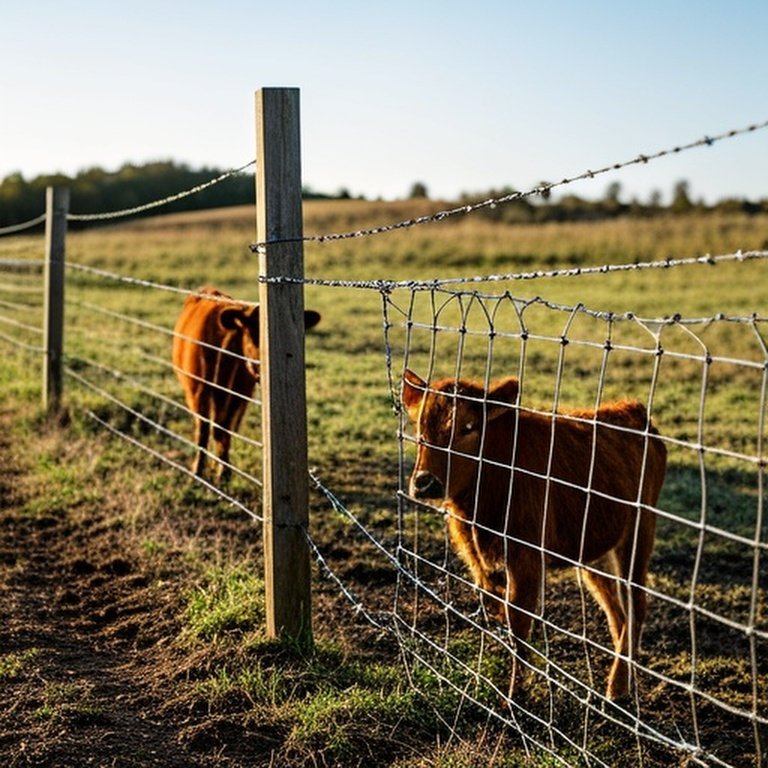
High-tensile wire and woven wire are often recommended by different groups for very different reasons, which makes choosing between them confusing. One emphasizes tension and efficiency; the other emphasizes physical containment and forgiveness. Selecting the wrong system can lead to escapes, injuries, or expensive retrofits. This question matters because these two fence types represent fundamentally different design philosophies. Understanding how they behave under livestock pressure and real farm conditions helps ensure the fence supports your operation rather than becoming a recurring problem.
Key Factors to Consider
- Livestock behavior and pressure patterns
- Terrain variability and ground conditions
- Installation precision and skill level
- Fence length and long-term scalability
- Maintenance tolerance and repair access
Detailed Explanation
High-tensile wire fencing uses smooth, high-strength wire tensioned tightly between posts. Its strength comes from tension rather than mass. When animals contact the fence, properly tensioned wire flexes slightly and returns to shape. This makes high-tensile systems efficient over long distances, using fewer posts and less material per foot.
Woven wire fencing relies on interwoven horizontal and vertical wires that create a flexible mesh. When livestock push against it, the fence distributes force across many wires and posts. This makes woven wire highly forgiving and reliable, especially where animals regularly test boundaries or terrain is uneven.
The key difference is how failure occurs. High-tensile systems depend heavily on correct installation and tension. Poor bracing, improper tensioning, or skipped details can cause large sections to fail at once. Woven wire tends to fail gradually, giving warning signs before full failure.
The short answer holds because high-tensile wire excels in efficiency and scalability, while woven wire excels in tolerance and containment. One rewards precision and planning; the other provides margin for error. Choosing between them means deciding whether your operation prioritizes efficiency or forgiveness.
How Livestock Behavior Affects This Choice
Livestock pressure is the deciding factor between these two systems. Calm animals trained to respect boundaries work well with high-tensile fencing, especially when electric offsets are used. The fence relies on behavior modification rather than brute strength.
Woven wire is better suited to unpredictable behavior. Animals that crowd, rub, or lean repeatedly place sustained pressure on fences. Woven wire absorbs this pressure and spreads it across the structure. In herds with frequent movement, competition, or mixed species, woven wire provides a safety margin high-tensile wire does not.
Calves vs Mature Cattle Considerations
High-tensile fencing can work well for mature cattle that are accustomed to fencing and management routines. However, it is less forgiving for calves or young animals, which may not recognize boundaries immediately.
Woven wire is safer for young livestock because it provides a continuous physical barrier with consistent openings. As animals grow, woven wire continues to perform without major system changes. Scalability favors woven wire in operations that regularly cycle livestock ages.
Terrain, Visibility, and Pressure Zones
High-tensile wire performs best on flat or gently rolling terrain where tension can remain consistent. Uneven ground complicates installation and increases stress on anchor points.
Woven wire adapts better to slopes, dips, and irregular ground. Visibility is lower than high-tensile systems but physical presence compensates. Pressure zones—corners, gates, feeding areas—are better handled by woven wire unless high-tensile systems are heavily reinforced.
When This Works Well
- High-tensile for long perimeter fencing
- Large pastures with low stocking density
- Experienced installers and proper equipment
- Operations prioritizing efficiency and scale
- Use with electric offsets for behavior control
When This Is Not Recommended
- High-tensile for young or mixed livestock
- Uneven terrain without proper bracing
- Operations lacking installation expertise
- Situations requiring immediate physical containment
- Areas with frequent livestock pressure
Alternatives or Better Options
Combination systems often deliver the best results. Woven wire paired with electric offsets reduces pressure and extends fence life. High-tensile systems with multiple electrified strands improve containment reliability. In predator-sensitive areas, physical mesh combined with electric deterrents outperforms either system alone.
Cost, Safety, and Practical Notes
High-tensile fencing usually costs less per foot and requires fewer posts, but installation precision increases labor complexity. Mistakes are expensive to fix. Woven wire costs more upfront but reduces long-term repair risk. From a safety perspective, woven wire is more forgiving during animal contact, while high-tensile wire requires careful tension management to prevent injury. Practically, the right choice balances cost savings against tolerance for error and livestock variability.
Quick Takeaway
Choose high-tensile wire for efficiency, long runs, and behavior-trained livestock. Choose woven wire for reliability, mixed herds, uneven terrain, and physical containment. The best fence is the one that matches how your livestock actually behave—not just how they should behave.