Short Answer
Fence posts should typically be set at least one-third of their total length into the ground. For most farm fences, that means 2 to 3 feet deep for standard 6–8 foot posts. In colder climates, posts must extend below the frost line to prevent heaving and long-term instability.
Why This Question Matters
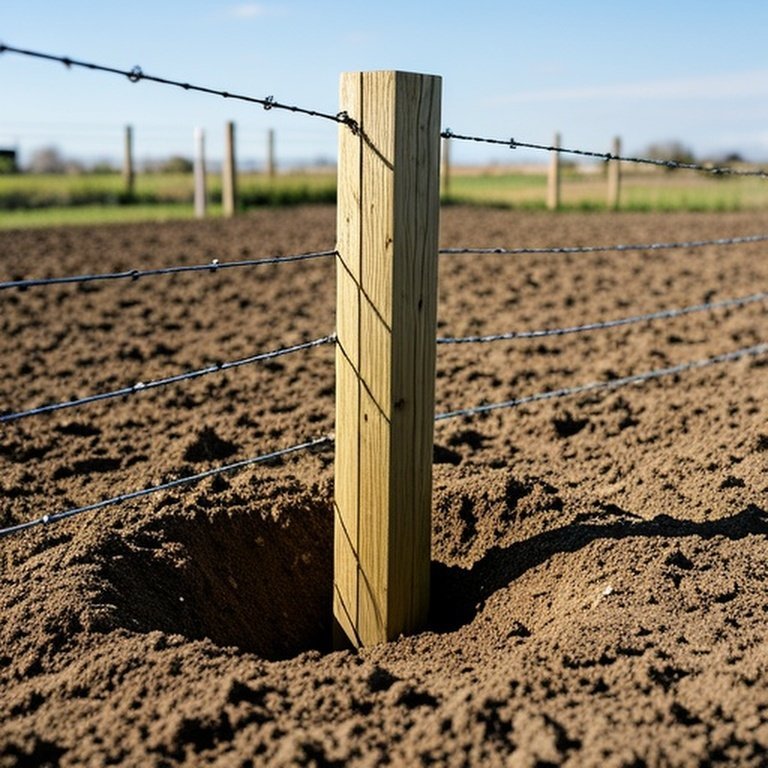
Fence depth directly determines stability. Posts that are too shallow will lean, loosen, or shift under tension, livestock pressure, wind load, or seasonal soil movement. Most fence failures begin underground—not in the wire or rails.
On farms and ranches, posts must withstand animal leaning, gate strain, weather cycles, and soil expansion. A fence might look straight on day one but fail within a year if posts are improperly set. Correct depth protects your labor investment and reduces long-term maintenance costs.
Understanding proper depth also helps you choose the right post length before purchasing materials. Too many DIY builders buy 6-foot posts only to realize they needed 8-foot posts to achieve proper burial depth.
Key Factors to Consider
- Post height above ground determines minimum burial depth
- Soil type affects holding strength and compaction
- Frost line depth varies by region and climate
- Corner and gate posts require deeper setting
- Fence type influences load and tension forces
Detailed Explanation
The general rule for fence post depth is one-third of the total post length. For example, if you need a finished fence height of 4 feet, you typically use a 6-foot post set 2 feet deep. For a 5-foot finished fence, an 8-foot post set 3 feet deep is common. This ratio provides structural balance between above-ground leverage and below-ground stability.
However, soil type changes everything. In sandy or loose soil, deeper installation improves anchoring. Clay soils may hold better but expand and contract with moisture, increasing frost movement risk. Rocky soil may prevent deep digging, requiring driven posts instead of set-in-hole methods.
In colder climates, frost depth is critical. Posts must extend below the frost line to prevent frost heave, which pushes shallow posts upward during freeze-thaw cycles. This is especially important for gate and corner posts that carry heavy tension loads.
Not all posts require the same depth. Line posts can often be set 2 feet deep for moderate livestock fencing, while corner, end, and gate posts should be buried 3–4 feet and properly braced. These structural anchor points absorb wire tension and animal pressure. Investing extra effort at anchor posts significantly improves fence longevity.
How Cattle Behavior Affects Post Depth
Cattle lean, rub, and apply consistent lateral pressure to fence lines. Standard line posts at 2 feet depth may suffice for calm herds, but high-traffic areas near water, feed, or gates benefit from deeper anchoring.
For heavy livestock pressure, deeper corner posts with brace assemblies distribute tension better and prevent gradual leaning over time.
Calves vs Mature Cattle Considerations
Calves apply less force but may test lower wires or squeeze between gaps. Mature cattle apply body weight directly to the fence. Posts supporting woven or high-tensile wire for cattle should prioritize depth and bracing.
If the fence is designed primarily for smaller livestock like sheep or goats, post depth can remain standard, but predator pressure may require stronger corner bracing.
Terrain, Visibility, and Pressure Zones
Sloped terrain increases leverage forces on posts. Posts placed downhill from tensioned wire may require extra depth. Wind-exposed areas also increase lateral stress.
Pressure zones—corners, bends, gates, and areas near mineral feeders—require deeper or reinforced posts to prevent structural failure.
When This Works Well
- Standard pasture fencing under moderate livestock pressure
- Soil that compacts firmly around driven or tamped posts
- Temperate climates with shallow frost lines
- Straight fence runs with minimal directional tension
- Properly braced corner and gate assemblies
When This Is Not Recommended
- Extremely sandy or marshy soil without reinforcement
- Regions with deep frost requiring extended burial
- High-tension fencing without brace assemblies
- Heavy animal traffic areas with shallow-set posts
- Large gate openings without reinforced anchor posts
Alternatives or Better Options
Driven Steel T-Posts
In rocky soil, driving steel posts 18–24 inches deep can provide strong stability without digging large holes.
Concrete-Set Wood Posts
Concrete improves stability in loose soil but may trap moisture and accelerate rot if not properly installed.
Helical or Screw Anchors
For high-tension or gate systems, ground anchors increase holding power without extreme digging depth.
Cost, Safety, and Practical Notes
Deeper posts require longer materials, increasing upfront cost. However, replacing leaning posts later is far more expensive in labor and materials.
Avoid shallow installation to save time. Improper depth leads to wire sagging, gate misalignment, and premature fence failure.
Always call local utility services before digging. Underground lines can pose serious hazards.
When digging deeper than 3 feet, use proper tools and stable footing. Post hole collapse and back strain are common DIY injuries.
Quick Takeaway
Fence posts should generally be buried one-third of their total length—typically 2 to 3 feet for most farm fences—and deeper for corner or gate posts. Soil type, frost depth, and livestock pressure all influence the final depth decision. Proper anchoring below ground determines how long your fence stands above it.