Short Answer
To prevent fence posts from leaning in clay soil, install them deeper than standard depth, improve drainage with gravel backfill, compact soil in layers, and reinforce corner posts with proper bracing. Clay expands when wet and shrinks when dry, so stability depends on depth, drainage control, and structural support—not just post material.
Why This Question Matters
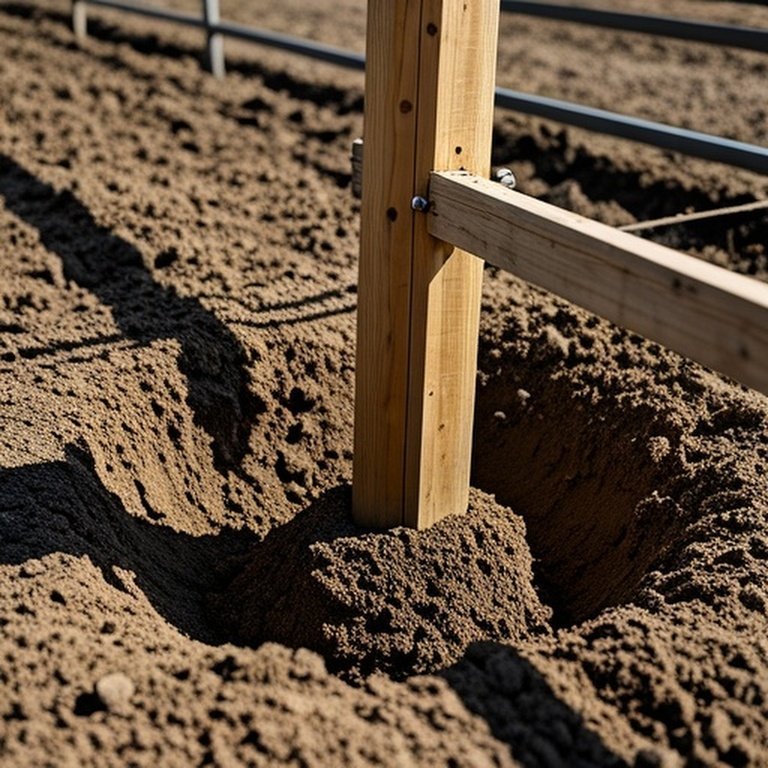
Clay soil is one of the most challenging conditions for fence installation. It holds water, swells during wet periods, and contracts dramatically during dry spells. This constant expansion and shrinkage loosens soil around posts, causing gradual leaning, heaving, or even complete failure over time.
Many fence problems blamed on weak posts are actually soil movement issues. In livestock settings, leaning posts quickly turn into sagging wire, broken insulators, and structural failure—especially under animal pressure. Fixing failed posts after installation is far more expensive and labor-intensive than building them correctly from the start. Understanding how clay behaves is the key to long-term fence stability.
Key Factors to Consider
- Clay expansion and shrinkage cycles
- Proper post depth beyond frost line
- Gravel backfill for drainage control
- Layered compaction during installation
- Strong corner and brace assemblies
Detailed Explanation
Clay soil behaves differently from sandy or loamy soil. When saturated, it becomes soft and exerts outward pressure as it swells. When dry, it shrinks and leaves gaps around posts. This repeated movement weakens the soil’s grip and causes posts to lean gradually.
The most effective prevention strategy is deeper installation. Posts in clay should typically be set at least one-third of their total length into the ground, and often deeper in high-moisture or frost-prone areas. Greater depth increases lateral resistance and reduces movement during seasonal soil shifts.
Drainage is equally important. Backfilling with compacted gravel rather than pure clay helps water drain away from the post. Gravel reduces moisture retention and limits swelling pressure. Compacting soil or gravel in layers during installation prevents air pockets and increases structural hold.
Corner posts and gate posts require special reinforcement because they carry the most tension. Proper H-brace or diagonal brace assemblies distribute tension forces and reduce leaning caused by wire strain. Without bracing, even deep posts can shift over time.
Ultimately, preventing leaning in clay soil is about managing moisture and distributing structural load effectively.
Livestock Behavior and Clay Soil Conditions
How Cattle Behavior Affects This Choice
Cattle frequently push or rub against fences, especially near feeding or watering areas. In clay soil, softened ground after rain increases post movement when animals apply pressure.
Reinforced bracing and strategic placement away from high-traffic zones reduce leaning risk.
Calves vs Mature Cattle Considerations
Calves exert less direct pressure but often cluster along fence lines. Mature cattle apply significantly more force, especially during breeding season or herd movement.
In clay-heavy environments, mature cattle operations require deeper posts and stronger bracing systems.
Terrain, Visibility, and Pressure Zones
Low-lying clay areas retain water longer, increasing soil expansion. Installing posts on slightly elevated or better-drained lines reduces swelling stress.
Planning fence alignment to avoid persistent wet zones improves long-term stability.
When This Works Well
- Deep-set posts with compacted gravel backfill
- Properly installed H-brace assemblies at corners
- Installation during moderate soil moisture conditions
- Routine inspection after extreme wet-dry cycles
When This Is Not Recommended
- Shallow post installation in heavy clay
- Backfilling only with loose, uncompacted clay
- Skipping brace assemblies on tensioned fence lines
- Installing during extreme saturation or drought
Alternatives or Better Options
Steel Posts in Clay Soil
Galvanized steel posts resist rot and may tolerate minor soil movement better than untreated wood, though depth and compaction still matter.
Concrete Footings with Drainage Base
For gate or corner posts, a gravel base with properly sloped concrete improves anchoring. However, drainage must be managed carefully to avoid trapped moisture.
Relocating Fence Lines to Better-Drained Soil
If possible, shifting fence lines slightly uphill or away from persistent clay pockets significantly reduces long-term leaning issues.
Cost / Safety / Practical Notes
Deeper installation and gravel backfill increase initial labor and material costs. However, resetting leaning posts later requires removing wire tension, excavating soil, and reinstalling braces—often doubling the long-term expense.
Concrete can increase stability but must be installed with drainage in mind. Solid concrete plugs in poorly drained clay can trap water and accelerate wood rot at the ground line.
Safety considerations include trench wall collapse in saturated clay and equipment instability on slick surfaces. Installation is best performed when soil is slightly moist but not waterlogged.
Investing in depth, drainage, and bracing at installation consistently prevents costly structural failures in clay soil environments.
Quick Takeaway
In clay soil, preventing leaning is about depth, drainage, and structural bracing. Set posts deeper than usual, use compacted gravel backfill, reinforce corners properly, and manage moisture exposure to ensure long-term fence stability.