Short Answer
To properly ground an electric fence, install at least three galvanized ground rods, spaced 10 feet apart, driven fully into moist soil, and connect them with a single continuous ground wire to the energizer’s ground terminal. Proper grounding allows electrical energy to return efficiently, ensuring the fence delivers a strong, effective shock every time an animal makes contact.
Why This Question Matters
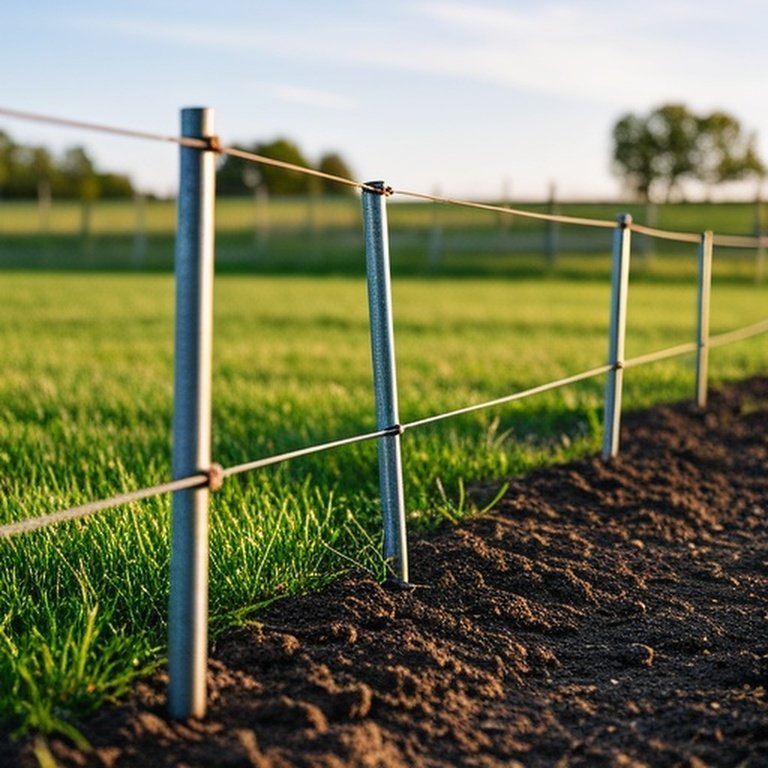
Grounding is the most misunderstood and most critical part of any electric fence system. Many fences fail not because the charger is weak, but because electricity cannot complete the circuit back to the energizer. When grounding is poor, voltage readings drop, shocks feel inconsistent, and livestock begin testing the fence. These failures are often misdiagnosed as animal behavior problems or underpowered energizers. Proper grounding directly determines whether the voltage you generate actually reaches the animal. Without it, even the best fence design will underperform.
Key Factors to Consider
- Soil moisture and conductivity strongly affect grounding performance
- Number, depth, and spacing of ground rods determine energy return efficiency
- Ground wire quality and connections must minimize resistance
- Distance from utility grounds prevents electrical interference
- Seasonal soil conditions change grounding effectiveness over time
Detailed Explanation
An electric fence works as a closed loop. Electricity leaves the energizer, travels through the fence wire, passes through the animal upon contact, and returns to the energizer through the soil and ground system. If the ground system cannot carry that energy back efficiently, the shock felt at the fence is weak regardless of energizer strength.
Proper grounding begins with the right number of ground rods. A single rod is rarely sufficient. Multiple rods increase surface contact with the soil, improving conductivity. These rods must be driven deep enough to reach consistent moisture levels, not just surface soil that dries out quickly. Spacing rods apart prevents them from competing with each other for conductive soil.
Connection quality is just as important as rod placement. Ground rods should be connected with a continuous, corrosion-resistant wire using solid clamps. Loose, rusted, or mixed-metal connections introduce resistance that reduces system performance. The ground wire must run directly back to the energizer’s ground terminal without unnecessary splices.
Location also matters. Ground rods should be placed away from building foundations, utility grounds, and areas with compacted or rocky soil. Moist, shaded areas often perform better year-round. Even a well-installed ground system should be tested periodically, especially during dry or frozen conditions, when soil conductivity drops. When grounding is done correctly, voltage readings stabilize, shocks become consistent, and livestock quickly learn to respect the fence.
How Cattle Behavior Affects This Choice
Cattle rely heavily on consistent feedback when interacting with fences. If grounding is poor, shocks may vary from one contact to the next. This inconsistency encourages cattle to test the fence repeatedly. Slow, steady pressure behavior allows them to discover weak systems without immediate consequences. Proper grounding ensures every contact delivers the same sharp deterrent, reinforcing avoidance behavior early and preventing learned fence challenges.
Calves vs. Mature Cattle Considerations
Calves often react strongly even when grounding is marginal, which can hide grounding deficiencies. As animals mature, thicker hides and greater confidence reduce shock sensitivity. Grounding systems that worked “well enough” for calves may fail entirely with adults. Designing grounding for mature livestock prevents costly retrofits and retraining as animals grow.
Terrain, Visibility, and Pressure Zones
High-pressure areas such as corners, gates, and feeding zones expose grounding weaknesses first. Poor visibility or uneven terrain increases accidental contact, which still requires a strong shock to be effective. In dry, rocky, or elevated terrain, grounding performance drops faster, making rod placement and depth even more important. These zones benefit most from robust grounding systems.
When This Works Well
- Soil retains moisture through most of the year
- Ground rods are deep and properly spaced
- Connections are corrosion-free and secure
- Fence voltage is tested under varying conditions
- Livestock are already familiar with electric fencing
When This Is Not Recommended
- Only one shallow ground rod is used
- Ground rods are placed in dry, compacted soil
- Mixed metals cause corrosion at connections
- Grounding is shared with building electrical systems
- Seasonal soil changes are ignored
Alternatives or Better Options
In difficult soil conditions, expanding the ground system is often more effective than upgrading the energizer. Adding additional ground rods, relocating them to wetter soil, or using longer rods improves performance. In extreme cases, a ground-return wire system can supplement soil grounding. These approaches improve reliability without increasing voltage output.
Cost, Safety, and Practical Notes
Proper grounding adds upfront cost through additional rods, wire, and labor, but it prevents long-term losses from escapes, damaged fences, and repeated troubleshooting. From a safety standpoint, grounding improves predictability rather than increasing risk. Electric fences operate at low amperage, and effective grounding ensures the system behaves as designed. Most safety issues arise from improper installations, not from well-grounded systems.
Complete Installation Guide
Quick Takeaway
A properly grounded electric fence depends on multiple deep ground rods, good soil contact, and solid connections. When grounding is done correctly, voltage stabilizes, shocks become consistent, and livestock quickly learn to respect the fence.