Short Answer
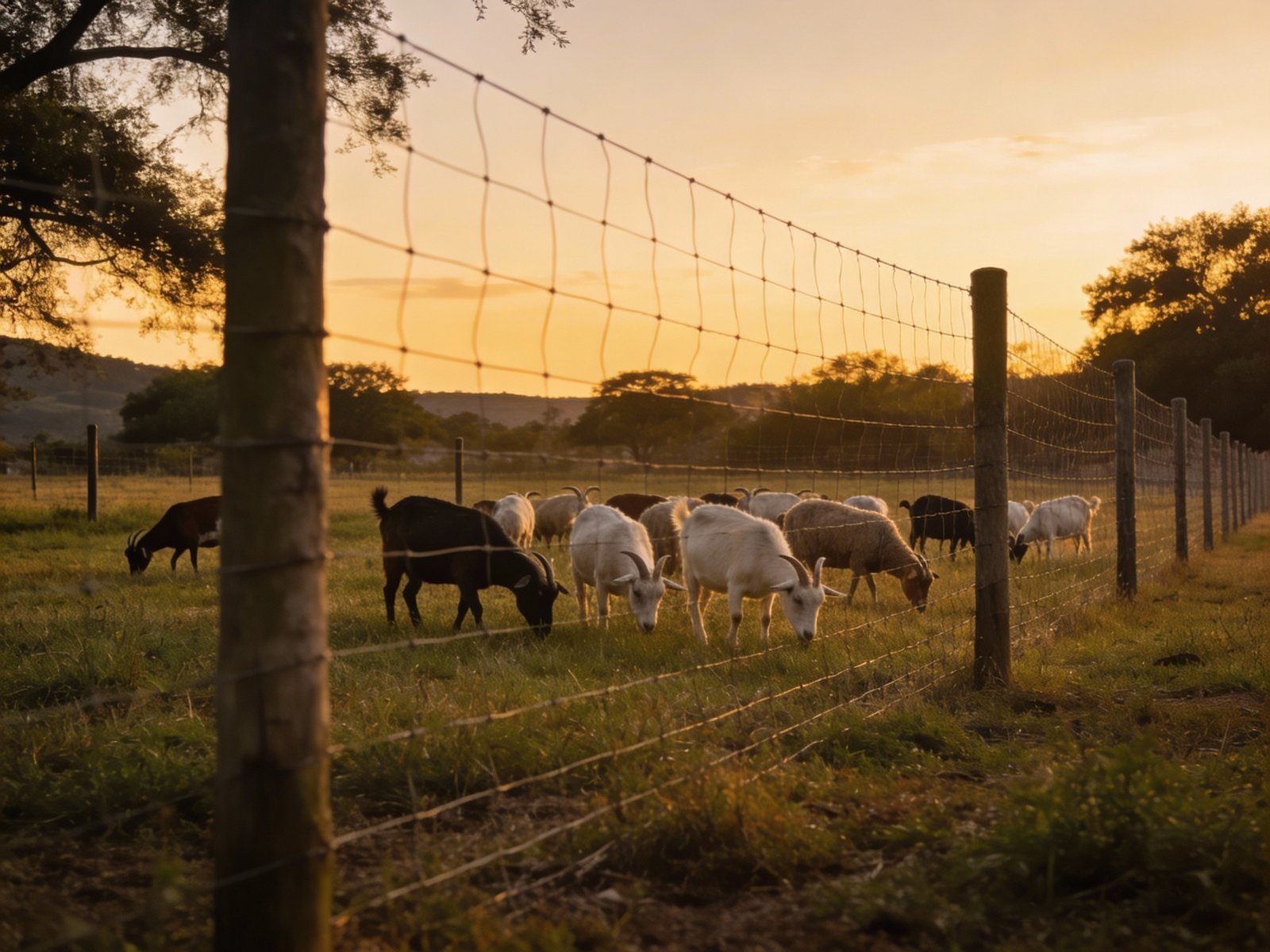
To protect goats from predators, fencing must combine a tight physical barrier with height and deterrence. Most effective systems use well-tensioned woven wire fencing at least 4–5 feet tall, often reinforced with electric offset wires. Fences must prevent climbing, squeezing, and digging while remaining reliable even during power loss or poor weather.
Why This Question Matters
Predator attacks are one of the leading causes of goat losses, especially for small and backyard herds. Many owners assume that any fence tall enough to hold goats will also stop predators, only to discover gaps, climbing access, or nighttime breaches. Once predators succeed, they often return repeatedly. Poor fencing decisions can result in sudden animal loss, ongoing stress to the herd, and expensive emergency upgrades. This question matters because fencing is usually the first and last line of defense when no human supervision is present.
Key Factors to Consider
- Predator type and behavior, including climbing, digging, and squeezing tendencies
- Fence height and ground clearance consistency along the entire perimeter
- Wire spacing and tension that prevent head or body entry
- Fence reliability during power outages or severe weather
- Pressure points near corners, gates, and shelter areas
Detailed Explanation
Protecting goats from predators requires understanding that predators interact with fences differently than goats do. While goats primarily test fences through pressure and curiosity, predators actively search for weaknesses. Coyotes, dogs, and foxes often probe the bottom of fences for gaps, while larger predators may climb or push against weak sections. A fence that merely discourages goats is often insufficient against determined predators.
The most reliable protection comes from physical exclusion first. Woven wire fencing with tight, consistent spacing prevents predators from squeezing through and reduces deformation when pressure is applied. Fence height matters because many predators are capable jumpers or climbers; fences under four feet are easily breached. Just as important is ground contact—gaps caused by erosion, uneven terrain, or poor installation often become entry points.
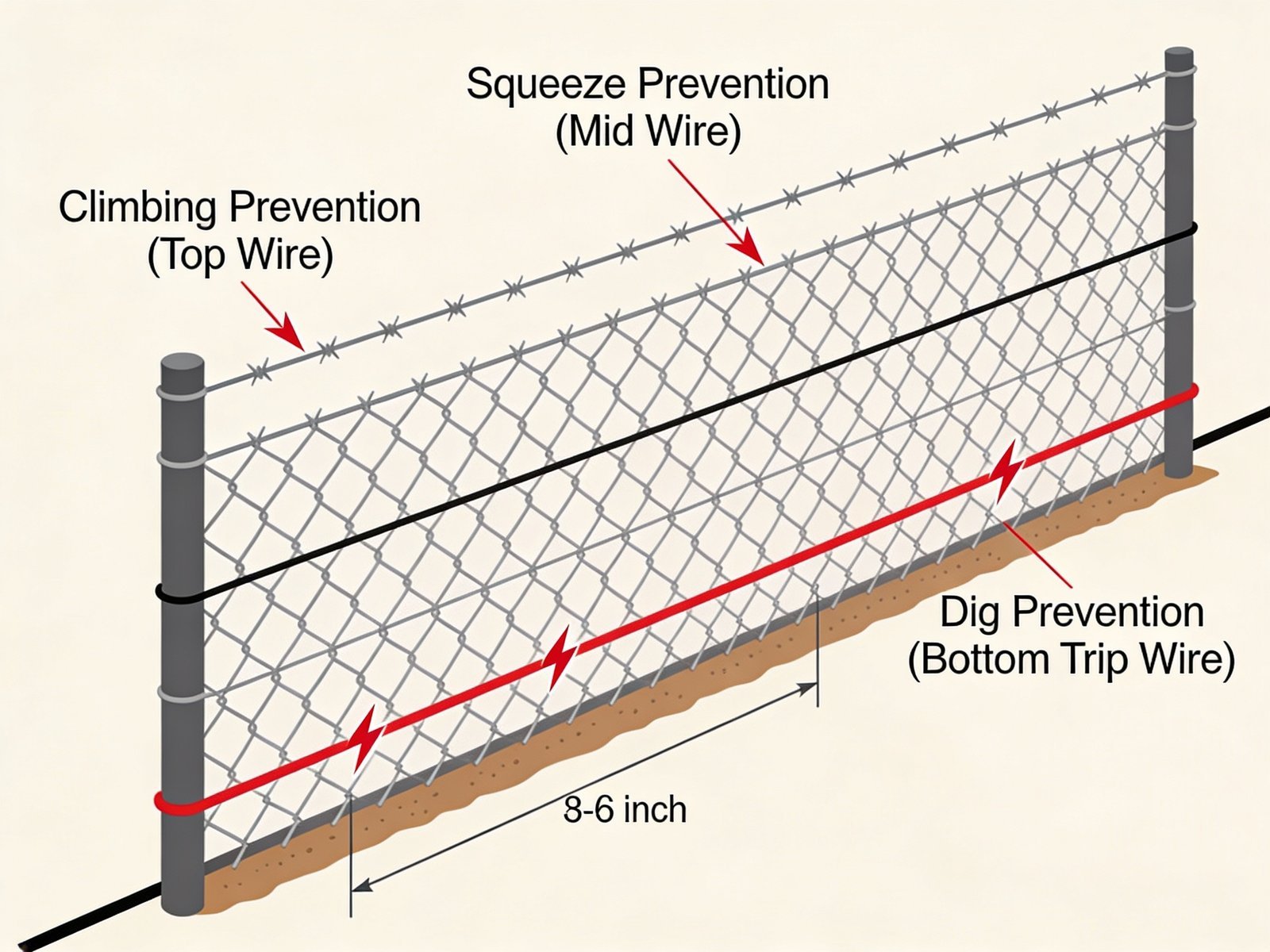
Electric fencing plays a supporting role rather than acting as the primary barrier. When used correctly, electric offset wires discourage climbing, digging, and nose testing, especially at the top and bottom of a woven wire fence. However, electric fencing alone depends on perfect conditions: consistent voltage, proper grounding, and regular maintenance. Any lapse reduces protection instantly.
The key principle is redundancy. Predator-resistant fencing works not because it is intimidating, but because it removes opportunity. When predators cannot climb, dig, or squeeze through without significant effort or discomfort, they move on to easier targets.
How Predator Behavior Changes Fence Requirements
Different predators challenge fences in different ways. Coyotes often dig or push under weak spots, while dogs may charge repeatedly at corners or gates. Raccoons and foxes exploit small gaps and flexible wire. This means that fencing designed only for height may still fail if ground clearance and wire spacing are ignored. Predator pressure also increases at night, when goats are less active and visibility is lower. Fences that rely on animals “respecting” boundaries tend to fail under these conditions.
Terrain, Visibility, and Pressure Zones
Terrain dramatically affects predator fencing performance. Slopes reduce effective fence height, while rocky or loose soil encourages digging. Vegetation buildup can short electric wires and create hidden gaps. Pressure zones—such as corners, gates, and areas near shelters—experience repeated testing and must be reinforced. Successful predator fencing anticipates these zones rather than reacting after a breach occurs.
When This Works Well
- Permanent perimeter fencing designed specifically for goats and predator exclusion
- Properties with consistent maintenance and regular fence inspections
- Areas with moderate predator pressure and known predator behavior patterns
- Systems combining physical barriers with electric deterrents
When This Is Not Recommended
- Relying on electric fencing alone in predator-heavy regions
- Using cattle or horse fencing with wide spacing for goat protection
- Ignoring ground clearance or terrain variation along fence lines
- Installing fencing without considering nighttime and weather conditions
Alternatives or Better Options
Some operations enhance fencing with guardian animals, night corrals, or double-fence systems. These options exist because fencing alone may not address every predator scenario. Guardian animals add active deterrence, while double fencing increases physical separation. These approaches are most useful where predator pressure is extreme or unpredictable, but they require additional management and cost.
Cost, Safety, and Practical Notes
Predator-resistant fencing costs more upfront but reduces long-term losses. Repairing fences after an attack, replacing animals, or dealing with repeated stress often exceeds the initial savings of lighter fencing. Safety also matters: poorly designed fences can trap predators and goats alike, creating injury risks. The most practical system balances material strength, maintenance capacity, and realistic predator pressure. A fence that works only under perfect conditions is not a protective fence—it is a liability.
Video Demonstration
Why watch this: This video shows real-world predator-resistant goat fencing, including electric offsets, ground clearance, and pressure-point reinforcement.
Quick Takeaway
Effective predator protection for goats starts with physical fencing that removes access, reinforced by electric deterrents where needed. The best fence is the one predators never learn how to defeat.