Short Answer
To repair a leaning fence after heavy rain, first identify whether the issue is soil washout, post rot, or structural failure. Straighten the post, improve drainage, compact or replace surrounding soil with gravel, and reinforce or reset the post if necessary. Severely compromised posts should be replaced rather than temporarily braced.
Why This Question Matters
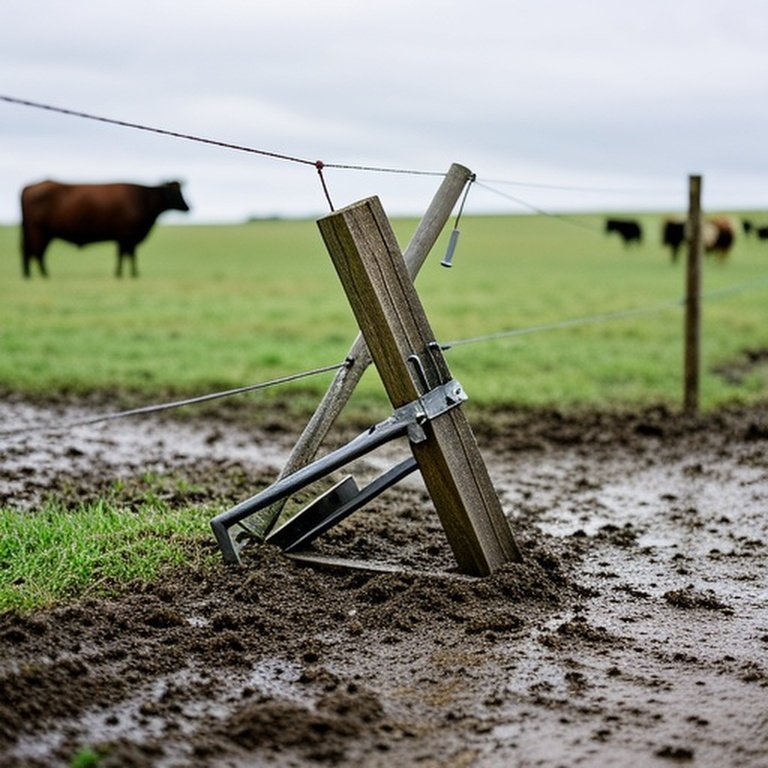
Heavy rain weakens fence stability by saturating soil, reducing compaction, and increasing lateral pressure. When soil becomes waterlogged, it loses its ability to grip fence posts securely. Even properly installed posts can shift if drainage is poor or if runoff channels form along the fence line.
Ignoring a leaning fence after rain can lead to progressive structural failure. As posts lean, wire tension becomes uneven, brace assemblies take additional strain, and adjacent posts may begin shifting. In livestock settings, weakened fences also increase escape risk. Repairing the issue quickly prevents small alignment problems from turning into costly structural rebuilds.
Key Factors to Consider
- Soil type and drainage conditions
- Depth and original installation method of posts
- Degree of post movement or rotation
- Condition of brace assemblies
- Livestock pressure on the affected section
Detailed Explanation
After heavy rain, the most common cause of leaning is soil saturation. When water fills air gaps in the soil, it reduces friction and allows posts to tilt under fence tension or livestock pressure. Before making repairs, allow excess surface water to drain so you can assess true soil stability.
If the post is structurally sound and only slightly leaning, it can often be straightened. Loosen fence tension temporarily if necessary. Pull the post upright using a bar or mechanical jack, then pack crushed gravel firmly around the base. Gravel improves drainage and provides better long-term stability than wet clay backfill.
For more significant lean or soil washout, excavation may be required. Remove soft soil, reset the post to proper depth, and backfill with compacted gravel in layers. In high-moisture zones, adding a slight mound or grading soil away from the post prevents future pooling.
If the post shows rot, cracking, or deep instability, replacement is usually the safest option. Bracing a weakened post may offer temporary correction, but underlying structural failure will return. Proper drainage correction combined with solid reinstallation ensures long-term stability.
At this stage, the key principle should be clear: correcting drainage and soil stability is just as important as straightening the post itself.
How Cattle Behavior Affects This Choice
Cattle often push or rub against fences, especially after rain when soil is soft. If leaning occurs in high-pressure zones such as feeding or shade areas, reinforcing the post may be necessary even after soil stabilization. Installing an offset electric wire can reduce repeated stress on newly reset posts.
Calves vs Mature Cattle Considerations
Calves exert less lateral force, so moderate correction may suffice. Mature cattle apply significant pressure, and a slightly weakened post may fail again quickly. In adult cattle paddocks, consider upgrading line posts or strengthening brace assemblies when repairing rain-related lean.
Terrain, Visibility, and Pressure Zones
Sloped terrain increases runoff velocity, often causing soil erosion around downhill posts. Low-lying areas may experience repeated saturation cycles. Identifying water flow patterns helps prevent future leaning by adjusting grading or adding drainage channels alongside fence lines.
When This Works Well
- Lean is recent and caused by temporary soil saturation
- Post wood remains solid and structurally sound
- Fence tension is not excessively high
- Drainage improvements are implemented
- Adjacent posts remain stable
When This Is Not Recommended
- Post shows internal rot or splitting
- Lean exceeds safe correction angle
- Corner or brace posts have shifted
- Soil repeatedly erodes in the same area
- Fence line experiences chronic flooding
Alternatives or Better Options
Replace with Treated or Steel Posts
In consistently wet areas, upgrading to pressure-treated or galvanized steel posts reduces rot risk and improves durability.
Install Proper Brace Assemblies
Upgrading corner and end braces distributes tension more evenly, preventing lean after heavy rainfall.
Improve Drainage Along Fence Line
Adding gravel trenches or shallow diversion channels reduces water pooling and long-term soil destabilization.
Cost, Safety, and Practical Notes
Minor leaning corrections using gravel backfill are relatively low cost. Replacing posts or rebuilding brace assemblies increases labor but prevents repeated failures. Investing in drainage improvements often saves money over time by reducing recurring repairs.
Safety is important during correction. Fence wire may be under tension and can snap if disturbed. Release tension carefully before resetting severely leaned posts. Use protective gloves and eye protection when handling wire or compacting material.
Avoid forcing severely tilted posts upright without soil correction. This often creates hollow gaps underground, leading to rapid failure after the next rainfall.
Long-term stability depends on drainage management and proper compaction—not just realignment.
Quick Takeaway
To repair a leaning fence after heavy rain, correct the underlying soil and drainage issue first, then straighten and properly compact or reset the post. Temporary bracing without drainage improvement usually leads to repeat failure. Stable soil and balanced tension are the keys to lasting repair.