Short Answer
To repair sagging wire after snow or ice load, first remove any remaining weight and inspect posts and braces. If posts are stable, re-tension the wire using a fence stretcher, come-along, or in-line tensioners. Replace stretched or permanently deformed wire sections. If posts shifted under load, reset or reinforce them before tightening the wire.
Why This Question Matters
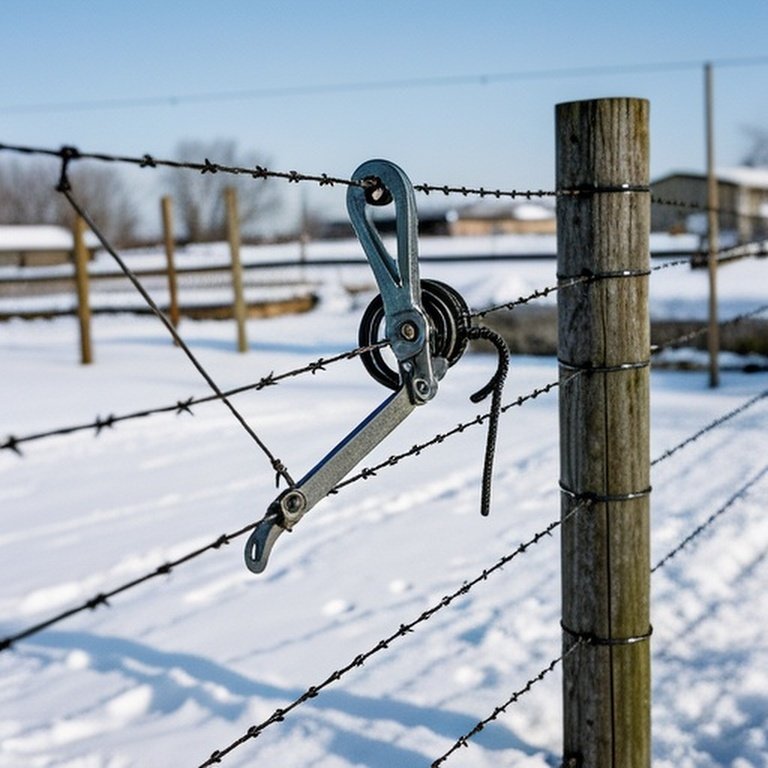
Snow and ice add vertical weight that wire fences are not designed to carry. Unlike livestock pressure, which applies horizontal force, frozen buildup pulls wire downward, stretching it beyond its elastic limit. Even after the snow melts, the wire often remains loose.
Ignoring winter sag weakens fence performance. Loose wire allows livestock to push through, increases wear at staples and clips, and adds strain to corner posts when re-tensioned improperly. Re-tightening without checking structural supports can also cause post movement or brace failure.
Understanding whether the sag is simple tension loss or permanent wire deformation prevents repeated repairs and long-term structural issues. The right approach restores both tension and stability — not just appearance.
Key Factors to Consider
- Whether wire is stretched beyond elastic recovery
- Condition of corner and brace posts
- Type of wire (woven, barbed, high-tensile)
- Length of sagging span
- Soil stability around end posts
Detailed Explanation
When snow or ice accumulates on fencing, the added vertical load pulls wire downward. Most fence wire has limited elasticity. If the load exceeds that limit, the metal permanently stretches. Once stretched, simply tightening at the ends may not restore proper tension evenly across the span.
Start by inspecting the entire section. Check corner posts, brace assemblies, and line posts for movement. Snow load sometimes pulls posts inward, reducing effective tension. Tightening wire against unstable posts can worsen leaning or pull braces out of alignment.
If posts are stable, re-tension the wire gradually. For woven wire, use a stretcher bar and come-along to evenly pull the mesh before re-stapling. For high-tensile wire, adjust in-line tensioners or ratchet strainers. Barbed wire may require re-tensioning at the brace post and re-fastening to line posts.
If the wire has visible kinks, flat spots, or remains loose even after tensioning, replacement of the affected section is usually more effective than repeated tightening. Severely stretched wire loses strength and may fail under future weather events.
Proper repair restores both alignment and structural tension — not just visual straightness.
How Livestock Behavior Affects Winter Wire Damage
After snow melts, livestock often test weakened sections. Cattle may lean against loose wire, increasing sag.
Repaired wire must be fully tensioned to withstand renewed pressure.
Calves vs Mature Cattle Considerations
Calves are more likely to slip under sagging bottom strands.
Mature cattle apply greater leaning pressure, stressing partially repaired sections.
Winter repairs should anticipate spring livestock behavior.
Terrain, Visibility, and Pressure Zones
Low spots collect drifting snow, increasing load concentration.
Fence sections near windbreaks or tree lines often experience uneven ice buildup.
Inspect these areas first during post-winter assessment.
When This Works Well
- Posts and braces remain structurally stable
- Wire shows minor stretch without deformation
- Sag is limited to one span
- Soil around end posts remains firm
- Tension can be evenly restored
When This Is Not Recommended
- Wire has permanent kinks or flat deformation
- Corner posts shifted under load
- Multiple spans show uneven stretch
- Bracing system has loosened
- Repeated winter sag occurs annually
Alternatives or Better Options
Upgrade to High-Tensile Wire
High-tensile systems resist stretch better under snow load and can be re-tensioned seasonally.
Add Additional Line Posts
Reducing span length lowers vertical sag during heavy snow accumulation.
Install Stronger Brace Assemblies
Reinforced H-braces improve resistance against winter tension shifts.
Cost, Safety, and Practical Notes
Re-tensioning existing wire is typically low cost if posts remain stable. Replacing stretched sections increases material expense but improves long-term reliability.
Always release tension carefully before cutting or reworking wire. Frozen wire can snap unexpectedly, causing injury. Wear eye protection and gloves.
Avoid over-tightening to compensate for stretch. Excess tension transfers stress to corner posts and can cause structural failure during the next freeze-thaw cycle.
The long-term solution often involves reducing span length, upgrading wire type, or improving brace strength rather than repeated seasonal tightening.
Quick Takeaway
Repair sagging wire after snow or ice load by first confirming post stability, then re-tensioning or replacing stretched sections. If structural supports shifted, fix those before tightening. Proper repair restores true tension — not just visual straightness — and prepares the fence for future winter loads.