Composite livestock fencing typically lasts 20–30 years outdoors when properly installed and maintained. Its longevity comes from resistance to rot, rust, and UV degradation, unlike wood or metal fencing. Actual lifespan depends on climate, livestock pressure, installation quality, and how well high-stress areas such as corners and gates are reinforced.
Why This Question Matters
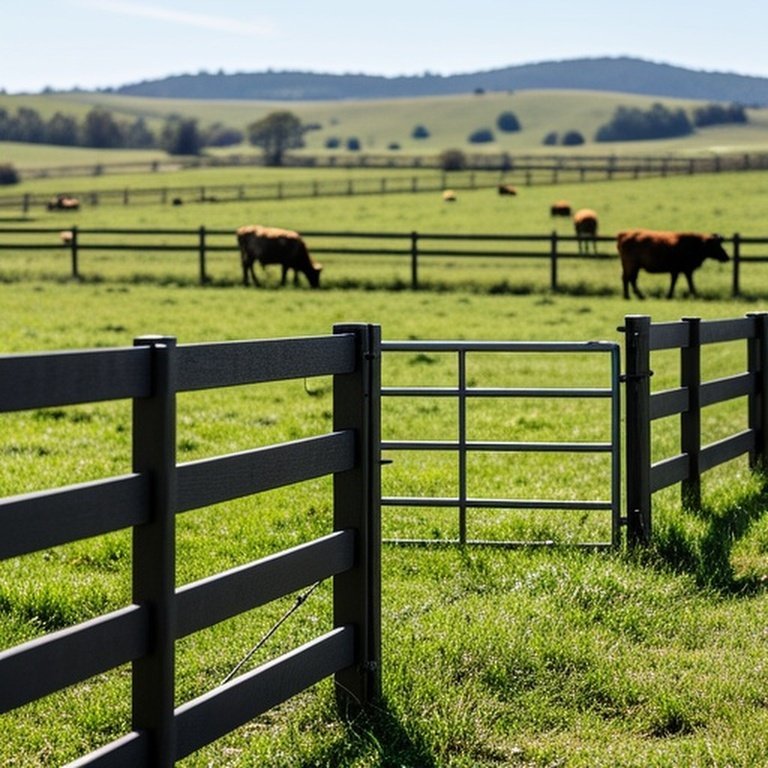
Fence lifespan directly affects total ownership cost, labor planning, and long-term safety. Composite fencing is often marketed as “long-lasting” or “maintenance-free,” but these claims mean little without realistic expectations. If a fence degrades prematurely, the result is costly repairs, livestock escapes, or injury risks.
This question matters because outdoor fencing faces constant exposure to sunlight, moisture, temperature swings, and animal pressure. Understanding how long composite fencing actually lasts—and why—helps livestock owners decide whether higher upfront costs translate into real long-term value.
Key Factors to Consider
- UV exposure: long-term sunlight resistance and material stabilization
- Moisture and climate: resistance to rot, corrosion, and freeze–thaw cycles
- Livestock pressure patterns: leaning versus repeated aggressive testing
- Installation quality: post spacing, tensioning, and corner construction
- Stress concentration areas: gates, corners, and feeding or watering points
Detailed Explanation
Composite livestock fencing is engineered to withstand outdoor exposure far better than traditional wood or untreated metal. Its materials do not rot, rust, or splinter, which eliminates the most common failure modes seen in conventional fencing. When exposed to sun and moisture, quality composite materials maintain structural integrity rather than slowly degrading.
The expected lifespan of 20–30 years assumes correct installation and appropriate use. Composite fencing does not rely on coatings or treatments that wear off over time.
However, longevity is not automatic. Composite fencing is designed to flex under pressure, and repeated stress in high-impact areas can shorten its effective life if the system is not reinforced.
When properly installed and used within its intended pressure range, composite fencing ages predictably rather than catastrophically.
How Cattle Behavior Affects This Choice
Cattle behavior plays a major role in how long composite fencing lasts outdoors.
Problems arise when cattle repeatedly test fences or push in groups.
Calves vs Mature Cattle Considerations
Calves place relatively low physical stress on fencing, so composite materials typically experience minimal wear.
Mature cattle exert significantly more pressure due to weight and momentum.
Terrain, Visibility, and Pressure Zones
Terrain affects longevity by altering how tension and pressure are distributed.
Visibility also influences lifespan indirectly.
When This Works Well
- Regions with high moisture or corrosion risk
- Operations seeking long-term, low-maintenance fencing
- Calm livestock with predictable movement patterns
- Properly reinforced corners and gate systems
- Perimeter or interior fencing with controlled access points
- Poorly installed systems without adequate post support
- High-pressure containment without reinforcement
- Situations requiring frequent fence relocation
- Extreme crowding near unreinforced gates or corners
- Installations prioritizing lowest upfront cost only
Pressure-treated wood fencing may last 10–15 years outdoors but requires ongoing maintenance and eventual replacement.
High-tensile wire fencing can last decades when maintained, though corrosion and tension loss are long-term concerns.
Hybrid systems using composite rails with steel or treated posts often achieve maximum lifespan by combining durable materials with structural strength.
Composite fencing typically costs more upfront than wood or basic wire systems, but its extended lifespan can offset this through reduced repairs and replacements.
From a practical standpoint, the fence’s lifespan depends more on system design than material marketing.
Composite livestock fencing can last 20–30 years outdoors when properly installed, reinforced, and matched to livestock behavior, making it a durable long-term alternative to wood or traditional wire systems.