Short Answer
In real-world conditions, one electric fence energizer reliably handles about 30–50% of its advertised maximum mileage. Fence load, number of wires, vegetation contact, grounding quality, and livestock pressure all reduce effective range. For consistent performance, energizers should be sized well beyond the actual fence length.
Why This Question Matters
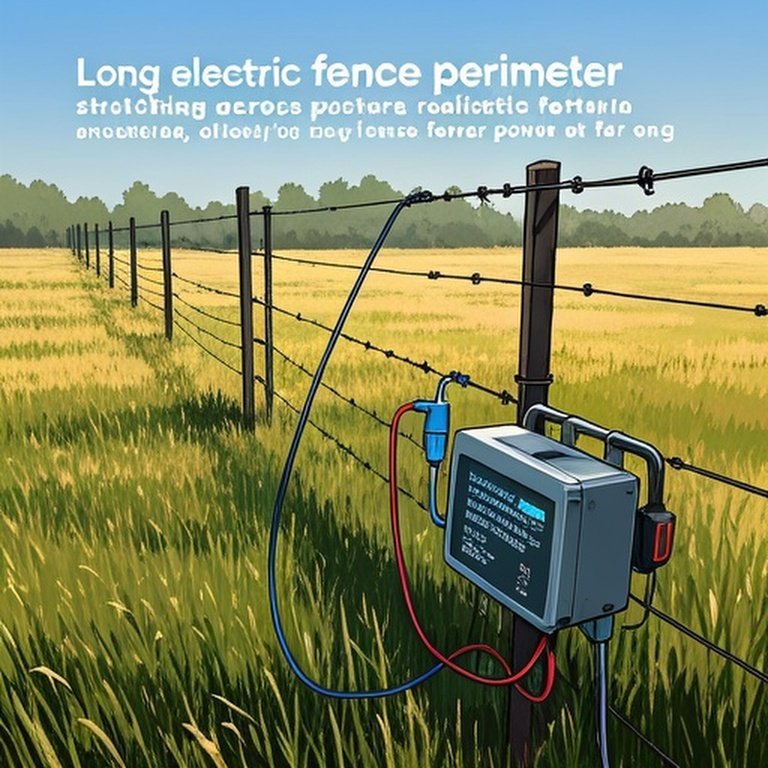
This question usually comes up after a fence is already built and performance is disappointing. Many users trust the “up to X miles” label on an energizer, only to find voltage weak at the far end of the fence. When livestock begin testing boundaries, owners often blame the charger rather than the sizing assumption. Replacing energizers, adding ground rods, or redesigning fences after the fact is costly. Understanding realistic mileage prevents undersized systems and avoids repeated upgrades.
Key Factors to Consider
- Advertised energizer mileage versus real fence conditions
- Total connected wire length, not property perimeter
- Number of strands and fence complexity
- Vegetation contact and seasonal growth
- Grounding system effectiveness
Detailed Explanation
Energizer mileage ratings are based on ideal test conditions: a single clean wire, no vegetation, excellent grounding, and minimal resistance. Real fences rarely operate under these conditions. Every added strand, splice, gate, or connection increases electrical load and shortens effective distance.
For example, an energizer rated for 20 miles may reliably power only 6–10 miles once multiple wires and normal vegetation are introduced. This is not a failure—it is expected behavior. The charger is delivering energy, but that energy is being consumed before it reaches the far end of the fence.
Grounding has a major influence on mileage. Poor grounding limits current return and reduces shock strength across the entire fence, especially at distant points. Many mileage complaints improve dramatically after upgrading grounding, but grounding alone cannot compensate for an undersized energizer.
Livestock pressure further reduces usable distance. Animals that challenge fences require higher voltage at all points, shrinking the practical range even more. Experienced operators plan energizer capacity for worst-case load, not best-case ratings.
Total Wire Length vs Fence Layout
Energizers power total connected wire, not straight-line distance. A compact paddock with multiple strands can place more load on an energizer than a long single-wire perimeter fence. Mileage estimates must account for every energized strand.
Expansion Over Time
Many fence systems expand gradually. Additional paddocks, extra wires, or temporary extensions increase load without resizing the energizer. A system that once worked well may slowly become underpowered without any obvious failure.
Seasonal Load Changes
Vegetation growth, moisture changes, and soil conditions affect load throughout the year. Energizers sized too close to the limit often fail seasonally rather than immediately, creating intermittent performance problems.
When This Works Well
- Energizer is rated for at least twice actual fence mileage
- Grounding system is properly installed
- Fence design minimizes unnecessary connections
- Vegetation is actively managed
When This Is Not Recommended
- Relying on advertised mileage alone
- Powering multi-wire systems with minimal capacity
- Ignoring grounding quality
- Expanding fences without upgrading the energizer
Alternatives or Better Options
Upsizing the Energizer
Choosing a higher-capacity unit increases usable mileage and stabilizes voltage across the fence.
Dividing Fence Systems
Large properties often perform better with multiple energizers serving separate zones.
Grounding Upgrades
Additional or deeper ground rods can extend effective mileage without changing chargers.
Cost / Safety / Practical Notes
The price difference between a marginally sized energizer and an adequately sized one is usually small compared to the cost of escapes, repairs, or replacement equipment. Weak fences increase livestock pressure and human intervention. Practically, most performance complaints disappear when energizers are sized conservatively and grounding is treated as part of the power system—not an accessory.
📍 Video Demonstration
Quick Takeaway
An energizer’s true capacity is determined by load and conditions, not marketing mileage—plan for half or less of the rated distance.