Short Answer
Most barbed wire fences use 3 to 5 strands, depending on livestock type, pressure level, and terrain. Three strands can work for well-trained adult cattle on low-pressure land, while four or five strands are better for higher pressure areas, uneven terrain, or mixed-age cattle. Fewer strands reduce cost, but too few increase escapes and repairs.
Why This Question Matters
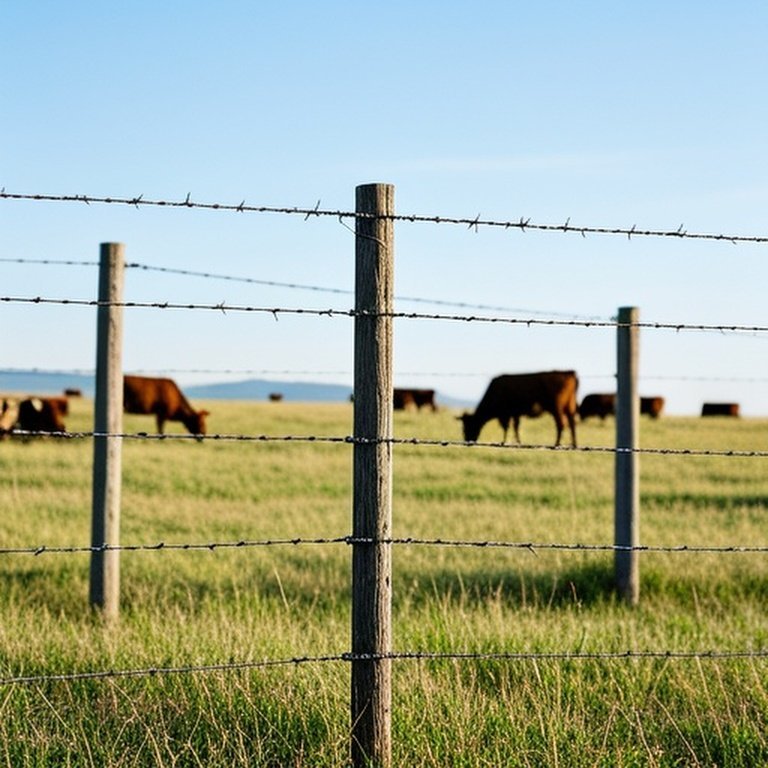
Barbed wire strand count looks like a small design choice, but it has a major impact on containment, safety, and long-term cost. Too few strands lead to cattle pushing through, frequent repairs, and damaged posts. Too many strands increase material cost and installation time without adding real value.
Many fence failures blamed on “bad wire” or “poor posts” are actually caused by incorrect strand spacing. Understanding how many strands you really need helps you build a fence that works with livestock behavior instead of constantly fighting it.
Key Factors to Consider
- Livestock type and size
- Animal training and fence respect
- Terrain slope and ground variation
- Fence purpose: perimeter vs interior
- Pressure zones near gates, water, and corners
Detailed Explanation
The number of barbed wire strands determines how effectively a fence controls animal movement. Each strand serves a purpose: lower wires prevent animals from going under, while upper wires discourage leaning or jumping.
Three-strand barbed wire is the minimum configuration and works best for calm, well-trained adult cattle on large, open pastures. It relies heavily on animal respect and works poorly if cattle crowd fences or if terrain creates gaps under the wire.
Four-strand fences are the most common all-around choice. The additional wire reduces spacing, improves visual presence, and significantly lowers the chance of animals pushing through. For most cattle operations, four strands strike the best balance between cost and performance.
Five-strand barbed wire is used in higher-pressure situations. It provides tighter spacing, better containment on uneven ground, and improved performance around corners, slopes, and high-traffic areas. While more expensive, it often reduces long-term repair costs where cattle apply constant pressure.
Terrain also affects strand needs. On rolling or uneven land, wider spacing between strands creates gaps animals exploit. Adding a strand is often cheaper than repairing repeated failures. Fence purpose matters too—perimeter fences usually need more strands than interior cross-fencing.
Ultimately, strand count should match animal behavior and land conditions, not just budget targets.
Video Demonstration
How Cattle Behavior Affects This Choice
Cattle behavior directly determines how many strands are required. Calm, trained cattle that respect fences apply minimal pressure, making fewer strands workable. These animals stop when they encounter resistance and rarely test boundaries.
High-pressure cattle behave differently. Crowding near feed, water, or shelter leads to leaning, rubbing, and pushing. In these situations, three strands fail quickly, regardless of wire quality. Adding a fourth or fifth strand distributes pressure and prevents animals from exploiting weak points.
Training also matters. Newly introduced cattle or frequently moved herds need more physical deterrence until fence respect is established.
Calves vs Mature Cattle Considerations
Barbed wire is not ideal for calves, but strand count still matters where it’s used. Calves slip under wide gaps, especially with three-strand fences. Adding strands lowers spacing but does not eliminate safety risks.
If calves are present, a four- or five-strand configuration performs better, but woven wire or electric fencing is usually safer. Planning strand height and spacing from the beginning avoids costly retrofits later.
Terrain, Visibility, and Pressure Zones
Uneven terrain creates vertical gaps that reduce fence effectiveness. Extra strands help maintain coverage across dips and rises. Corners, gates, and slopes are pressure zones where strand density matters most.
Visibility also plays a role. More strands increase visual presence, reducing accidental contact and panic responses that cause fence damage.
When This Works Well
- Adult cattle with good fence respect
- Large, low-pressure pastures
- Flat or gently rolling terrain
- Perimeter fencing with limited access points
- Operations prioritizing low upfront cost
When This Is Not Recommended
- Calves or small livestock
- High-pressure feeding or watering areas
- Steep or highly uneven terrain
- Confined paddocks or heavy traffic zones
- Operations with frequent fence contact
Alternatives or Better Options
Barbed wire plus electric offset
An electrified top or inside wire increases effectiveness without adding multiple barbed strands.
Woven wire with top barbed strand
Provides physical containment with reduced injury risk, especially for young livestock.
High-tensile electric fencing
Often cheaper long-term and more adaptable than adding extra barbed strands.
Cost, Safety, and Practical Notes
Each additional strand increases material and labor costs, but too few strands cost more over time through repairs and escapes. For most cattle operations, four strands offer the best return on investment.
Safety should not be ignored. More strands increase injury risk if cattle panic or slip. Proper spacing, tension, and post bracing matter as much as strand count.
Design fences for real conditions, not ideal ones. Adding one strand during installation is far cheaper than rebuilding later.
Quick Takeaway
Three strands may work, four strands work reliably, and five strands are for pressure situations. The right number depends on cattle behavior, terrain, and fence purpose—not just budget.