Most livestock fencing with high-tensile wire requires 3–6 strands, depending on livestock type, fence purpose, and whether electricity is used. Fewer strands are possible because high-tensile wire relies on strength and constant tension rather than mass. The correct number is determined by animal behavior, spacing, and system design—not by a one-size-fits-all rule.
Why This Question Matters
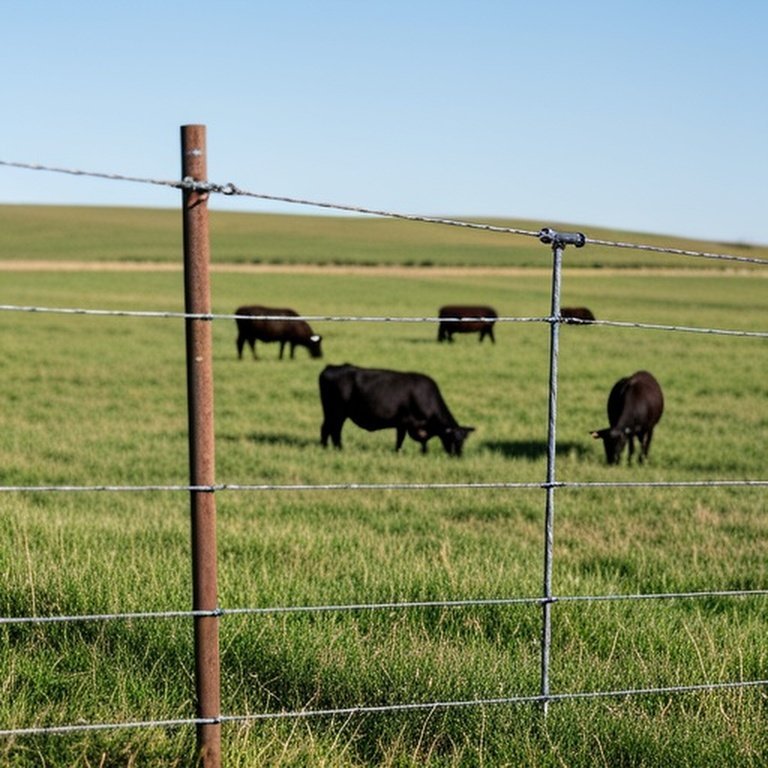
The number of wire strands directly affects containment reliability, safety, and total cost. Using too few strands can lead to escapes and retraining livestock, while using too many increases material and installation costs without improving performance. High-tensile fencing often looks “too minimal,” which causes doubt for first-time users.
This question matters because strand count is one of the most common causes of high-tensile fence failure—not due to weak wire, but incorrect layout. Getting this decision right ensures the fence works as intended for years instead of becoming a constant adjustment problem.
Key Factors to Consider
- Livestock size and behavior: calm grazing versus frequent testing or pushing
- Fence electrification: electric systems require fewer physical strands
- Fence role: perimeter containment versus interior or cross fencing
- Strand spacing: vertical gaps matter more than total strand count
- Terrain and pressure zones: slopes, gates, and feeding areas need adjustment
Detailed Explanation
High-tensile wire fencing requires fewer strands than traditional wire because the wire remains under constant tension and does not sag over time. Instead of creating a physical barrier through mass, it creates a behavioral and visual boundary that livestock learn to respect. This is why strand count must be evaluated as part of a system rather than as an isolated number.
In most applications, 3–4 strands are sufficient for interior fencing or rotational grazing, especially when electricity is used. Electric high-tensile systems rely on livestock learning rather than physical resistance, allowing fewer wires to be effective once animals are trained.
For perimeter fencing or non-electric systems, 4–6 strands are more common. Additional strands reduce the chance of animals pushing through or attempting to step over the fence. However, adding strands without proper spacing offers little benefit. Correct vertical placement is more important than simply increasing the count.
High-pressure areas such as corners, gates, water points, and feeding zones often require additional strands or reinforcement regardless of the general fence layout. Failures typically occur in these areas, not in long straight runs.
The key reason strand count works differently in high-tensile fencing is tension consistency. Regular wire systems stretch and sag, requiring more strands to compensate. High-tensile systems maintain height and spacing over time, allowing fewer strands to perform the same containment role—provided the system is installed correctly.
How Cattle Behavior Affects This Choice
Cattle behavior is one of the strongest predictors of required strand count. Calm, pasture-trained cattle typically lean or rub against fences rather than charge them. In these cases, fewer high-tensile strands are sufficient because animals disengage once resistance is felt.
Problems arise when cattle are crowded, stressed, or unfamiliar with fencing. Group pressure at feeding or watering areas increases the likelihood of pushing through. In these scenarios, adding strands—or electrifying the fence—reduces physical pressure by changing behavior. Strand count should reflect how cattle actually interact with the fence, not just their size.
Calves vs Mature Cattle Considerations
Calves require careful strand spacing more than additional strands. Because they are smaller and more curious, wide vertical gaps can invite pass-through attempts. Fewer strands may still work if spacing prevents calves from slipping between wires.
Mature cattle exert greater force but in predictable ways. High-tensile fencing holds height under pressure, so additional strands are only needed when cattle repeatedly test boundaries. Designing for adult cattle usually means adjusting spacing and reinforcement rather than dramatically increasing strand count.
Terrain, Visibility, and Pressure Zones
Terrain affects how strand count performs. On slopes, vertical spacing changes relative to ground level, which can create unintended gaps. In these areas, adding strands or reducing spacing may be necessary even if the overall strand count remains low.
Visibility also matters. Thin wires are harder for livestock to see, increasing testing behavior. Markers or electric offsets often reduce the need for additional strands. Pressure zones concentrate force and should always be reinforced independently of the standard fence layout.
When This Works Well
- Electric high-tensile fencing with trained livestock
- Interior or cross fencing applications
- Large pasture systems with predictable movement
- Properly spaced and tensioned installations
- Reinforced gates and corners
When This Is Not Recommended
- Non-electric systems with aggressive livestock
- Poorly spaced strands creating large vertical gaps
- High-pressure feeding or watering zones without reinforcement
- Temporary fencing needs
- Installations without precise layout control
Alternatives or Better Options
Woven wire fencing uses many horizontal wires to create a physical barrier and may be better for small animals or mixed-age groups.
Barbed wire fencing often uses more strands to compensate for sagging but requires more maintenance over time.
Hybrid systems combining high-tensile wire with electric offsets or woven wire at the bottom often optimize strand count and performance.
Cost, Safety, and Practical Notes
Fewer strands reduce material and installation costs, which is one of the main advantages of high-tensile fencing. However, underbuilding a fence leads to higher long-term costs through escapes, retraining livestock, and repairs.
From a safety perspective, correct spacing matters more than total strands. Poorly spaced wires increase entanglement risk, especially for young animals. Practically, strand count should be decided during planning, not adjusted after failure. When designed correctly, high-tensile fencing achieves reliable containment with fewer wires than traditional systems.
Quick Takeaway
High-tensile livestock fencing typically uses 3–6 strands, with the exact number determined by livestock behavior, electrification, spacing, and pressure zones—not by visual thickness or tradition.