How Many Strands of Wire Do Cattle Need for Safe and Effective Containment?
Short Answer
Most cattle require four to five strands of wire for reliable containment. The exact number depends on whether the fence is a perimeter or interior fence, cattle age and size, terrain, and whether the fence relies on physical or electric deterrence.
Why This Question Matters
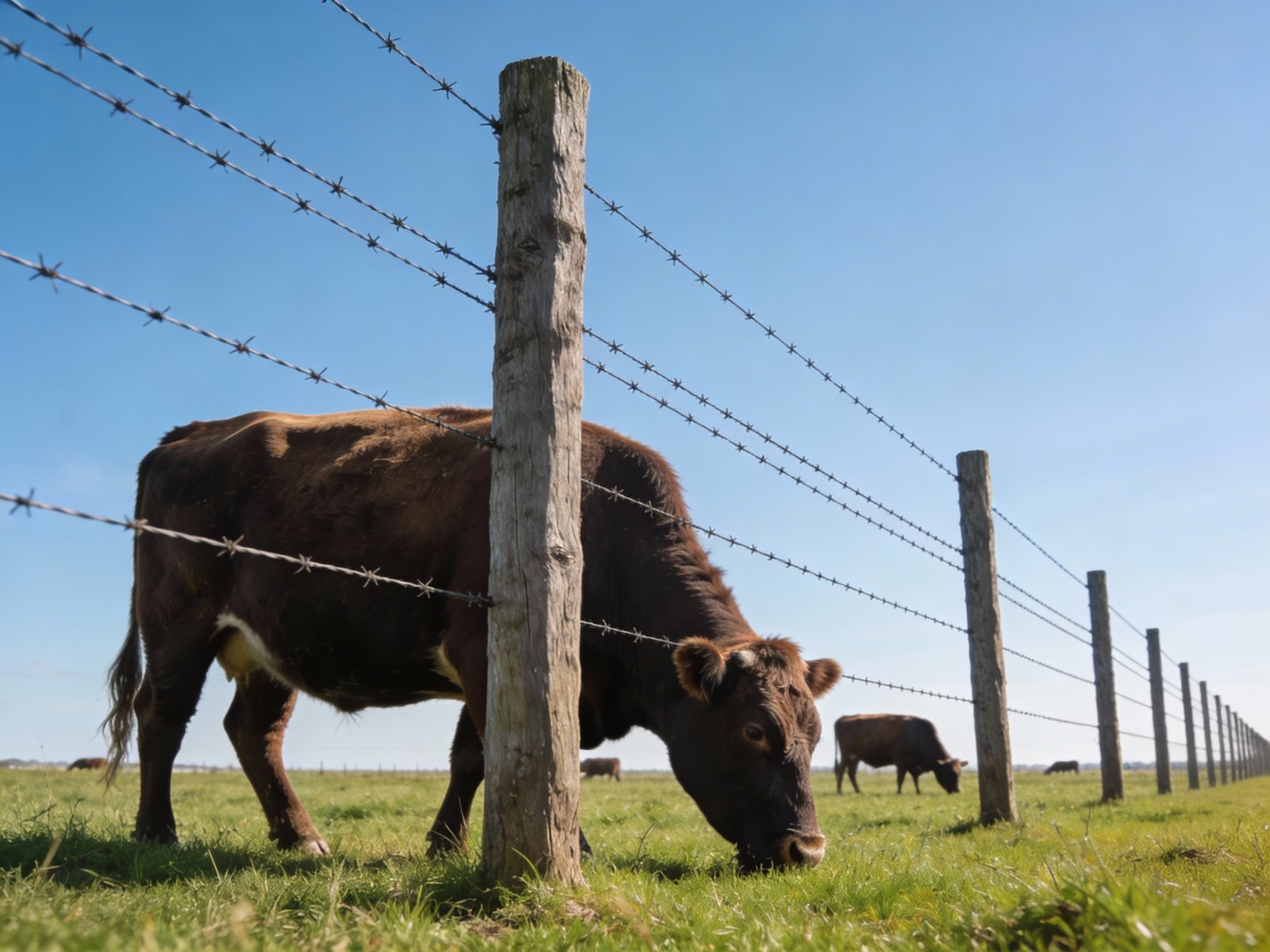
Determining how many strands of wire cattle need is a foundational fencing decision that directly affects containment reliability, animal safety, and long-term costs. Too few strands increase the risk of escapes, fence damage, and injuries, while unnecessary extra strands add cost without meaningful performance gains.
Many cattle owners assume that adding more wire automatically creates a better fence. In practice, effective containment depends more on correct strand spacing, proper tension, and fence purpose than on sheer wire count.
Key Factors to Consider
- Fence purpose, especially the difference between perimeter fencing and interior cross fencing
- Cattle age, size, and behavior, including calves versus mature animals
- Fence type, such as barbed wire, smooth wire, or electric fencing
- Terrain, visibility, and pressure points like corners, gates, and water access areas
Detailed Explanation
Standard Recommendations for Barbed Wire Fencing
Traditional cattle fencing relies on multiple horizontal wire strands to create a physical barrier that cattle learn to respect. For most mature beef cattle, four strands of barbed wire spaced correctly can provide adequate containment in low-pressure environments such as interior cross fences or paddock dividers. However, perimeter fences typically benefit from a fifth strand to reduce the chance of cattle reaching over, stepping through, or pushing under the fence.[1]
In regions with well-established ranching traditions, the five-strand configuration has become the standard for perimeter applications. This arrangement balances security, visibility, and cost while providing sufficient deterrence for most cattle operations. For high-pressure situations involving bulls, dense stocking, or road frontage, adding a sixth or even seventh strand increases overall height and wire density to handle increased force and liability concerns.[2]
The Importance of Wire Spacing
Wire spacing matters as much as strand count. Common configurations place the bottom wire approximately 10 to 12 inches above ground, with subsequent wires spaced 8 to 12 inches apart. This arrangement aligns wire contact points with a cow’s nose, chest, and shoulder, discouraging forward pressure and climbing behavior.[1]
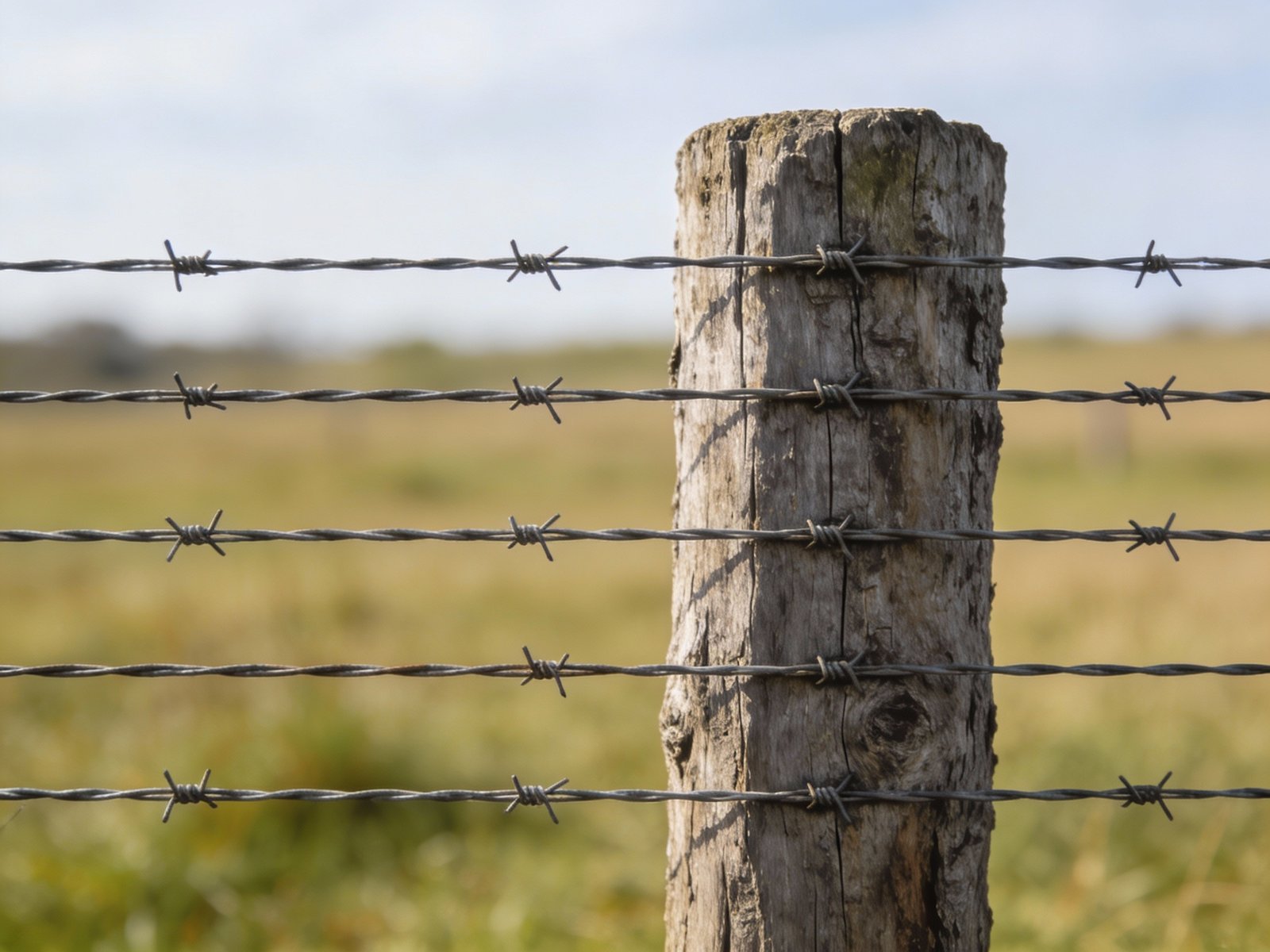
For optimal containment, the top wire should sit at approximately 48 to 54 inches above ground, roughly at shoulder height for adult cattle. In areas with deer populations, widening the top gap to 10 to 12 inches can reduce wildlife entanglements while tightening the lower gaps prevents calves from crawling underneath.[2]
Electric Fencing Reduces Strand Requirements
Electric fencing systems change the calculation significantly. Because cattle respond quickly to electric shock, fewer strands are required once animals are trained. Two to three energized smooth wires are often sufficient for interior divisions, while four or five electrified wires may be used for perimeter applications.[3][4]
The key to effective electric fencing is proper training. Most livestock are curious and will investigate a new fence. After one or two encounters with an energized wire, cattle typically learn to respect the boundary and rarely challenge it again. Training usually takes no more than one day when conducted in a small enclosed area with the electric fence installed inside a physical perimeter fence.[5][6]
Electric fence effectiveness depends heavily on wire placement. Setting one hot wire at the typical nose height of the animal ensures that the shock occurs in front of the eyes, triggering a backing-up response rather than a forward flight response. If different-sized animals share the same enclosure, such as calves and full-grown cattle, a nose-level strand is needed for each size category.[4][3]
How Barbed Wire Interacts With Cattle Behavior
Cattle learn fence boundaries through contact and memory. A properly tensioned multi-strand fence presents resistance at multiple heights, making it uncomfortable to test. After one or two encounters, most cattle avoid further contact, reducing pressure on the fence and lowering injury risk. This learned respect for physical boundaries is similar to the psychological deterrence created by electric fencing, though it develops more gradually.
Common Causes of Barbed Wire Injuries
Injuries commonly occur when wire spacing is too wide or when too few strands allow cattle to step through or become partially entangled. Calves are particularly vulnerable if strand counts are reduced without adjusting spacing to account for their smaller size. Sagging wires caused by poor tension or post failure also increase injury risk regardless of strand count.
Another common injury scenario occurs when cattle are startled or spooked near the fence. In these situations, adequate strand count and proper spacing provide multiple deterrent points that prevent animals from gaining enough momentum to break through or become seriously entangled.
Modern High-Tensile Barbed Wire vs Older Systems
Modern high-tensile barbed wire maintains consistent tension and spacing better than older low-carbon wire. This consistency allows fewer strands to perform effectively while reducing sagging and uneven gaps that contribute to escapes and injuries. High-tensile systems can maintain proper tension across longer spans between posts, reducing material and labor costs.[7]
Older low-carbon barbed wire systems often required additional strands to compensate for stretching and loss of tension over time. The shift to high-tensile wire has made four- and five-strand configurations more reliable than they were with traditional materials, contributing to the modern standard recommendations.[1][2]
Regional and Regulatory Considerations
Legal requirements for cattle fencing vary by state and county. In Florida, a “legal fence” requires at least three wires at three feet height, though five wires at 48 inches is the practical standard for most operations. Alabama regulations may require five-foot overall height for certain fence classes, while Georgia ordinances vary by county. Always verify local requirements before construction begins.[2]
When This Works Well
- Four-strand fences for mature cattle in large, open pastures with low pressure and interior paddock divisions
- Five-strand fences for perimeter fencing, uneven terrain, or standard ranch operations
- Six-strand configurations for bulls, high-density lots, holding pens, or road frontage areas
- Two to three electrified strands for trained cattle in rotational grazing systems or temporary paddocks
- Four to five electrified high-tensile wires for permanent electric perimeter fencing
When This Is Not Recommended
- Using fewer than four strands for permanent perimeter fencing on properties with mature cattle
- Wide strand spacing in calving pastures or with young calves that can slip through gaps
- Low-strand-count fences in high-traffic areas, near roads, or in confined feeding areas
- Three-strand configurations for exterior boundaries unless combined with electric deterrence
- Electric fencing for untrained animals without a proper training period in a secure enclosure
Alternatives or Better Options
- Smooth high-tensile electric fencing that uses fewer strands with effective psychological deterrence and lower injury risk
- Woven wire fencing for operations requiring physical barriers for calves, mixed livestock, or areas where electric fencing is impractical
- Combination systems using woven wire with a single electrified strand above to deter climbing and predator access
- Cable wire fences consisting of steel cables stretched between anchor posts with heavy springs to absorb shock
Cost, Safety, or Practical Notes
Each additional wire strand increases material and labor costs, but insufficient strand count often results in higher long-term expenses from repairs, escapes, and veterinary bills. For most cattle operations, four to five strands offer the best balance between affordability, durability, and animal safety. A five-strand barbed wire fence with posts spaced 10 feet apart typically costs around 35 cents per linear foot, making it one of the most economical permanent fencing options.[8]
Proper installation is as important as strand count. Line posts should be placed at regular intervals with closer spacing providing better support and fence longevity. High-tensile systems can use wider post spacing, sometimes up to 50 feet apart for suspension fencing, which reduces overall installation costs while maintaining effectiveness.[8]
When calculating wire needs for electric fencing systems, remember that controllers must be rated for the total wire length. For example, a fence with 4 miles of length and three electrified strands requires a controller rated for at least 15 miles of wire coverage.[8]
Video Demonstration
For a practical demonstration of barbed wire fence installation techniques and proper strand spacing, this video shows the complete process of installing line posts and multiple wire strands for a cattle pasture fence.
If you are working with electric fencing systems and need to train cattle to respect the boundary, this video demonstrates an effective training system that makes the process easy and efficient.
Quick Takeaway
Most cattle require four to five strands of wire for dependable containment, with the exact number determined by fence location, animal size, and pressure level. Electric fencing systems can safely use fewer strands when properly installed and maintained, typically requiring only two to three wires for interior paddocks and four to five for perimeter applications. Proper wire spacing, tension, and training are equally important as strand count for creating safe, effective cattle fencing.
Disclaimer: Fencing practices, safety requirements, and regulations may vary by location. Always check local laws and consult professionals when necessary.