PVC fencing requires very little routine maintenance compared to wood or metal—no painting, staining, or rust prevention. However, it is not maintenance-free. While day-to-day upkeep is minimal, repairs can be more expensive and less forgiving if panels crack, joints loosen, or posts shift under livestock pressure or ground movement.
Why This Question Matters
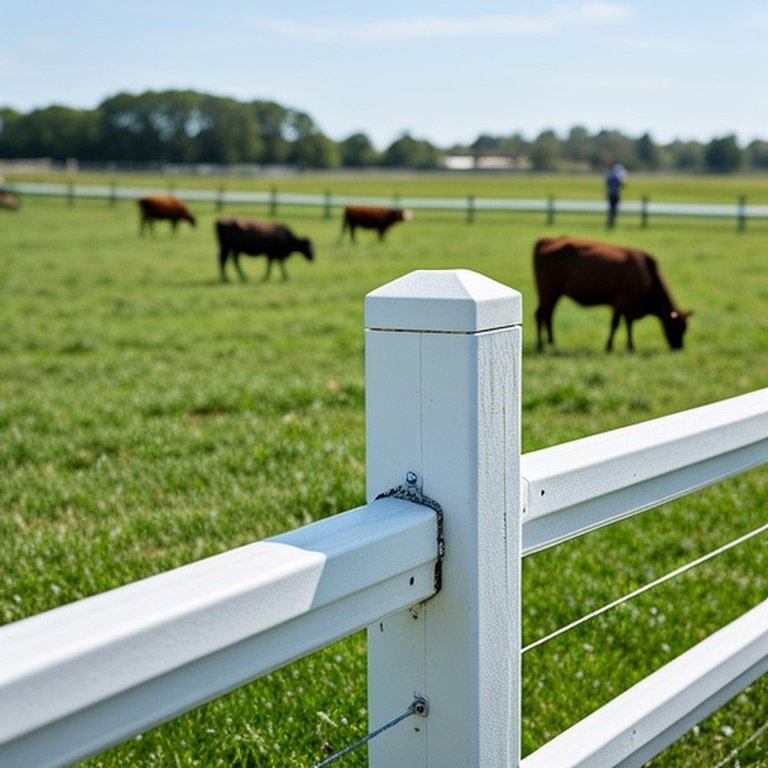
PVC fencing is often marketed as a “zero-maintenance” solution, which strongly influences buying decisions for farms and ranches. For landowners tired of replacing rotting wood or tightening sagging wire, this promise sounds ideal. The reality is more nuanced. PVC fencing dramatically reduces routine labor, but it changes the type of maintenance rather than eliminating it entirely.
If damage occurs, repairs are usually more involved and costly than with traditional fencing. Understanding what maintenance PVC fencing actually requires helps producers avoid false expectations and decide whether lower routine upkeep offsets higher repair risk.
Key Factors to Consider
- Routine upkeep: no painting, staining, or corrosion treatment required
- Repair complexity: damaged sections often need full replacement
- Livestock pressure: repeated force increases long-term maintenance risk
- Ground movement: shifting soil affects post stability
- Cleaning needs: cosmetic cleaning may still be necessary
Detailed Explanation
PVC fencing’s biggest maintenance advantage is what it doesn’t need. Unlike wood, it does not rot, splinter, or attract insects. Unlike metal, it does not rust, corrode, or require protective coatings. This eliminates a long list of recurring tasks—painting, staining, sealing, and rust control—that consume time and money over decades. For many farms, especially smaller or mixed-use properties, this reduction in routine labor is the main reason PVC fencing is appealing.
That said, PVC fencing shifts maintenance from frequent small tasks to infrequent but larger interventions. When PVC fencing performs well, it may go years with nothing more than occasional visual inspections. But when it fails, repairs are rarely quick fixes. Cracked rails, broken connectors, or loosened posts usually require replacing entire components rather than tightening a wire or swapping a board. This makes each repair more expensive and time-sensitive.
Environmental factors also play a role. Temperature swings cause PVC to expand and contract. Quality fencing systems account for this, but improper installation can lead to joint stress over time. Ground movement—from frost heave, erosion, or settling—can shift posts and create alignment issues that require professional correction rather than simple adjustment.
Finally, cosmetic maintenance is often overlooked. PVC fencing stays structurally sound while still accumulating dirt, algae, or stains, especially in humid or shaded areas. While this does not affect performance, many owners choose to periodically wash fences to maintain appearance, particularly in visible farm areas.
In short, PVC fencing dramatically reduces routine maintenance, but it demands careful installation and realistic expectations about repair work when damage occurs.
How Cattle Behavior Affects This Choice
Cattle behavior has a direct impact on long-term maintenance requirements for PVC fencing. Cattle naturally lean, scratch, and apply pressure—especially near gates, feeding areas, and corners. While PVC fencing tolerates occasional contact, repeated pressure concentrates stress at joints and posts rather than distributing it along flexible wire.
Over time, this behavior increases the likelihood of cracked rails or loosened fittings. Even if damage occurs infrequently, each incident usually requires replacing specific components instead of performing minor adjustments. Farms with calm, low-density cattle experience fewer issues, while high-density or highly active herds see maintenance demands increase noticeably. In these settings, PVC fencing may remain low-maintenance for years—or require sudden, costly repairs after a single high-pressure event.
Calves vs Mature Cattle Considerations
PVC fencing maintenance differs significantly depending on livestock size. With calves or smaller animals, physical stress on the fence remains relatively low. This often allows PVC systems to maintain alignment and integrity for long periods with almost no intervention beyond inspection.
Mature cattle, however, apply much greater force. Their weight and strength increase the chance of post movement or joint failure. While this does not mean constant maintenance, it does mean higher risk when issues occur. For operations dominated by mature livestock, maintenance is less about frequency and more about impact severity when repairs are needed.
Terrain, Visibility, and Pressure Zones
Terrain plays a major role in PVC fencing maintenance. Flat, stable ground supports long-term alignment and reduces post movement. Uneven or sloped terrain increases stress on posts and joints, raising the likelihood of alignment issues over time.
Pressure zones—corners, gates, and transitions—require special attention. Reinforcement in these areas reduces maintenance needs but increases initial installation complexity. Visibility is a plus: animals see PVC fencing clearly, which lowers accidental impacts and indirectly reduces maintenance caused by collisions.
When This Works Well
- Small to medium enclosures with limited livestock pressure
- Flat terrain with stable soil conditions
- Farms prioritizing reduced routine labor
- Areas where appearance matters
- Low-density or calm livestock environments
When This Is Not Recommended
- Large-scale pasture fencing
- High-pressure livestock areas
- Operations expecting frequent layout changes
- Uneven or shifting ground conditions
- Situations where quick, low-cost repairs are essential
Alternatives or Better Options
High-tensile wire fencing requires more routine inspection but allows easy, low-cost adjustments.
Woven or barbed wire fencing offers simple, fast repairs and greater flexibility.
Electric fencing minimizes physical stress on fence materials through behavioral control.
Hybrid systems using PVC only in visible or safety-critical areas often deliver the best maintenance balance.
Cost, Safety, and Practical Notes
PVC fencing’s maintenance profile is best described as low-frequency, high-impact. Day-to-day upkeep is minimal, but when repairs are needed, they tend to be more expensive and less forgiving than wire or wood systems. Safety remains a strong advantage, as smooth surfaces reduce injury risk when the fence is intact.
From a practical standpoint, PVC fencing works best when maintenance planning focuses on prevention: proper installation, reinforced pressure points, and realistic placement. Farms that treat PVC as a selective solution rather than a universal one see the greatest long-term benefit.
Quick Takeaway
PVC fencing greatly reduces routine maintenance, but repairs are less flexible and more costly when damage occurs—making it ideal for low-pressure, permanent applications rather than high-stress working systems.