Short Answer
The right wire fence depends on livestock behavior, fence purpose, terrain, and maintenance capacity. High-tensile wire suits long, low-maintenance perimeter runs; woven wire fits mixed or high-pressure livestock; welded wire works best for pens and interior areas; barbed wire suits calm cattle in low-pressure settings. Match fence behavior to animal behavior for reliable results.
Why This Question Matters
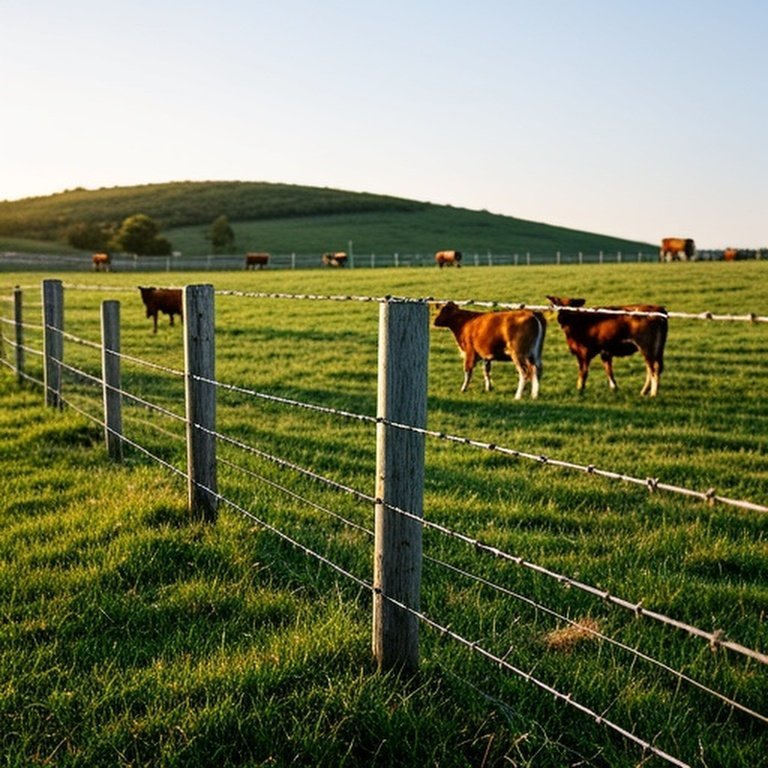
Choosing fencing is a long-term infrastructure decision that affects safety, labor, and operating costs for decades. Many problems—escapes, injuries, constant repairs—come from fences that don’t match how animals behave or how the land performs. This question matters because there’s no single “best” wire fence. The best choice is contextual: what you fence, where you fence it, and how much time you can realistically spend maintaining it. Getting this right up front prevents costly retrofits and daily headaches later.
Key Factors to Consider
- Livestock species, size, and pressure patterns
- Fence role: perimeter, interior, or temporary
- Terrain, soil movement, and drainage
- Installation skill and maintenance tolerance
- Consequences if containment fails
Detailed Explanation
Start by defining the job of the fence. Perimeter fencing needs to be fail-safe and durable; interior fencing can prioritize flexibility and cost. Next, consider how animals apply pressure. Livestock don’t test fences evenly—they lean, rub, crowd, and challenge corners. Fences that flex under pressure (high-tensile, woven wire) last longer in these conditions than rigid systems.
High-tensile wire works best when animals are trained and pressure is predictable. Its strength comes from tension and flexibility, allowing long runs with fewer posts and minimal maintenance. Woven wire provides consistent physical containment and tolerates unpredictable behavior, making it a strong choice for mixed livestock or uneven terrain.
Welded wire offers visibility and uniform openings, which helps in pens, corrals, and interior divisions. However, it relies on rigidity and closer post spacing, making it less forgiving in high-pressure or long-run applications. Barbed wire remains common for calm cattle on large acreage but trades safety for low upfront cost.
Terrain often determines success or failure. Uneven ground favors flexible systems; rigid fences demand precise installation. Finally, match the fence to your maintenance reality. A low-maintenance system that quietly works is often better than a cheaper fence that demands constant attention.
The short answer holds because the “right” fence isn’t about material strength alone—it’s about how the system behaves over time under real pressure.
How Cattle Behavior Affects This Choice
Cattle pressure is slow and repetitive. They lean, rub, and crowd rather than charge. Fences that absorb and redistribute this pressure require less repair. Flexible systems handle this best.
Rigid fences concentrate stress at posts and joints, increasing maintenance. Calm, well-managed herds expand your options; unpredictable behavior narrows them. Understanding daily animal movement patterns is as important as choosing wire type.
Calves vs Mature Cattle Considerations
Calves apply less force, allowing lighter fencing to perform adequately. As cattle mature, pressure increases sharply. Fences that worked early may fail later.
Scalable systems—high-tensile or woven wire—handle growth without replacement. Planning for mature animals avoids rebuilding fences mid-cycle, which is one of the most common and expensive mistakes.
Terrain, Visibility, and Pressure Zones
Flat terrain simplifies installation and reduces stress. Uneven ground creates gaps, tension loss, and weak points. Flexible fencing adapts better here.
Pressure zones—corners, gates, feeding areas—should influence material choice more than straight runs. Reinforcement in these areas often matters more than upgrading the entire fence line.
When This Works Well
- High-tensile for long perimeter fencing
- Woven wire for mixed or high-pressure livestock
- Welded wire for pens and interior divisions
- Barbed wire for calm cattle on open land
- Operations matching fence type to behavior
When This Is Not Recommended
- One fence type used everywhere by default
- Rigid fencing in high-pressure areas
- Low-maintenance expectations with high-maintenance systems
- Ignoring terrain and pressure zones
- Choosing based on price alone
Alternatives or Better Options
Combination systems often outperform single-material choices. Adding electric offsets reduces pressure and extends fence life. Using heavier fencing only in pressure zones controls cost while maintaining reliability. In many cases, layered solutions deliver the best balance of safety, durability, and budget control.
Cost, Safety, and Practical Notes
Upfront cost rarely predicts lifetime cost. Fences that reduce repairs, injuries, and escapes save money over time. Safety improves when fencing behavior matches animal behavior, reducing panic and entanglement. Practically, the best fence is the one that fits your land, livestock, and labor—not the one with the most steel.
Quick Takeaway
There’s no universal “best” wire fence. The right choice balances livestock behavior, terrain, purpose, and maintenance capacity. When the fence system matches real-world pressure, it works quietly—and that’s the best outcome.