Short Answer
To find faults or shorts in an electric fence, start by testing voltage at the energizer, then progressively disconnect fence sections to isolate the problem. Walk the fence line to look for grounding points such as vegetation, broken insulators, or wire contact with metal posts. Use a fence tester to confirm voltage drops and pinpoint where current is leaking.
Why This Question Matters
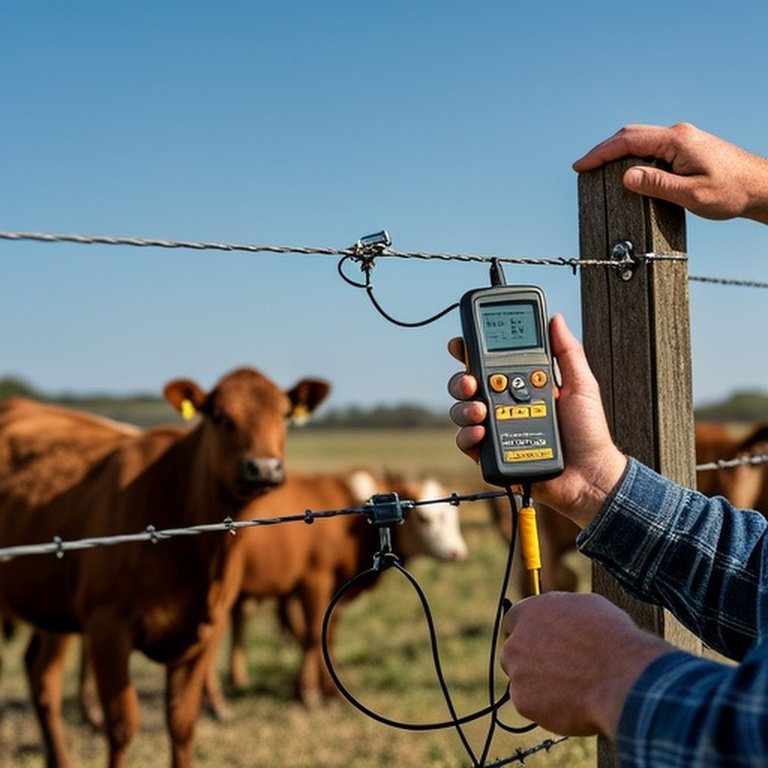
Electric fences often fail silently. Animals stop respecting the fence long before owners realize voltage has dropped. Many fence issues are not complete failures but partial shorts that weaken shock strength, making troubleshooting confusing and time-consuming. A single fault can affect hundreds or thousands of feet of fence, wasting energizer capacity and creating safety risks. Misdiagnosing the issue can lead to unnecessary equipment replacement, ongoing animal escapes, or dangerous assumptions that the energizer itself is defective.
Key Factors to Consider
- Fence length and total load directly affect how noticeable voltage loss becomes
- Soil moisture and grounding quality influence how faults present themselves
- Vegetation contact causes gradual shorts that worsen over time
- Fence layout complexity makes isolation more difficult
- Tool accuracy matters when diagnosing small voltage drops
Detailed Explanation
Finding faults in an electric fence is a process of elimination rather than a single test. The first step is always to verify whether the energizer itself is functioning. Testing voltage directly at the energizer output establishes a baseline. If voltage is already low there, the issue is not in the fence line but in grounding, power supply, or the energizer unit.
If energizer output is strong, the problem lies somewhere along the fence. Faults typically occur when electricity leaks to ground before completing the shock circuit. Common causes include vegetation touching the wire, cracked or dirty insulators, loose connections, broken wires, or contact with metal posts. These issues rarely stop the fence entirely but reduce voltage enough to make the shock ineffective.
To locate the fault, fence lines should be disconnected into sections if possible. By reconnecting one section at a time and testing voltage after each connection, you can identify which segment causes the largest voltage drop. Once narrowed down, walking that section slowly while visually inspecting and using a tester helps pinpoint the exact fault location.
The key is patience and consistency. Shorts are often subtle and may not be visible at a glance. Moisture, weather, and terrain can hide grounding points that only cause problems under certain conditions. A systematic approach prevents guesswork and unnecessary repairs.
How Fence Layout Affects Fault Detection
Complex fence layouts with multiple branches, gates, and cross-fencing increase the difficulty of fault isolation. Each junction adds another potential failure point. In these systems, isolating faults requires clear segmentation and labeled cutoff points. Without sectioning, voltage loss spreads across the entire system, making the fault appear everywhere at once.
How Vegetation and Seasonal Growth Create Hidden Shorts
Vegetation is the most common and most underestimated cause of fence faults. Grass, weeds, and vines can drain voltage gradually, especially after rain or during rapid growth seasons. These shorts often appear intermittently, causing inconsistent fence performance that is harder to diagnose than a total failure.
Why Grounding Problems Mimic Fence Faults
Poor grounding can look exactly like a fence short. Dry soil, insufficient ground rods, or corroded connections prevent current from completing the circuit properly. In these cases, the fence may test low everywhere, even if no physical fault exists on the wire itself.
When This Works Well
- Fence system has clear disconnect points or sectional design
- Voltage tester is available and functioning correctly
- Terrain allows physical inspection of fence lines
- Faults are caused by visible contact or damage
When This Is Not Recommended
- Large, continuous fence systems without isolation points
- Buried or inaccessible wire sections
- Severe grounding deficiencies masking real issues
- Situations requiring uninterrupted containment
Alternatives or Better Options
For large or complex systems, installing permanent cutoff switches or zone isolators allows faster troubleshooting in the future. Fault finders that measure current flow direction can significantly reduce diagnostic time. In high-pressure containment areas, upgrading to higher-output energizers can help tolerate minor shorts without performance loss.
Cost / Safety / Practical Notes
Fault-finding is usually a labor cost, not an equipment cost. Investing in a quality fence tester often saves more money than replacing energizers unnecessarily. Always disconnect power before making physical repairs, and never assume low voltage means zero shock risk. Repeated shorts accelerate energizer wear and increase fire risk near dry vegetation, making prompt repair a safety issue as well as a performance concern.
📍 Video Demonstration
Quick Takeaway
Most electric fence faults are small, cumulative leaks rather than dramatic failures. Systematic isolation, careful inspection, and reliable testing tools turn troubleshooting from frustration into a predictable process.