Short Answer
Yes, you can install an electric fence on uneven or sloped terrain. Electric fencing is highly adaptable and works well on hills, dips, and rolling ground when post spacing, wire height, and tension are adjusted correctly. Proper installation prevents gaps under the fence and maintains consistent voltage across elevation changes.
Why This Question Matters
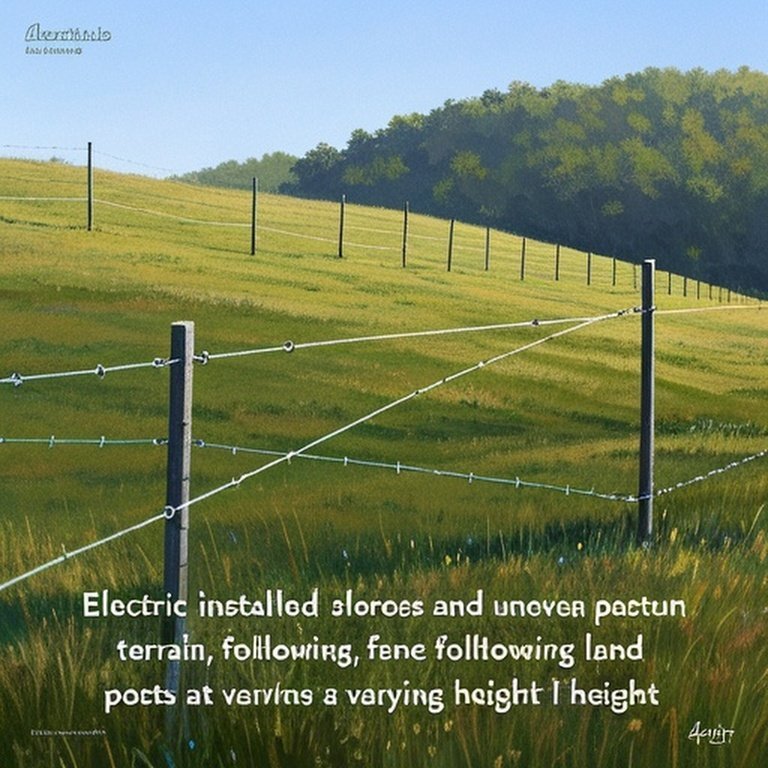
Very few properties are perfectly flat. Farms, pastures, and rural land often include slopes, gullies, ridges, and uneven ground. Many fence failures happen not because of weak chargers or poor materials, but because the fence was installed as if the ground were flat. Gaps under wires, poor tension on slopes, and posts shifting downhill can quickly make an electric fence ineffective. Knowing whether electric fencing works on uneven terrain—and how to adapt it—prevents wasted labor, livestock escapes, and repeated repairs.
Key Factors to Consider
- Degree of slope and frequency of elevation changes
- Post spacing adjustments on hills and dips
- Wire height consistency relative to ground level
- Fence tension management on slopes
- Soil stability and erosion risk
Detailed Explanation
Electric fences are especially well-suited for uneven or sloped terrain because they rely on wire placement and tension rather than rigid panels. Unlike traditional fencing, electric fencing can follow the natural contour of the land. However, successful installation depends on adapting the layout to the terrain instead of forcing straight, level lines.
On slopes, posts should be placed closer together than on flat ground. Shorter spacing helps maintain wire height and prevents sagging or lifting as the fence runs uphill or downhill. In areas with sharp elevation changes, stepping the fence—where wire height gradually changes between posts—keeps animals from finding low spots to crawl under or high spots to push through.
Wire tension is critical. Gravity naturally pulls wire downhill, so strainers or tensioners should be used more frequently on slopes to prevent slack. Corner and end posts on hills must be firmly braced, as they experience greater lateral force than posts on flat ground.
Uneven terrain also increases the risk of vegetation contact. Grass and weeds grow differently on slopes and in low areas, so regular vegetation control is essential to maintain voltage. When installed correctly, electric fencing on sloped land can be just as effective—often more so—than on flat ground.
Post Spacing on Slopes
On hills and uneven ground, post spacing typically needs to be reduced. Closer spacing helps maintain consistent wire height and prevents large gaps where animals can challenge the fence.
Wire Height Adjustment
Wire height should follow the ground contour, not a straight visual line. Adjusting insulators up or down keeps the effective shock zone consistent for livestock or predators.
Soil Stability and Erosion
Sloped terrain is more prone to erosion. Posts may need to be driven deeper or reinforced to prevent leaning or shifting over time.
When This Works Well
- Rolling or moderately sloped terrain
- Flexible wire or polywire systems
- Properly braced corner and end posts
- Regular vegetation control
When This Is Not Recommended
- Extremely rocky slopes where posts cannot be set securely
- Severe erosion zones without soil stabilization
- Very steep drop-offs without stepped fence design
- Ignoring tension adjustments on long downhill runs
Alternatives or Better Options
Stepped Fence Layouts
Using stepped wire heights between posts improves ground coverage on sharp slopes.
More Flexible Materials
Polywire or high-tensile wire adapts better to terrain changes than rigid fence materials.
Additional Offset Wires
Adding a lower offset wire helps prevent animals from exploiting low spots on uneven ground.
Cost / Safety / Practical Notes
Installing electric fencing on uneven terrain may require more posts, tensioners, and time, slightly increasing upfront cost. However, it often remains cheaper and more effective than traditional fencing alternatives. For safety, ensure stable footing during installation and properly brace all load-bearing posts. Regular inspections are especially important on slopes, where movement and erosion can change fence performance over time.
📍 Video Demonstration
Quick Takeaway
Electric fences work well on uneven and sloped terrain when post spacing, wire height, and tension are adjusted to follow the land’s natural contour.