
Short Answer
Yes, permanent electric fencing is safe for livestock and people when properly installed and maintained. These systems deliver high voltage but very low amperage pulses, designed to startle—not injure. The shock is brief and controlled, making it safe for animals and humans while remaining effective as a deterrent when grounding, voltage, and visibility are correct.
Why This Question Matters
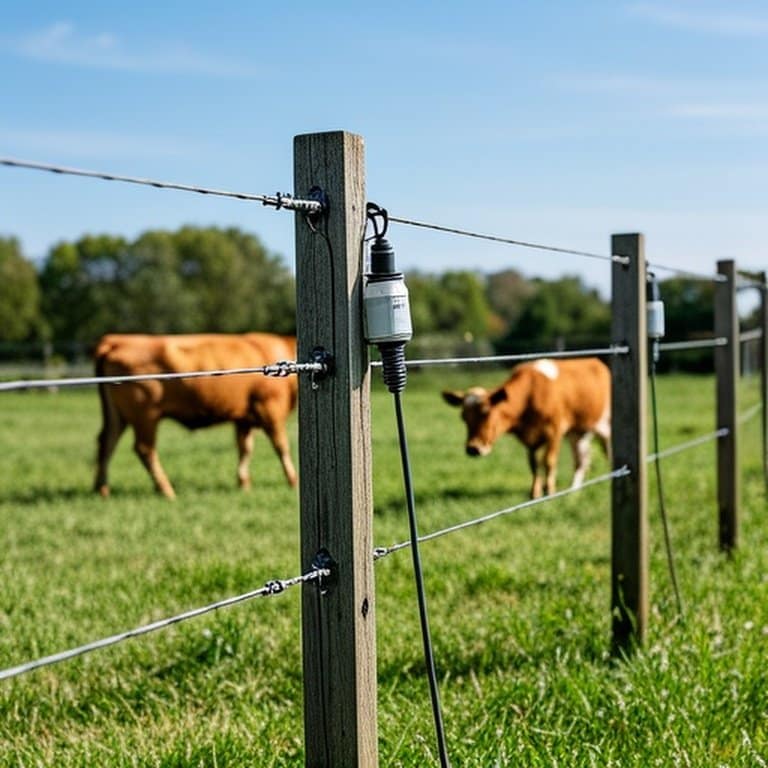
Safety concerns are one of the biggest barriers to adopting electric fencing, especially for perimeter or long-term use. Many people equate high voltage with danger, without understanding how electric fences actually work. Misunderstandings lead either to overbuilding unsafe systems or avoiding electric fencing altogether. This question matters because permanent electric fencing is widely used around the world in close proximity to livestock, people, and equipment. Knowing why it’s considered safe—and under what conditions it becomes unsafe—helps operators design systems that protect animals, people, and property without unnecessary fear or risk.
Key Factors to Consider
- Electric fences use high voltage but extremely low current
- Pulse duration is short, limiting energy transfer
- Grounding quality affects predictability and safety
- Visibility reduces accidental contact
- Maintenance prevents unexpected behavior or faults
Detailed Explanation
Permanent electric fencing works on a fundamentally different principle than household or industrial electrical systems. While the voltage is high, the amperage is extremely low, and electricity is delivered in brief pulses rather than a continuous flow. This combination creates a sharp but momentary shock that triggers a reflex response without causing tissue damage, burns, or cardiac risk under normal conditions.
For livestock, the shock is designed to be memorable but harmless. Animals learn quickly to avoid the fence, which reduces repeated contact and stress. Because physical contact drops after training, injury risk actually decreases compared to barbed wire or rigid physical fencing, where cuts and entanglement are common.
For people, contact is unpleasant but not dangerous for healthy individuals. The pulse nature of the shock prevents muscles from locking up, allowing a person to pull away instinctively. This is why electric fences are legally permitted around farms, roads, and residential boundaries in many regions when properly marked.
Safety problems usually arise not from voltage itself, but from poor design or neglect. Inadequate grounding can cause unpredictable shock intensity. Broken insulators or exposed wires can create surprise contact. Poor visibility increases accidental encounters. These are management issues—not inherent flaws in permanent electric fencing.
By the end of this explanation, the key idea should be clear: electric fencing is engineered to be safe by design, and unsafe outcomes almost always result from installation or maintenance failures, not from the concept itself.
Video Demonstration
How Cattle Behavior Affects This Choice
Cattle behavior actually improves safety outcomes. Once cattle learn to respect an electric fence, they stop pushing, rubbing, or leaning against it. This reduces panic responses, fence damage, and accidental entanglement. Calm, trained cattle experience less stress with electric fencing than with physical barriers. Inconsistent voltage, however, undermines this effect and encourages testing behavior, increasing both escape risk and injury potential.
Calves vs Mature Cattle Considerations
Calves are more sensitive to electric shock, which makes training easier but requires careful strand placement to avoid nose or eye contact. Mature cattle require stronger, more consistent voltage but are no less safe around electric fencing. Designing for mature animals ensures predictable behavior and prevents accidental pressure that could cause fence failure or injury.
Terrain, Visibility, and Pressure Zones
Safety improves when fences are visible and well-placed. Poor visibility increases surprise contact for both people and animals. High-pressure zones such as gates and water points should be clearly marked and well-maintained. Uneven terrain requires careful wire height adjustment to avoid unexpected contact at vulnerable body areas.
When This Works Well
- Fence voltage is stable and well-grounded
- Livestock are trained early
- Fence lines are visible and clearly marked
- Components are maintained regularly
- System is designed for worst-case conditions
When This Is Not Recommended
- Fence is poorly grounded or inconsistently powered
- Visibility is low or markings are missing
- Maintenance is neglected
- Untrained animals are introduced suddenly
- Local regulations are ignored
Alternatives or Better Options
In sensitive areas—such as near public access points or where untrained animals are present—a hybrid system may improve safety. Combining permanent electric fencing with a physical barrier increases visibility and reduces accidental contact. This approach is often used along roads, shared boundaries, or high-traffic zones to balance deterrence with clarity.
Cost, Safety, and Practical Notes
From a safety perspective, permanent electric fencing often reduces injuries compared to barbed wire or rigid fencing. Initial investment in quality components and grounding pays off by creating predictable behavior. The biggest safety risk is complacency—assuming a fence is safe without testing voltage, checking insulators, or managing vegetation. Proper signage, especially on perimeter fences, protects visitors and workers. When safety is designed into the system, electric fencing is one of the safest long-term livestock containment options available.
Quick Takeaway
Yes—permanent electric fencing is safe for livestock and people when properly designed and maintained. Its safety comes from low current, pulsed delivery, and predictable behavior—not from low voltage. Consistency and maintenance are what keep it safe.