PVC or plastic fencing is strong enough for some livestock situations, but not all. It performs well in low-pressure, controlled environments but is generally not suitable for high-pressure containment of large or aggressive animals. Its strength is limited by rigidity and impact tolerance rather than material thickness.
Why This Question Matters
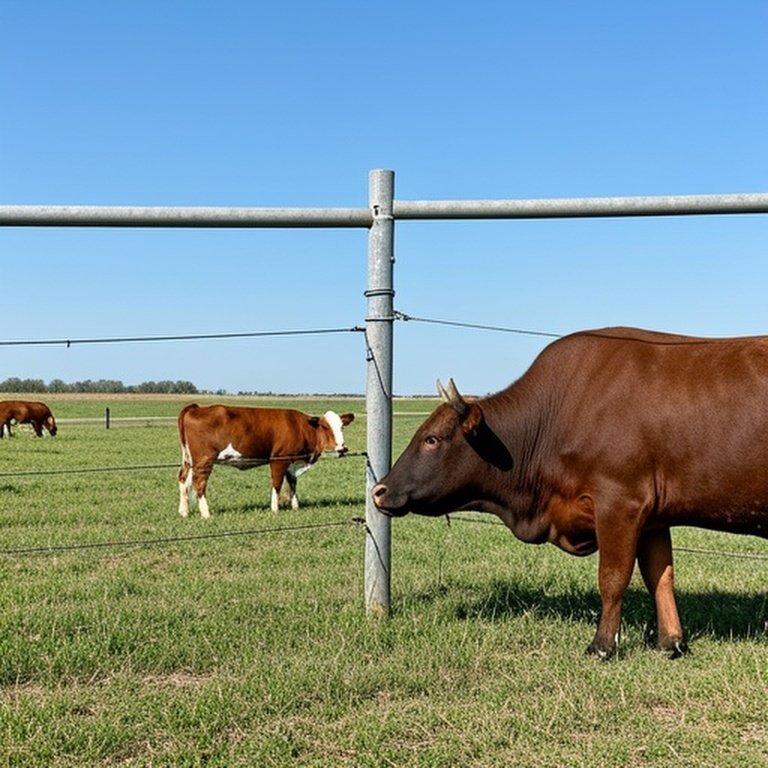
This question sits at the center of many costly fencing mistakes. PVC fencing is often marketed using residential or equestrian imagery, leading livestock owners to assume it offers comparable strength to wood or wire. In reality, “strong enough” depends on how animals interact with the fence, not just material ratings.
Choosing PVC for the wrong livestock type or location can result in sudden failures, escapes, or repeated replacements. Understanding where PVC succeeds—and where it fails—protects both animals and budgets by aligning expectations with real-world performance.
Key Factors to Consider
- Livestock pressure: leaning, rubbing, and crowding increase failure risk
- Fence role: visual boundary versus primary containment
- Impact behavior: PVC resists static load but fails under sharp force
- Temperature effects: cold increases brittleness, heat increases flex
- Repair strategy: damaged sections usually require full replacement
Detailed Explanation
PVC fencing derives its strength from rigid plastic rails and posts designed to hold shape rather than absorb force. Under light, evenly distributed loads, this structure performs well. However, livestock rarely apply force evenly. They push, lean, rub, and occasionally panic—especially near gates, feed, or water. In these situations, PVC behaves very differently from wood or wire.
Wood absorbs energy through fiber compression and gradual deformation. Wire fencing redistributes force across posts and spans. PVC, by contrast, resists movement until a threshold is reached, then fails abruptly by cracking, pulling from fasteners, or breaking at joints. This makes it less forgiving in real livestock conditions.
For small or calm animals, or where the fence serves primarily as a visual or secondary barrier, PVC can perform adequately. Problems arise when PVC is used as primary containment for mature cattle, mixed herds, or high-pressure areas. In these cases, repeated force testing leads to fatigue and eventual failure—not gradual wear that can be adjusted or repaired.
Climate amplifies these limits. In cold weather, PVC becomes more brittle and less impact-resistant. In hot conditions, it softens slightly, increasing deflection under load. Neither condition is inherently dangerous, but both reduce the margin for error when animals apply force.
In short, PVC fencing is not “weak,” but its strength profile is narrow. It must be matched carefully to livestock behavior, pressure zones, and environmental conditions to avoid misuse.
How Cattle Behavior Affects This Choice
Cattle test fences through behavior, not intent. Leaning while scratching, crowding along boundaries, or pushing toward feed areas applies sustained lateral force. PVC fencing tolerates occasional contact but performs poorly under repeated testing.
Without deterrents, cattle quickly learn whether a fence yields. Once they discover that PVC rails flex or shift, pressure increases until failure occurs. This is why PVC fencing often performs well initially, then fails suddenly. Behavior-driven force—not material defect—is the dominant factor in strength outcomes.
Calves vs Mature Cattle Considerations
Calves are lighter and exert less force, making PVC fencing more viable in short-term or controlled situations. Visibility helps reduce accidental contact, which lowers failure risk.
Mature cattle present a different challenge. Adult weight, momentum, and herd pressure exceed the design comfort zone of most PVC systems. Failures with mature cattle are typically abrupt rather than progressive, leaving little opportunity for adjustment or reinforcement.
Terrain, Visibility, and Pressure Zones
PVC fencing performs best on flat terrain where rails remain level and evenly loaded. Slopes introduce stress concentrations because rigid sections cannot follow ground contours easily.
Visibility is a strength—animals see PVC fencing clearly—but pressure zones negate this advantage. Gates, corners, and congregation points experience forces that frequently exceed PVC’s structural tolerance unless heavily reinforced.
When This Works Well
- Low-pressure livestock environments
- Calm or trained animals
- Flat terrain with stable soil
- Visual boundary or secondary fencing
- Areas with minimal crowding or movement
When This Is Not Recommended
- Primary containment for mature cattle
- High-pressure feeding or watering areas
- Mixed or aggressive livestock groups
- Cold climates with impact risk
- Locations requiring frequent modification or repair
Alternatives or Better Options
Wire fencing systems provide superior force distribution and adaptability for livestock pressure.
Wood fencing offers strength and repair flexibility but requires regular maintenance.
Hybrid systems using PVC for visibility combined with wire or electric containment often deliver better long-term performance.
Cost, Safety, and Practical Notes
PVC fencing reduces routine maintenance but increases replacement risk when failures occur. From a safety perspective, smooth surfaces reduce cuts, but sudden structural failure can create containment hazards. Practically, PVC should be selected for where it works best, not where it looks best.
The most expensive PVC fence is one used outside its strength envelope. Matching material behavior to livestock behavior is the real measure of strength.
Quick Takeaway
PVC or plastic fencing is strong enough for livestock only in low-pressure, controlled situations—it is not a universal replacement for wood or wire in primary livestock containment.