Short Answer
Most livestock owners should budget $1.50 to $6.00 per linear foot for fencing, depending on materials, terrain, and installation method. Simple electric fencing sits at the low end, while woven wire or permanent systems cost more upfront. A realistic budget accounts not only for materials, but also posts, gates, labor, and future maintenance.
Why This Question Matters
Fencing is often the single largest infrastructure expense in livestock operations, yet it is frequently under-budgeted. Many people calculate only wire or panel costs and overlook posts, gates, labor, terrain challenges, and ongoing maintenance. Underestimating fencing costs can delay projects, force material compromises, or lead to incomplete enclosures that fail under pressure. Budgeting correctly from the start reduces surprises, prevents corner-cutting, and helps align fencing choices with long-term management goals rather than short-term cost pressure.
Key Factors to Consider
- Total linear footage required for perimeter and interior divisions
- Fence type and material lifespan expectations
- Terrain difficulty affecting post spacing and labor
- DIY installation versus professional labor costs
- Long-term maintenance, repairs, and replacement cycles
Detailed Explanation
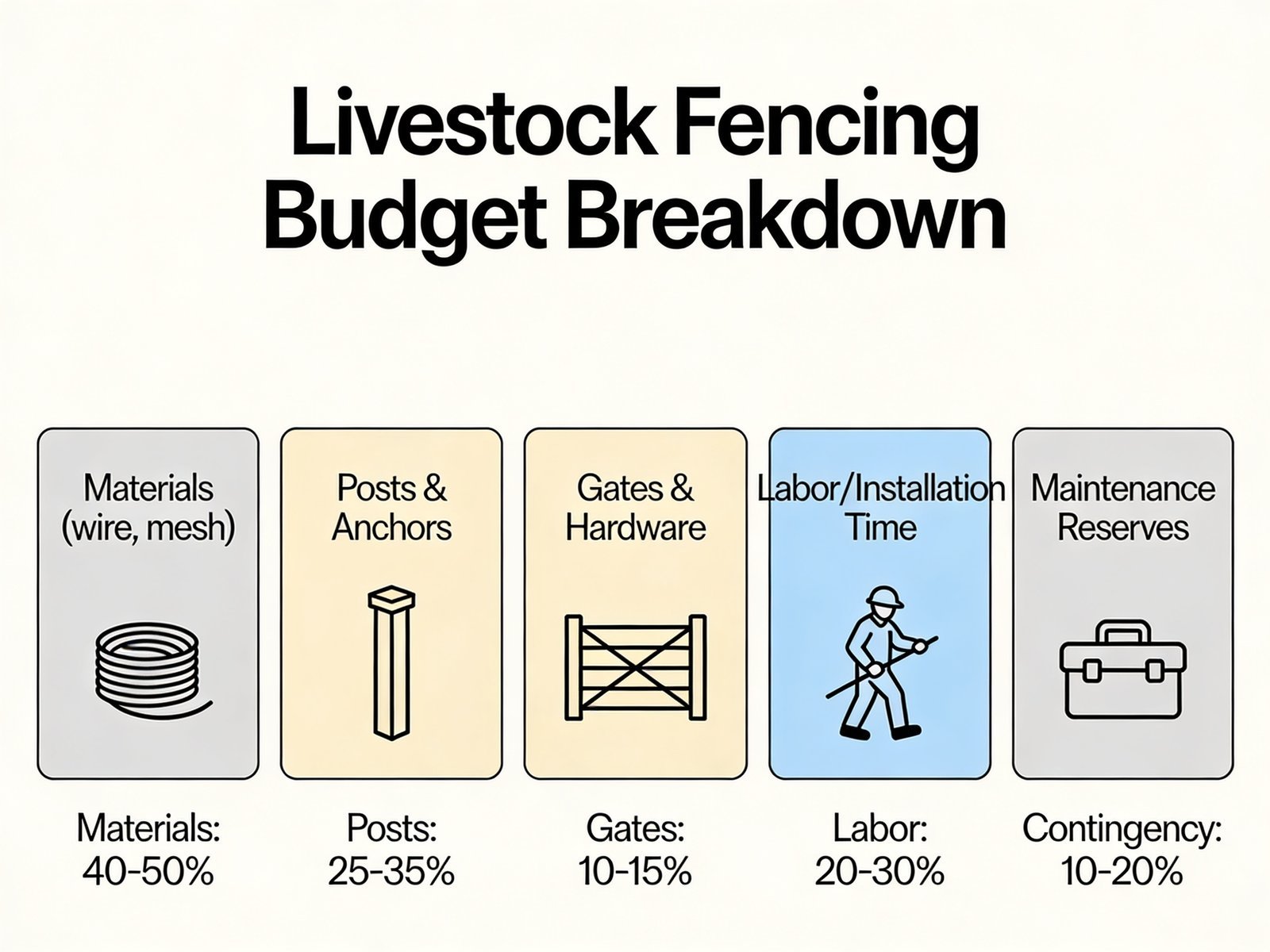
Budgeting for livestock fencing is less about finding a single number and more about understanding cost ranges and trade-offs. Most fencing costs are calculated per linear foot, but that number includes far more than wire alone. Posts, braces, gates, corners, and labor often account for a significant portion of the total expense.
At the lower end, basic electric fencing typically costs between $1.50 and $3.00 per foot when installed by the owner. These systems use fewer materials and rely on animal training rather than physical strength. While affordable upfront, they require ongoing monitoring, vegetation control, and reliable power to remain effective.
Mid-range options such as woven wire generally fall between $3.00 and $6.00 per foot. The higher cost reflects heavier materials, closer post spacing, and increased labor. In return, these fences provide physical containment without relying on electricity or animal behavior, reducing daily oversight and failure risk.
Labor is often underestimated. Even DIY projects incur time costs, specialized tools, and learning curves. Hiring professional installers can double material costs but often results in faster installation, stronger corners, and fewer long-term repairs. Terrain also plays a major role: rocky soil, slopes, and irregular layouts increase post work and labor time significantly.
A practical fencing budget should include a contingency margin of 10–20 percent. This accounts for unexpected terrain issues, material waste, additional gates, or future reinforcement needs. Budgeting realistically upfront prevents compromises that reduce fence performance and increase total lifetime cost.
Budget Allocation Strategies
Perimeter vs Interior Fencing Budgets
Perimeter fencing typically consumes the largest share of a fencing budget because it must withstand the most pressure and last the longest. Strong corners, heavy posts, and reliable materials are critical at boundaries, which raises per-foot costs. Cutting corners on perimeter fences often leads to escapes, neighbor conflicts, or predator access.
Interior fencing, by contrast, can often be built more cheaply. Temporary electric fencing or lighter materials work well for rotational grazing or subdividing pastures. Separating the budget into perimeter and interior categories helps allocate funds where durability matters most while saving money where flexibility is acceptable.
How Fence Type Changes Long-Term Costs
Lower-cost fencing usually carries higher maintenance demands. Electric fencing requires regular voltage checks, vegetation control, and occasional retraining of animals. While inexpensive initially, neglect can quickly reduce effectiveness.
More expensive fencing often lowers long-term costs by reducing failures, labor, and emergency repairs. Woven wire and permanent systems may cost more upfront but often last decades with minimal intervention. Budgeting should consider how much time and attention you can realistically commit to fence upkeep.
When This Works Well
- You are planning fencing before purchasing animals
- Land boundaries and layout are clearly defined
- You can separate permanent and temporary fencing needs
- Budget decisions consider long-term maintenance, not just installation
When This Is Not Recommended
- You budget only for wire and ignore posts, gates, and labor
- Terrain challenges are not evaluated beforehand
- Fence type is chosen solely by lowest price
- No contingency is included for future adjustments or repairs
Alternatives or Better Options
Staged Installation
Installing perimeter fencing first and adding interior fencing later spreads costs over time without compromising containment.
Hybrid Systems
Combining permanent perimeter fencing with low-cost electric interior lines balances durability and flexibility.
Professional Corners, DIY Runs
Hiring professionals for corners and braces while installing straight runs yourself reduces labor cost without sacrificing strength.
Cost, Safety, and Practical Notes
Fencing budgets should prioritize reliability and safety over minimum upfront cost. Poorly built fences increase escape risk, animal injury, and labor demands. Inadequate corners or post spacing often fail first and are expensive to repair once animals are present.
From a safety perspective, smooth wire, proper tensioning, and correct post depth reduce injury risk for both animals and people. Cheap materials that fail under pressure can create sharp edges or unstable structures.
Practically, the most effective budget is one that matches fencing strength to pressure zones. Spending more on corners, gates, and high-traffic areas while economizing elsewhere often delivers the best balance of cost and performance.
Quick Takeaway
A realistic livestock fencing budget accounts for materials, labor, terrain, and maintenance. Expect $1.50–$6.00 per foot depending on fence type, and plan for contingencies. Spending slightly more upfront often reduces long-term costs and operational stress.