
Young & Baby Livestock Fencing

Fencing considerations for young and baby livestock such as calves, lambs, kids, and chicks. Learn about safety, spacing, mesh size, escape prevention, and special requirements for young animals.

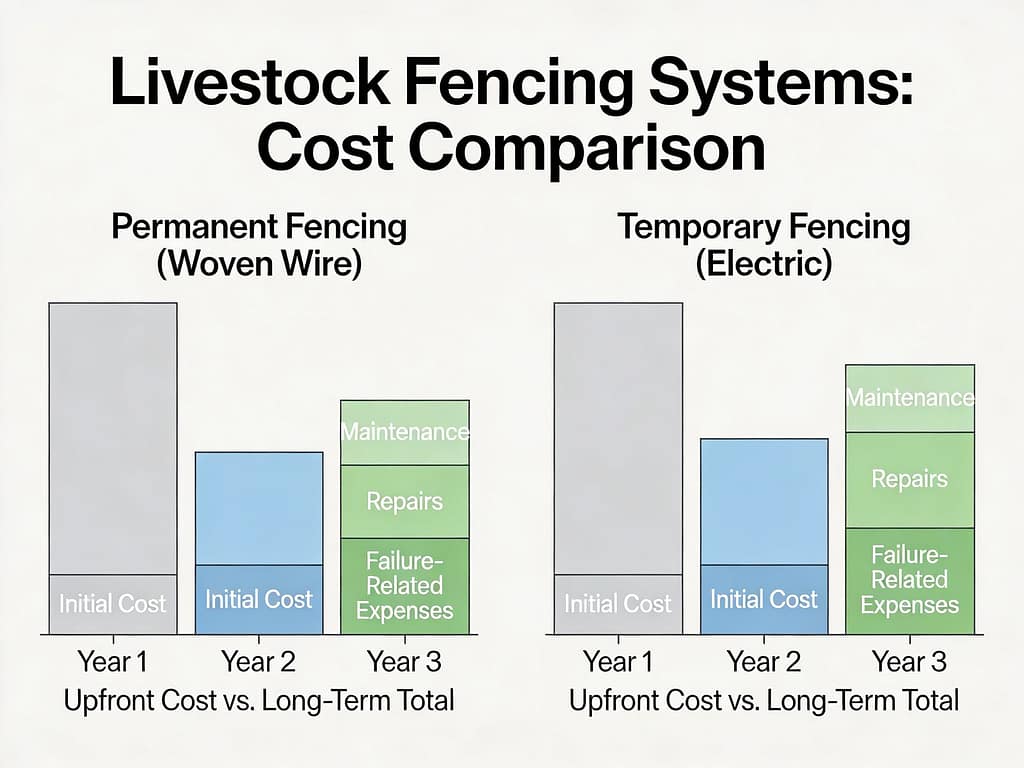
Livestock fencing cost comparison over time | How much does fencing cost for young or baby livestock?

How much does fencing cost for young or baby livestock?

Short Answer Fencing for young or baby livestock typically costs $3 to $10 per linear foot for permanent fencing and $1 to $4 per linear foot for temporary systems. Total cost depends on materials, spacing, terrain, and whether predator protection is required. Designing for young animals usually costs more upfront but reduces long-term losses and […]

How much does fencing cost for young or baby livestock? Read More »

Young & Baby Livestock Fencing
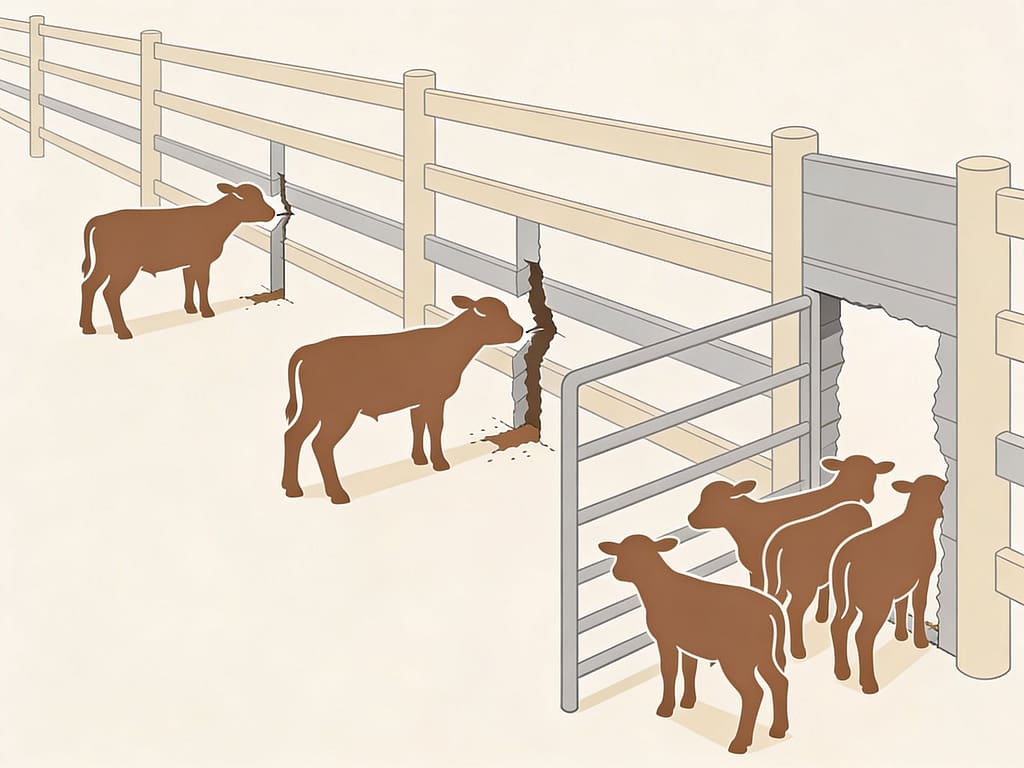
Progressive fence failure from repeated pressure | What are the most common fencing mistakes with young animals?

What are the most common fencing mistakes with young animals?

Short Answer The most common fencing mistakes with young animals include using spacing designed for adults, relying on temporary or electric fencing too early, ignoring ground-level gaps, and underestimating repeated pressure. These mistakes don’t fail once—they teach animals how to escape, creating long-term containment problems. Why This Question Matters Most fencing failures with young animals

What are the most common fencing mistakes with young animals? Read More »

Young & Baby Livestock Fencing
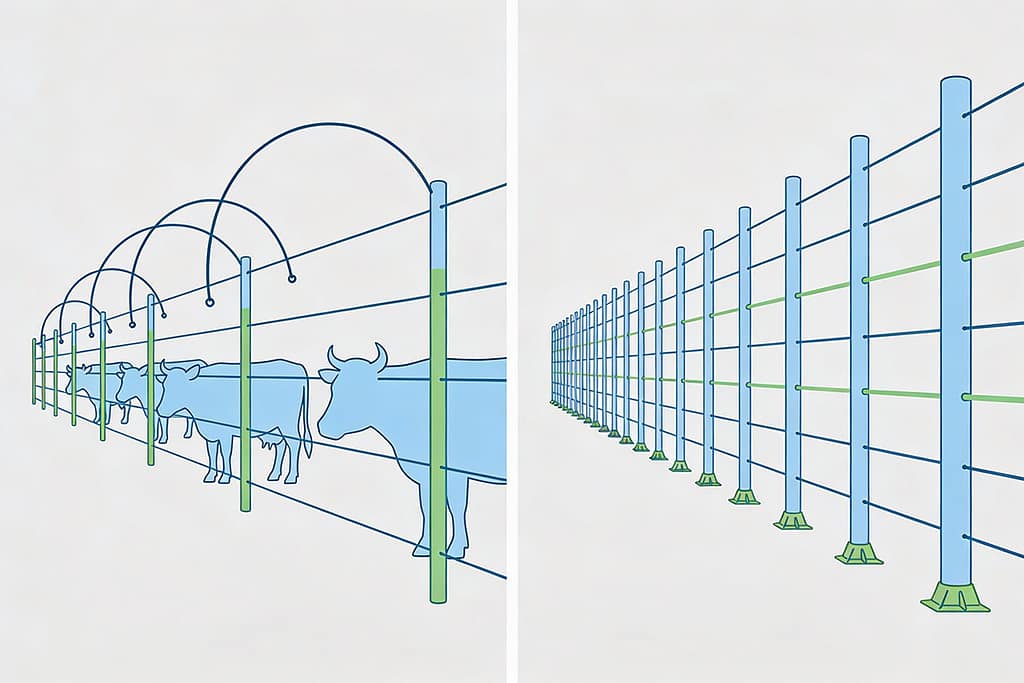
Temporary versus permanent fencing stability comparison | Temporary vs permanent fencing for young livestock: which is better?

Temporary vs permanent fencing for young livestock: which is better?

Short Answer Permanent fencing is generally better for young livestock. It provides consistent physical containment, reduces escape risk during early growth stages, and does not rely on animal training or constant adjustment. Temporary fencing can work in limited, well-managed situations, but it carries higher failure risk when used as a primary barrier for young animals.

Temporary vs permanent fencing for young livestock: which is better? Read More »

Young & Baby Livestock Fencing
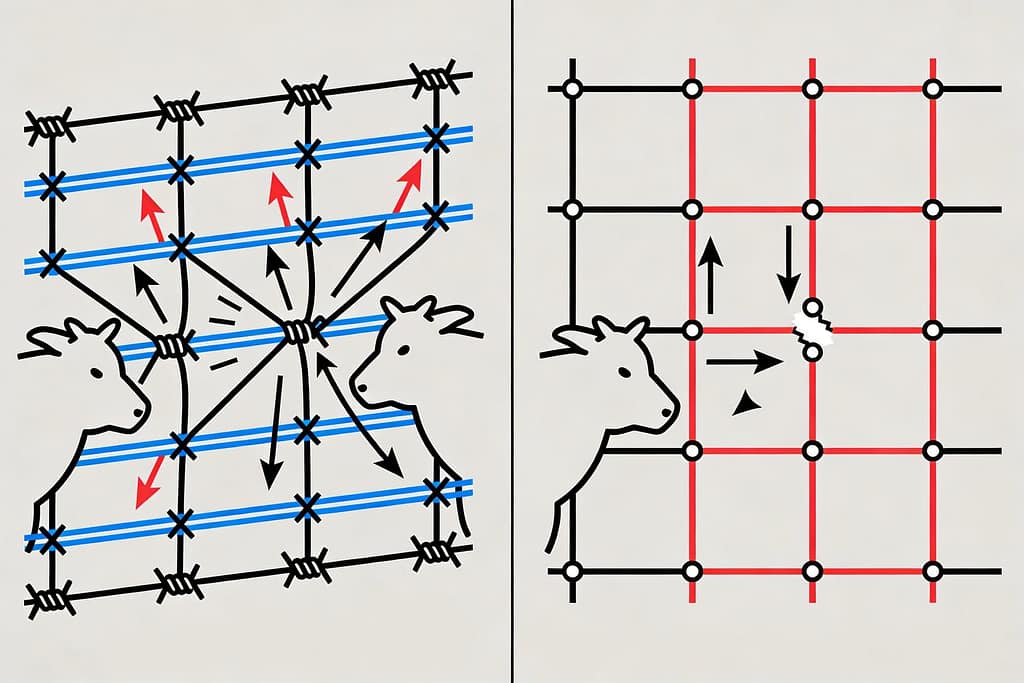
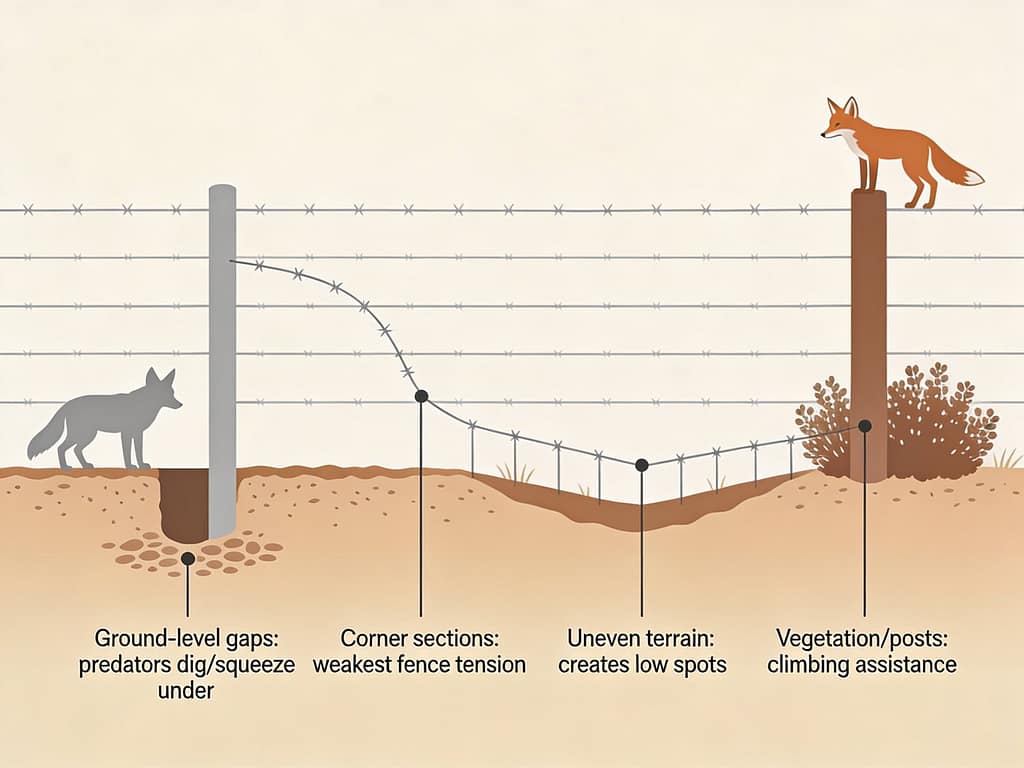
Predator entry points in livestock fencing | How to protect young livestock from predators using fencing?

How to protect young livestock from predators using fencing?

Short Answer To protect young livestock from predators, use tight, continuous perimeter fencing with small mesh spacing and no ground-level gaps, ideally reinforced with an offset electric strand. The fence must physically block entry, prevent digging or squeezing through, and remain reliable at all times, especially during nighttime and low-visibility conditions. Why This Question Matters

How to protect young livestock from predators using fencing? Read More »

Young & Baby Livestock Fencing
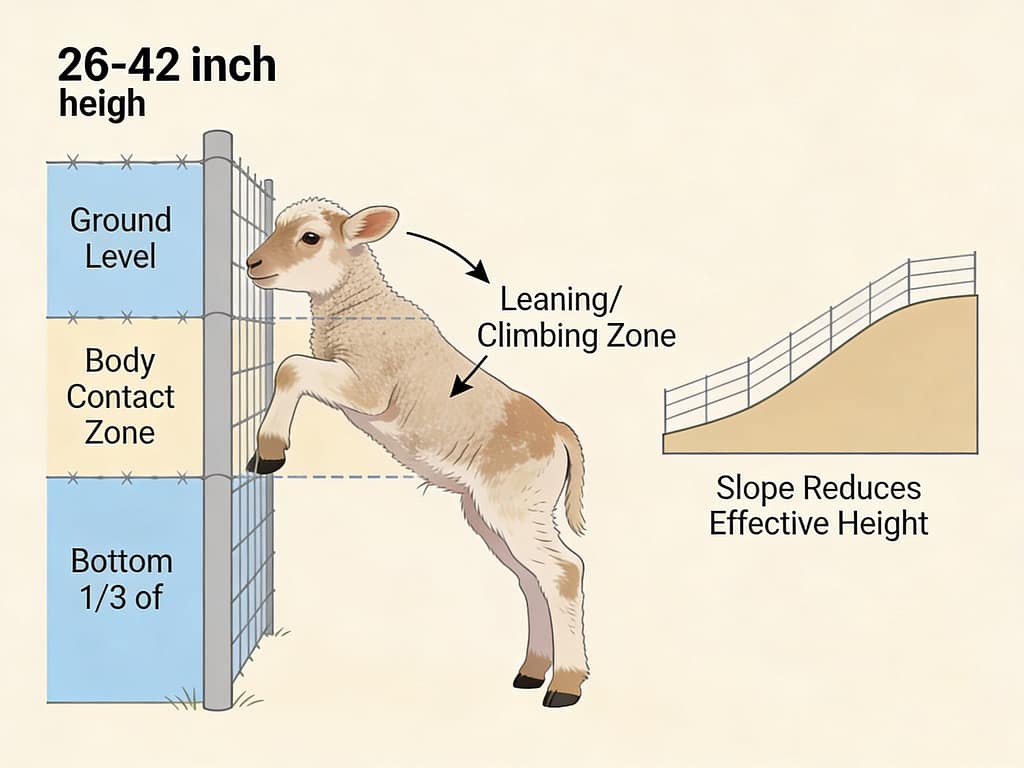
Woven wire versus welded wire pressure distribution | Is woven wire or welded wire better for young livestock?

Is woven wire or welded wire better for young livestock?

Short Answer Woven wire is generally better than welded wire for young livestock. It flexes under pressure instead of breaking, maintains consistent spacing, and reduces the risk of sudden failures when animals push, climb, or pile against the fence during early growth stages. Why This Question Matters Woven wire and welded wire often look similar

Is woven wire or welded wire better for young livestock? Read More »

Young & Baby Livestock Fencing
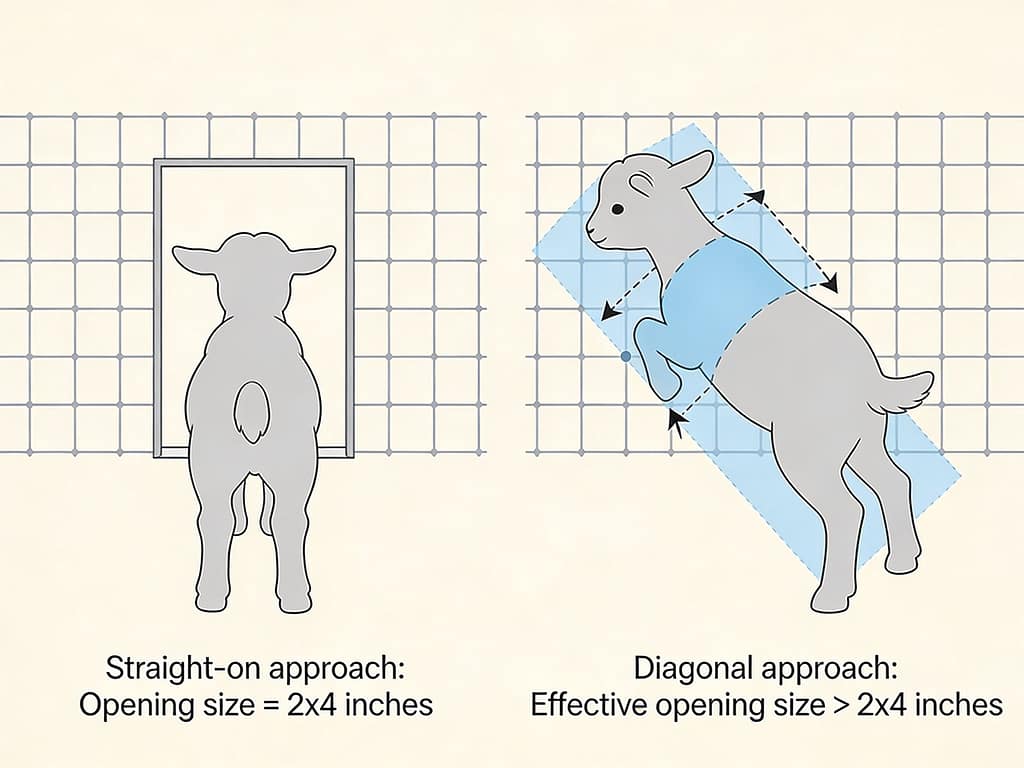
Fence height pressure zones for young livestock | What fence height is safe for young animals?

What fence height is safe for young animals?

Short Answer A fence height of 36 to 42 inches (90–105 cm) is generally safe for young animals when combined with appropriate mesh spacing and ground-level security. This height prevents jumping, climbing, or leaning escapes during early growth stages while remaining manageable, visible, and structurally stable for long-term use. Why This Question Matters Fence height

What fence height is safe for young animals? Read More »

Young & Baby Livestock Fencing
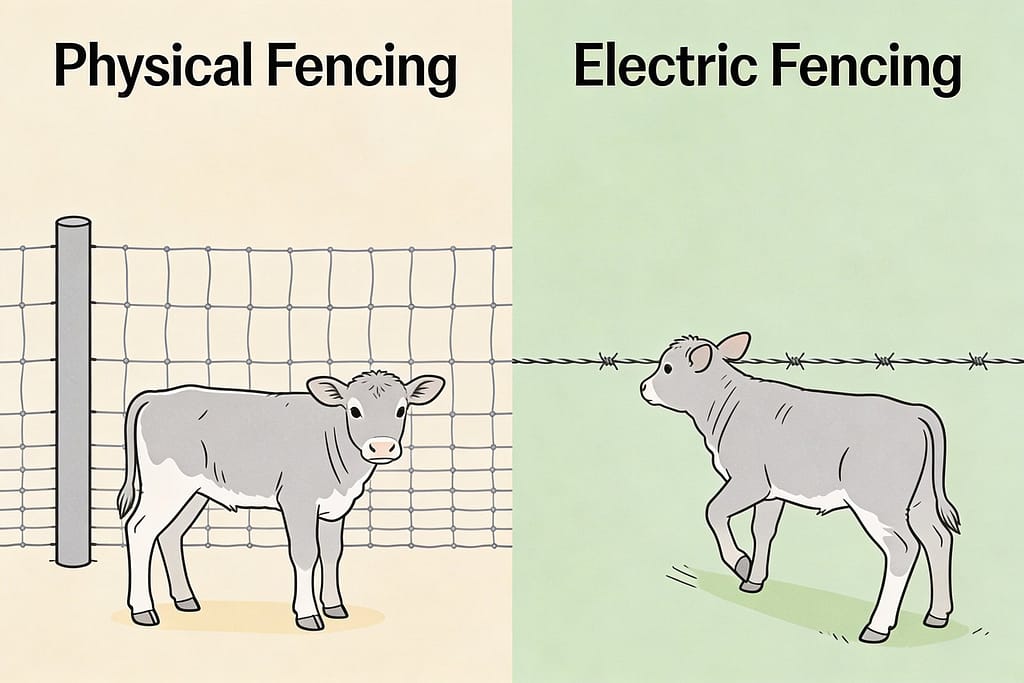
Fence opening dynamics for young animals | How to prevent baby goats / lambs from slipping through fences?

How to prevent baby goats / lambs from slipping through fences?

Short Answer To prevent baby goats and lambs from slipping through fences, use small-mesh woven wire fencing with openings no larger than 2 by 4 inches, installed tight to the ground and properly tensioned. This creates a continuous physical barrier that blocks heads, shoulders, and bodies before escape attempts turn into learned behavior. Why This

How to prevent baby goats / lambs from slipping through fences? Read More »

Young & Baby Livestock Fencing
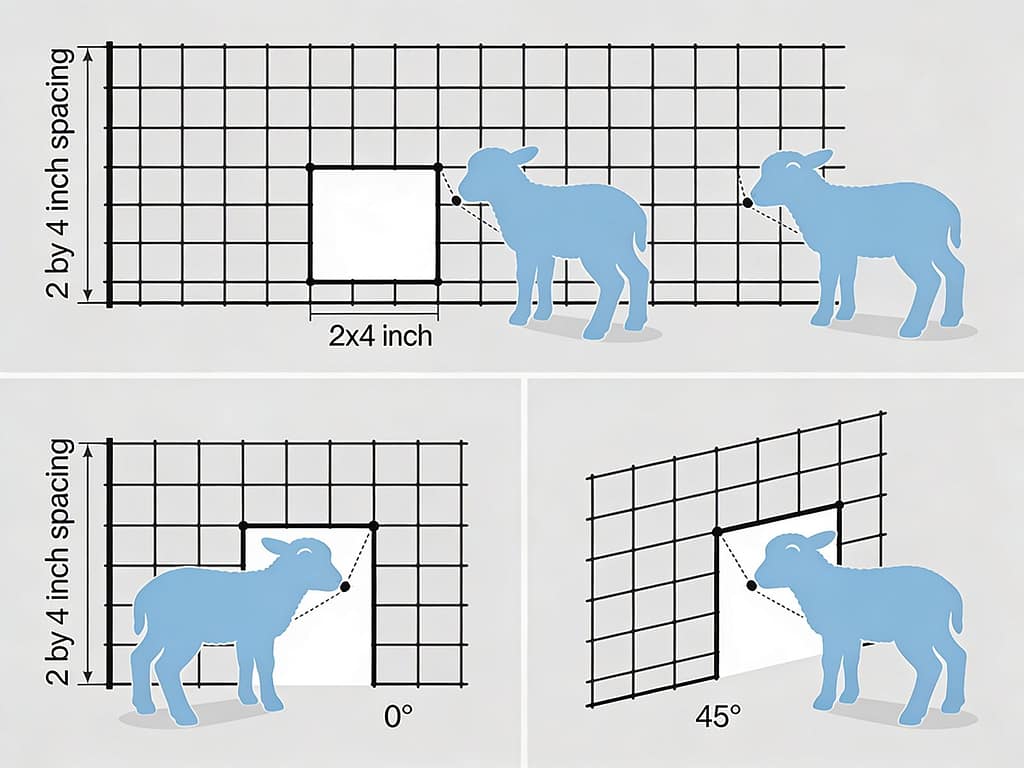
Woven wire fence mesh spacing illustration | What is the best fencing for young livestock?

What is the best fencing for young livestock?

Short Answer The best fencing for young livestock is woven wire fencing with small mesh spacing, properly tensioned and securely anchored to solid posts. It provides consistent physical containment, prevents young animals from slipping through or getting stuck, and works reliably without requiring behavioral training or constant monitoring. Why This Question Matters Young livestock behave

What is the best fencing for young livestock? Read More »

Young & Baby Livestock Fencing
Scroll to Top