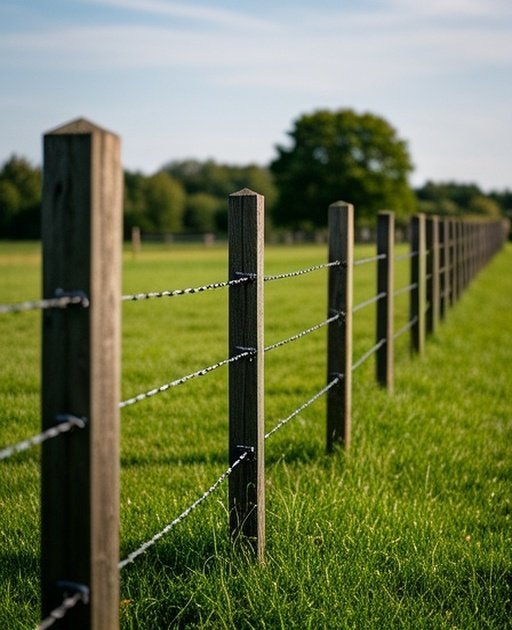
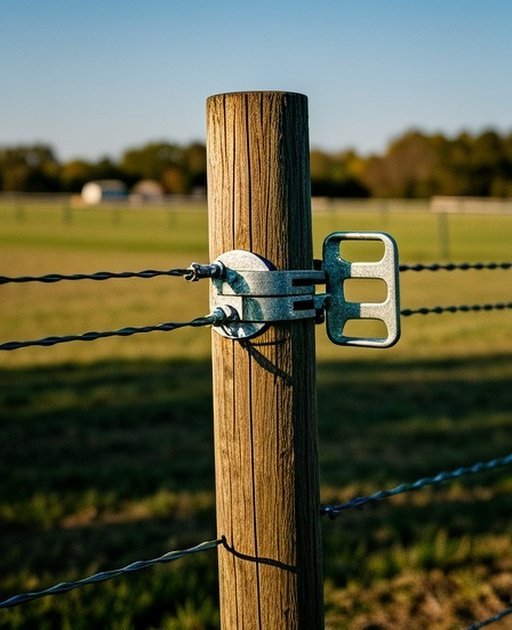
This page focuses on structural design differences and strategic planning—not specific material cost comparisons or detailed installation techniques covered in separate guides. For comprehensive fence layout planning, see the Fence Planning Basics hub.
YouTube search query: “perimeter vs interior fencing livestock explained”
What This Guide Covers
The Role of Perimeter Fencing
Perimeter fencing is the outer boundary fence that contains livestock within the property and excludes outside threats — neighboring livestock, predators, and unauthorized access. It carries the highest consequence if it fails: escaped livestock on public roads, predator entry, or trespass claims. Perimeter fence specifications should therefore be the most robust on the property — heavier posts, better wire, deeper post setting, and more thorough bracing than interior cross-fencing requires.
The perimeter fence also defines the operation's boundary with neighboring properties and public roads, making it subject to legal requirements (setback distances, height regulations, boundary maintenance obligations) that interior fencing doesn't face. Budget perimeter fence at full specification even if it means delaying interior cross-fencing — a compromised perimeter creates liability and management problems that interior fence efficiency cannot compensate for.
Interior Cross-Fencing: Purpose and Specification
Interior cross-fencing divides the property into management units — paddocks for rotational grazing, separate pastures for different livestock species or production groups, lanes for livestock movement, and exclusion zones around infrastructure. Because both sides of interior fence are controlled by the same operator, the consequences of interior fence failure are lower than perimeter failure — animals that break through an interior fence remain on the property.
Interior cross-fencing specifications can be lighter than perimeter: 2-strand high-tensile electric on T-posts at 200-foot spacing is adequate for trained cattle paddock division; portable electric netting handles sheep and goat paddock division without permanent infrastructure. Reserve expensive materials (woven wire, board fence, heavy wooden posts) for situations where interior fence must handle predator exclusion or separate incompatible species permanently.
When to Prioritize Interior Fence Over Perimeter
The standard recommendation is perimeter before interior, but specific situations justify prioritizing interior fencing. Operations where the existing perimeter fence is functional but livestock management is severely limited by lack of paddock division may generate more economic return from adding cross-fencing than from improving an already-functional perimeter. If the perimeter contains livestock reliably and the primary productivity problem is inability to manage forage through rotation, interior fence addresses the binding constraint.
Water source exclusion — fencing streams and ponds out of the main pasture with a small exclusion fence and providing off-stream water — is often the highest-return interior fence investment on properties with water quality or riparian area challenges. USDA EQIP frequently offers high cost-share rates for stream exclusion fencing, making this one of the most economical fence investments available.
Cost Allocation: Perimeter vs Interior Budget
A typical well-designed operation allocates 60–70% of fence budget to perimeter and 30–40% to interior cross-fencing. This ratio reflects the higher specification required for perimeter compared to the lighter interior fence that achieves paddock management goals. Operations with predator pressure may shift more budget to perimeter (heavier woven wire with electric offset rather than basic barbed wire) while using portable electric for all interior division.
Total fence cost per acre decreases as property size increases — perimeter length grows as the square root of area, but a 1,000-acre property doesn't need 10x the interior fence of a 100-acre property. Small properties often spend more per acre on fencing than large ones because the perimeter-to-interior ratio is higher at small scales. Calculate cost per acre when comparing fence investment across properties of different sizes.
Integrating Lanes into the Fence Design
A lane system connecting working facilities (chutes, loading areas, handling pens) to all paddocks through the property is an interior fence element that dramatically improves livestock management efficiency. The main lane (20–30 feet wide) allows moving livestock from any paddock to working facilities without disturbing other paddocks. Without a lane, each animal movement requires opening multiple gates and potentially disturbing multiple groups.
Lane fencing is simpler construction than paddock perimeter — 2-strand electric on T-posts at 50-foot spacing is adequate for a lane where livestock are present briefly and accompanied during moves. The lane also provides a sacrifice area for mud season when main paddock access would damage soil structure. Budget lanes as infrastructure investment that pays back through reduced labor and stress on livestock during handling operations.
With no existing fence, establish the full perimeter first at adequate specification before adding any interior cross-fencing. A property with perimeter fence but no interior division can still operate — move the entire herd together, use portable electric for any needed division, and add permanent interior cross-fencing as budget allows in subsequent years. A property with interior cross-fencing but no perimeter fence cannot operate safely.
When planning the perimeter, design with interior cross-fence connection points in mind. Install T-posts or wooden posts at planned future cross-fence junction points on the perimeter, even if the cross-fence isn't built yet. Future cross-fence installation is much easier when the perimeter already has appropriate anchoring posts at connection locations.
If you need to separate species or production groups
Separating species with incompatible fencing needs (horses and cattle, sheep and goats with different requirements) requires interior division fence built to the more demanding species' specification. The fence separating horses from cattle must meet horse fence standards (high-visibility, smooth wire, adequate height) on the horse side — a T-post with 3 strands of barbed wire that works for cattle is a horse injury risk.
For temporary separation needs (weaning, breeding management, health treatment), portable electric fence accomplishes the objective without permanent infrastructure. A solid portable fence setup and a well-trained herd makes temporary separation a one-hour operation rather than a capital project.
If You Only Need Basic Containment
Basic containment without rotational grazing requires only secure perimeter fencing using cost-effective livestock fence
Recommended fence height for livestock varies between perimeter and interior applications—cattle perimeter fencing requires 48-54 inches while interior cross fencing tolerates 42-48 inches for trained animals. Perimeter systems demand additional height preventing escapes from maximum pressure events including breeding season, predator disturbances, or unfamiliar livestock introductions. Wire spacing standards also differ—perimeter requires tighter spacing preventing entrapment and small animal passage while interior divisions permit wider spacing reducing costs. Goats and sheep demand consistent tight spacing both perimeter and interior due to smaller size and escape tendency.
Structural Strength & Tension
Perimeter fencing requires closer post spacing for wire fencing—typically 8-12 feet versus 12-16 feet for interior divisions—providing superior structural integrity withstanding livestock pressure, weather stress, and accidental impacts. Corner assemblies demand reinforced bracing on perimeter systems using H-braces or double-braced configurations, while interior corners tolerate lighter single-brace designs. High-tensile wire systems benefit from premium perimeter construction maintaining proper tension preventing sag, while interior applications tolerate slight tension variations without compromising functionality. Terrain and soil factors affect structural requirements more severely on perimeter installations facing maximum environmental exposure.
Budget & Material Longevity
Investment prioritization favors perimeter over interior—allocate 60-70% of total fencing budget to perimeter construction using premium materials ensuring 25-40 year lifespan, reserving remaining budget for interior divisions accepting 15-25 year performance using economical alternatives. Fence material cost comparison shows woven wire and treated wood justify perimeter investment through durability, while portable electric systems provide cost-effective interior divisions. Perimeter installation costs more per linear foot but represents smaller total footage than extensive interior subdivision systems. Annual maintenance costs remain lower for properly installed perimeter versus poorly constructed systems requiring frequent repairs.
Terrain & Soil Factors
How soil type affects fence post stability impacts perimeter more severely than interior—perimeter demands deeper installation in sandy soil, enhanced drainage in clay conditions, and specialized techniques on slopes and hills where boundary fencing cannot avoid challenging terrain. Interior divisions benefit from strategic placement avoiding worst soil conditions and difficult topography, routing through optimal ground while perimeter must follow property boundaries regardless of terrain challenges. Frost heave, drainage issues, and rocky ground disproportionately affect perimeter costs and construction complexity.
Can I use the same fence type for both perimeter and interior?
Yes, but it proves economically inefficient—using different materials optimizes investment by applying premium systems to perimeter while utilizing cost-effective electric divisions internally. Uniform systems waste budget on over-engineered interior fencing or compromise perimeter security through inadequate construction.
Should interior fencing be lower than perimeter fencing?
Should interior cross fencing be lower—yes, interior typically runs 6-12 inches shorter than perimeter because trained livestock respect familiar boundaries requiring less height, while perimeter faces maximum escape pressure demanding full containment height specifications.
How much more does perimeter fencing cost than interior?
Perimeter installation costs 50-150% more per linear foot than interior divisions due to premium materials, structural requirements, and enhanced construction. However, perimeter represents smaller total footage than extensive interior subdivision systems.
Can electric fencing work for perimeter boundaries?
Short Answer Perimeter fencing almost always costs more per foot than interior cross fencing. It requires stronger materials, reinforced corners, heavier posts, and greater structural…
Short Answer Yes, interior cross fencing is typically lower than perimeter fencing. Perimeter fences serve as the primary security boundary and are usually built at…
Short Answer Yes, perimeter fencing should generally be stronger and more durable than interior fencing. The perimeter serves as the primary containment and security barrier,…
YouTube search query: “perimeter vs interior fencing livestock explained”
Explore More Fencing Guides
Find the right fence for your farm — browse by livestock type, material, or project need.