
“`html
Poultry / Chicken Fencing Guide
Overview
Poultry and chicken fencing must solve two primary challenges: keeping birds safely contained and preventing predators from entering. Unlike larger livestock, chickens can fly short distances, squeeze through small openings, and are vulnerable to digging, climbing, and aerial predators.
This Poultry / Chicken Fencing Guide covers permanent coop enclosures, free-range perimeter fencing, electric poultry netting, predator-proof design strategies, fence height recommendations, spacing requirements, post placement, and cost planning considerations. It is ideal for backyard flocks, small farms, pasture poultry systems, and larger rural poultry operations.
This guide focuses specifically on chicken and poultry containment systems. For fencing solutions related to cattle, goats, sheep, pigs, horses, or mixed livestock, refer to the Cattle Fencing Guide, Goat Fencing Guide, Sheep Fencing Guide, and Pig Fencing Guide.
YouTube search query: “how to build a predator proof chicken fence tutorial”
What This Guide Covers
Best Fencing for Chickens
The best fencing for chickens balances containment, predator protection, and budget. Welded wire mesh with small openings (1-inch or smaller) provides excellent security against most predators while keeping birds safely inside. Hardware cloth offers the strongest protection but comes at a higher cost.
Traditional chicken wire keeps birds contained but lacks the strength to resist determined predators like raccoons, dogs, or foxes. For permanent installations, galvanized welded wire mesh on sturdy posts offers the best combination of durability and protection. For detailed material comparisons and installation recommendations, visit the Best Fencing for Chickens guide.
Chicken Fence Height Requirements
Chicken fence height depends on breed, wing clipping status, and whether birds are confined or free-ranging. Most backyard chicken runs require 4–6 feet of height to prevent flight over the fence. Heavier breeds like Orpingtons and Brahmas rarely fly higher than 3–4 feet, while lighter breeds like Leghorns and Fayoumis can easily clear 6-foot fences.
For free-range systems, lower perimeter fencing combined with predator deterrents may be sufficient if birds are trained to return to a secure coop at night. For breed-specific height charts and design recommendations, refer to the Chicken Fence Height Requirements guide.
Chicken Fence Height Requirements
Do Chickens Need Electric Fencing?
Electric fencing for chickens serves primarily as predator deterrence rather than bird containment. Chickens do not require electric fencing in most backyard situations, but electric poultry netting can be highly effective for protecting free-range flocks from ground predators like foxes, coyotes, and stray dogs.
Portable electric netting works well for rotational pasture poultry systems where birds are moved frequently to fresh ground. The electrified strands create a psychological barrier for predators while the physical mesh prevents birds from wandering too far. For system selection and setup guidance, see the Do Chickens Need Electric Fencing guide.
Do Chickens Need Electric Fencing?
Predator-Proof Chicken Fencing
Predator-proof chicken fencing must address threats from multiple angles—digging predators like foxes and dogs, climbing predators like raccoons and opossums, and aerial predators like hawks and owls. The most secure designs combine strong mesh fencing with buried skirts or aprons to prevent digging.
Hardware cloth with ½-inch or smaller openings prevents raccoons from reaching through and grabbing birds. Adding overhead netting or a solid roof protects against aerial attacks. For comprehensive predator-proofing strategies and material recommendations, explore the Predator-Proof Chicken Fencing guide.
Predator-Proof Chicken Fencing
Is Chicken Wire Strong Enough?
Traditional chicken wire is not strong enough to reliably keep predators out. While it effectively contains chickens, its thin wire and large hexagonal openings can be torn by determined predators, and raccoons can easily reach through to grab birds pressed against the fence.
Chicken wire deteriorates quickly when exposed to weather and becomes brittle within a few years. For predator protection, welded wire mesh or hardware cloth provides significantly better security and longevity. For material strength comparisons and upgrade recommendations, see the Is Chicken Wire Strong Enough guide.
Is Chicken Wire Strong Enough?
Free-Range Chicken Fencing
Free-range chicken fencing requires different priorities than confined run systems. The perimeter fence serves primarily to deter predators rather than strictly contain birds, since free-range chickens naturally range widely during daylight hours and return to their coop at dusk.
Many successful free-range systems use electric poultry netting around the perimeter combined with trained livestock guardian dogs or other predator deterrence methods. The key is ensuring birds have a secure coop to return to each evening. For layout planning and system design, visit the Free-Range Chicken Fencing guide.
Chicken Run Fencing Options
Chicken run fencing can be permanent or portable depending on your management system. Permanent runs typically use welded wire mesh on wooden or metal posts with buried wire skirts to prevent digging. These systems work well for stationary coops and fixed flock sizes.
Portable chicken tractors and runs allow rotation to fresh ground, reducing parasite loads and providing access to new forage. These systems often use lighter-weight materials that can be moved by one or two people. For comparisons of permanent versus portable systems, see the Chicken Run Fencing Options guide.
Fence Post Spacing for Poultry
Proper fence post spacing for poultry differs from larger livestock because chicken fencing materials are lighter and predators often test fences at multiple points. Standard post spacing for welded wire chicken fencing ranges from 6 to 10 feet, with closer spacing providing better support and predator resistance.
Corner posts require extra bracing because they support tension from two directions. Gate posts should be set deeper and reinforced to handle daily use without sagging. For spacing charts and installation guidelines, refer to the Post Spacing Guide.
Fence Post Spacing for Poultry
Portable Poultry Netting
Portable poultry netting provides flexibility for rotational grazing systems and temporary enclosures. Pre-assembled electrified netting with built-in posts can be set up or moved in minutes, making it ideal for pasture-raised poultry operations that rotate birds to fresh ground regularly.
Quality portable netting features multiple electrified horizontal strands that deter predators while the mesh prevents birds from escaping. Solar or battery-powered energizers make these systems functional in locations without electrical access. For system selection and setup guidance, see the Portable Poultry Netting guide.
Common Chicken Fencing Mistakes
The most common chicken fencing mistakes include using chicken wire for predator protection, failing to bury fence bottoms or add aprons, spacing posts too far apart, and neglecting overhead protection in areas with aerial predators.
Other frequent errors involve installing gates that sag or don’t close securely, using posts that are too small or shallow, and failing to inspect fence lines regularly for weak points. For detailed troubleshooting and prevention strategies, see the Common Chicken Fencing Mistakes guide.
Common Chicken Fencing Mistakes
Common Decision Scenarios
If You Need a Low-Cost Backyard Setup
For backyard flocks with moderate predator pressure, welded wire mesh on treated wood posts offers good protection at reasonable cost. Using 2×4-inch welded wire rather than hardware cloth significantly reduces material costs while still providing better security than chicken wire.
Building the run yourself rather than purchasing pre-made kits can cut costs by 50% or more. For budget planning and DIY installation guidance, see the Cheapest Fencing That Still Works guide.
Cheapest Fencing That Still Works
If Predator Pressure Is High
In areas with persistent predator problems, preventing digging is just as important as strong fencing. Many predators, especially foxes and dogs, will dig under fences rather than trying to climb or break through them.
The most effective solution is burying hardware cloth or welded wire mesh 12–18 inches deep around the entire perimeter, or creating an outward-facing apron of mesh at ground level. For comprehensive predator exclusion strategies, see the Best Fencing to Keep Predators Out guide.
Can Predators Dig Under Fences? | Best Fencing to Keep Predators Out
If Chickens Free-Range During the Day
For flocks that free-range during daylight hours, perimeter electric fencing provides flexible predator deterrence without strictly confining birds. Electric fencing can be effective for protecting chickens when combined with training birds to return to a secure coop at dusk.
Many producers use portable electric netting to create large ranging areas that can be moved periodically, giving birds access to fresh forage while maintaining predator protection. For mixed flock management strategies, see the Electric Fencing for Mixed Livestock guide.
Electric Fencing for Mixed Livestock
If Terrain Is Uneven
On sloped or hilly terrain, flexible mesh fencing adapts better to ground contours than rigid panels. Installing fencing that follows the natural grade prevents gaps at ground level where predators can enter or birds can escape.
Stepped fencing works better on steep slopes than trying to stretch mesh in a straight line from high to low points. Additional posts may be needed in dips and rises to maintain proper tension. For terrain-specific installation techniques, see the Sloped Terrain Fencing guide.
If You Want Minimal Maintenance
For low-maintenance chicken fencing, galvanized welded mesh provides the best combination of durability and longevity. Quality galvanized wire resists rust significantly better than standard steel mesh and maintains structural integrity for many years with minimal intervention.
Well-installed welded wire on properly set posts requires only periodic inspection and occasional minor repairs. For material comparisons and maintenance planning, see the Low Maintenance Fencing guide.
Key Design & Planning Considerations
Fence Height & Spacing
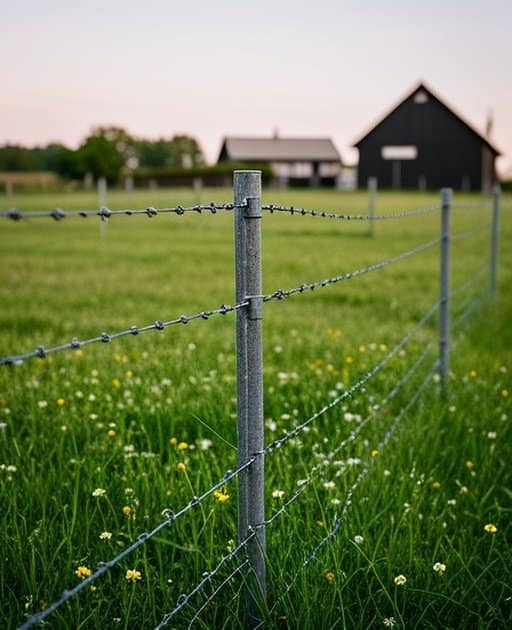
Chicken fencing height typically ranges from 4 to 6 feet, depending on breed flight capability and whether birds are confined full-time or free-ranging. Wire openings should be 1 inch or smaller to prevent chicks from slipping through and to stop predators from reaching through the fence.
Proper spacing between horizontal wires reduces climbing opportunities for predators and prevents birds from getting their heads caught. For comprehensive height recommendations across different livestock types, see the Fence Height Guide and Fence Spacing & Animal Safety.
Safety Factors
Chicken wire alone does not stop predators and should not be relied upon for security. Hardware cloth or welded mesh provides significantly greater strength against predator attacks. When using electric fencing, voltage must be maintained at safe levels for small animals—typically 3,000–5,000 volts for poultry netting.
Sharp wire ends, protruding fasteners, and gaps in fence coverage all present injury risks. For safety planning and risk reduction, see the Electric Fencing Safety guide and Safest Fence for Livestock guide.
Cost & Maintenance
Chicken fencing costs vary significantly based on material type, predator protection level, and enclosure size. Hardware cloth costs substantially more per square foot than welded wire mesh but provides superior predator protection in high-risk areas. Material costs typically represent 40–60% of total project expense for DIY installations.
Ongoing maintenance includes checking mesh tension, inspecting for rust or damage, examining ground contact points where digging may occur, and controlling vegetation that touches electric fencing. For lifecycle cost planning, see the Fence Maintenance Cost guide.
Installation Complexity
Permanent welded mesh fencing requires proper corner bracing, adequate post depth, and careful attention to ground-level security where predators are most likely to breach the fence. Installation demands basic carpentry skills and standard tools including post hole diggers, wire cutters, and staple guns.
Portable poultry netting is significantly easier to install but depends on energizer reliability and proper grounding for effectiveness. For step-by-step instructions, see the Farm Fence Installation guide and Electric Fence Installation guide.
Legal & Boundary Considerations
Many municipalities have specific regulations regarding backyard poultry, including setback requirements from property lines, maximum flock sizes, and enclosure standards. Some areas require permits for structures over certain heights or square footage.
Installing fencing too close to property lines can create disputes with neighbors, especially if birds make noise or attract predators. For legal planning and property line guidance, see the Property Line Fence Placement guide.
Related Fence Systems
- Cattle Fencing Guide – Large livestock containment systems
- Goat Fencing Guide – Climbing and browsing behavior solutions
- Pig / Swine Fencing Guide – Ground-level containment strategies
- Wildlife & Predator Fencing – Protecting livestock from external threats
- Fence Cost & Budgeting – Comprehensive cost planning tools
Frequently Asked Questions
What is the best fence for chickens?
Welded wire mesh or hardware cloth provides stronger predator protection than traditional chicken wire, which keeps birds in but does not reliably keep predators out.
How tall should chicken fencing be?
Most chicken fences range from 4–6 feet in height depending on breed flight ability and whether birds are wing-clipped.
Can electric fencing protect chickens?
Yes, electric poultry netting can effectively deter ground predators when properly grounded and maintained at adequate voltage.
Is chicken wire predator-proof?
No, chicken wire keeps birds in but does not reliably keep predators out—it can be torn by determined predators and allows raccoons to reach through.
How much does chicken fencing cost per acre?
Costs vary widely depending on material type (chicken wire vs welded mesh vs hardware cloth), enclosure size, post spacing, and predator-proofing measures like buried wire or overhead netting.
Final Recommendations
Chicken fencing must prioritize predator protection above containment strength because chickens rarely challenge fences the way larger livestock do. For backyard flocks in areas with moderate predator pressure, welded wire mesh with 1-inch or smaller openings, combined with buried wire skirts or aprons, offers reliable long-term security at reasonable cost.
For rotational pasture poultry systems or free-range operations, portable electric netting provides excellent flexibility and strong predator deterrence when properly maintained. Choose your system based on predator risk in your area, flock size, available budget, terrain characteristics, and long-term maintenance capacity. Use the linked guides above for detailed material comparisons, cost planning worksheets, installation instructions, and predator-proofing strategies tailored to your specific situation.
“`