Short Answer
To prevent fence damage during winter freeze-thaw cycles, ensure posts are set below frost depth, improve drainage around post bases, use gravel backfill instead of dense clay, maintain proper wire tension before winter, and reinforce weak corners. Preventing frost heave and soil expansion is more important than repairing surface damage.
Why This Question Matters
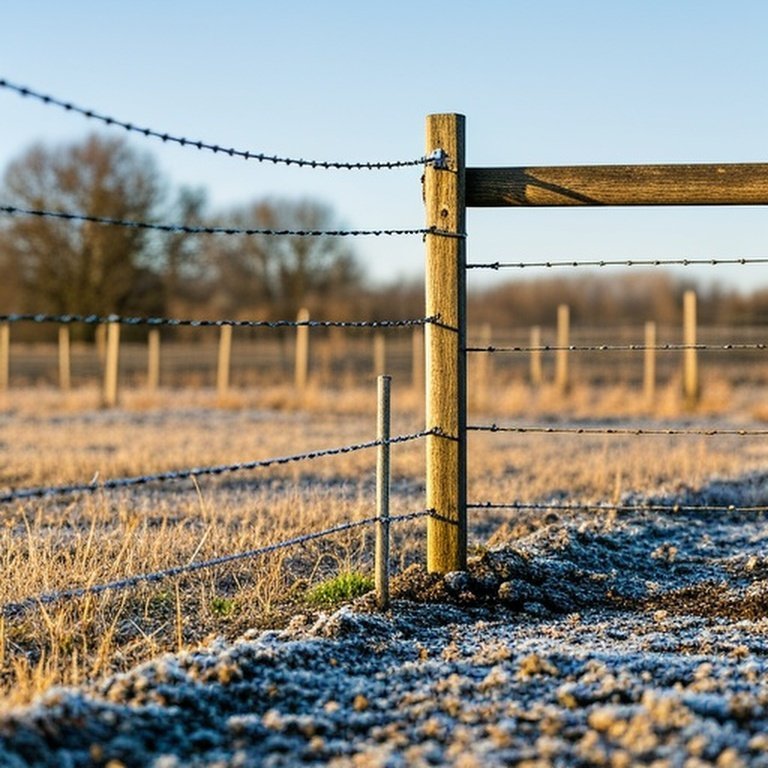
Freeze-thaw cycles don’t usually break fences instantly — they slowly destabilize them. When soil freezes, it expands and lifts posts upward (frost heave). When it thaws, soil contracts and settles unevenly. Over repeated cycles, posts loosen, lean, or shift out of alignment.
If fence posts are shallow or poorly drained, winter movement can undo years of stable performance. Wire tension also changes in cold temperatures, increasing stress on posts and staples. Many fence failures blamed on “old age” are actually long-term frost damage.
Preventing freeze-thaw damage is about controlling moisture, depth, and structural balance before winter arrives — not reacting after spring reveals the leaning sections.
Key Factors to Consider
- Local frost depth in your region
- Soil type and drainage capacity
- Post installation depth and backfill method
- Existing post looseness before winter
- Wire tension entering cold season
Detailed Explanation
Freeze-thaw damage is driven by moisture trapped in soil. When water freezes, it expands approximately 9%, pushing soil upward. If fence posts are embedded in moisture-heavy soil, the expansion lifts them incrementally. Repeated cycles gradually work posts upward or sideways.
The most effective prevention method is setting posts below the frost line. Posts installed deeper than the maximum frost depth remain anchored in stable soil that does not freeze. Shallow posts are far more vulnerable to seasonal movement.
Drainage is equally critical. Gravel backfill allows water to drain away from the post base, reducing freeze expansion pressure. Dense clay holds water and increases frost heave risk. Proper compaction of gravel improves both drainage and structural grip.
Wire tension also shifts in cold weather. Steel contracts as temperatures drop, increasing tension stress. Entering winter with already over-tightened wire can overload corner posts during deep freezes. Slightly balanced, moderate tension before winter reduces structural strain.
Finally, inspect and reinforce weak posts before the ground freezes. Once soil is frozen solid, corrective repairs become difficult and expensive. Preventive inspection in late fall is significantly easier than emergency realignment in early spring.
By combining deeper installation, drainage control, and structural reinforcement, freeze-thaw damage can be minimized long before visible leaning appears.
How Frost Heave Affects Fence Posts
Frost heave lifts posts vertically and can tilt them if soil expands unevenly. Even small annual movement compounds over time.
Deeper installation and gravel backfill dramatically reduce upward pressure.
Why Drainage Is More Important Than Concrete
Concrete traps moisture around posts in cold climates. Gravel allows water escape, reducing freeze expansion pressure.
In frost-prone regions, drainage often matters more than rigid anchoring.
The Role of Wire Tension in Winter Stability
Cold weather increases wire tension naturally. Over-tightened systems stress corners and brace assemblies.
Balanced pre-winter tension protects structural components during contraction.
When This Works Well
- Posts are installed below frost depth
- Soil drains reasonably well
- Gravel backfill is used
- Wire tension is properly adjusted
- Fence is inspected before winter
When This Is Not Recommended
- Posts are shallow and already loose
- Clay soil retains heavy moisture
- Fence sits in low, water-collecting areas
- Corner braces are weak or undersized
- Chronic frost heave occurs annually
Alternatives or Better Options
Use Steel Posts in High Frost Zones
Steel T-posts resist upward frost pressure better than wood in some soil types, though depth still matters.
Install Frost-Resistant Anchoring Systems
Helical anchors or deeper augered holes provide stronger below-frost stability.
Redesign Drainage Around Fence Lines
Redirect runoff or add shallow grading to reduce standing moisture near posts.
Cost, Safety, and Practical Notes
Preventive upgrades are far cheaper than replacing multiple frost-lifted posts in spring. Gravel backfill and deeper installation add modest labor but significantly extend fence life.
Avoid working frozen ground whenever possible. Attempting to reset posts in frozen soil often causes additional structural disturbance.
Late fall inspection is the most practical time to prepare. Address loose posts before deep freeze locks the ground.
In severe frost regions, long-term durability depends more on installation depth and drainage than on post material alone.
Quick Takeaway
Preventing winter freeze-thaw damage is about depth, drainage, and balanced tension. Set posts below frost line, use gravel backfill, correct weak areas before winter, and avoid over-tightening wire. Managing moisture and structural balance prevents slow seasonal movement that leads to leaning fences in spring.