Short Answer
The proper way to tamp fence posts is to backfill the hole in 4–6 inch layers, compacting each layer firmly with a tamping bar while keeping the post level and aligned. Use crushed gravel or native soil depending on drainage conditions, and apply consistent pressure around all sides to eliminate air pockets and prevent future shifting.
Why This Question Matters
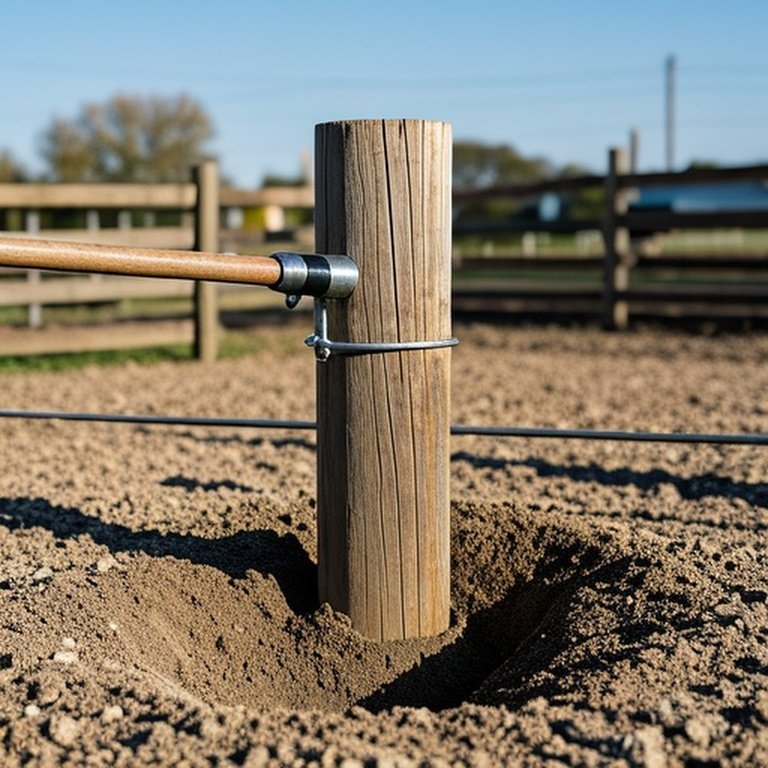
Many fence failures are not caused by poor materials — they are caused by improper compaction around the post. Even a correctly sized and positioned post will eventually lean if the surrounding soil is loose or unevenly packed.
Tamping is what locks the post into the ground. Without proper compaction, soil settles over time, especially after rain, livestock pressure, or freeze-thaw cycles. That settlement creates gaps, reduces lateral resistance, and allows the post to move under tension or animal impact.
Understanding how to tamp correctly ensures long-term stability, reduces maintenance costs, and prevents sagging wire or misaligned fence lines.
Key Factors to Consider
- Soil type and drainage conditions
- Depth and diameter of the post hole
- Post material (wood or steel)
- Fence type and expected tension load
- Livestock pressure and environmental stress
Detailed Explanation
Tamping works by compacting soil or gravel in controlled layers to remove air pockets and increase density. Simply dumping soil back into the hole and pressing it down once is not sufficient. Proper compaction must happen incrementally.
After placing the post at the correct depth, add 4–6 inches of backfill material. Use a tamping bar or digging iron to compact the material firmly around the post. Apply force evenly from multiple angles, ensuring the post remains vertically level. Check alignment frequently using a level or visual sight line along the fence row.
Crushed gravel is often preferred in well-draining soils because it compacts tightly and allows water to move away from the post, reducing rot risk. Native soil can work if it is dense clay or compactable loam. Sandy soil may require mixing with gravel for improved stability.
Repeat the layering and tamping process until the hole is completely filled. The top layer should be slightly crowned to shed water away from the post base. When properly tamped, the post should feel rigid immediately, without wobble or movement.
Correct tamping distributes lateral force through dense soil friction. This is especially important for woven wire or high-tension fences, where constant strain pulls against end and line posts.
When done properly, tamped posts can rival concrete in stability under the right soil conditions.
How Cattle Behavior Affects This Choice
Cattle often rub or lean against fences, creating repeated side pressure. Poorly tamped posts loosen quickly under this behavior.
Dense compaction resists lateral movement and distributes force more evenly into the surrounding soil mass.
Calves vs Mature Cattle Considerations
Calves exert minimal force and may not reveal tamping weaknesses immediately. Mature cattle, however, apply significant pressure.
If fencing for adult livestock, extra care in tamping and deeper post depth improves durability.
Terrain, Visibility, and Pressure Zones
Posts located on slopes or near gates experience more stress. Soil erosion around sloped installations can expose weak compaction.
In high-traffic or corner zones, tamping must be especially thorough to prevent gradual loosening.
When This Works Well
- Well-draining soil conditions
- Properly sized post holes
- Moderate-tension fencing systems
- Areas with minimal frost heave
- Installations where water does not pool
When This Is Not Recommended
- Extremely sandy or loose soil
- High water table areas
- Very high-tension fencing corners without bracing
- Regions with severe frost heave cycles
- Heavy livestock pressure on perimeter fences
Alternatives or Better Options
Concrete Footings
Concrete provides maximum rigidity for corner, brace, and gate posts, especially under high-tension systems.
Gravel-Only Backfill
Crushed stone improves drainage and reduces rot risk while allowing strong compaction.
Driven Steel Posts
In some soil types, driving steel posts directly into the ground provides immediate stability without backfilling.
Cost, Safety, and Practical Notes
Tamping requires physical effort but saves material cost compared to concrete. A tamping bar is inexpensive and effective for most farm applications.
Improper tamping can cause posts to lean within months, requiring reinstallation. Rework often costs more than doing the job correctly the first time.
Always maintain safe posture when tamping to avoid back strain. Compact evenly around the post to prevent uneven loading that may tilt the post off vertical alignment.
Good tamping technique provides long-term performance in suitable soil conditions, especially for line posts.
Quick Takeaway
Proper tamping means compacting soil or gravel in small layers while keeping the post level. Layered compaction eliminates air gaps, increases soil density, and prevents long-term shifting. Done correctly, tamped posts provide durable stability without concrete in many farm settings.