
High-tensile wire fencing offers long lifespan, low maintenance, and efficient livestock containment when properly installed. Its main advantages are durability, fewer materials, and compatibility with electric fencing. The main drawbacks are higher upfront installation precision, dependence on good bracing, and reduced forgiveness if design or livestock behavior is misjudged.
Why This Question Matters
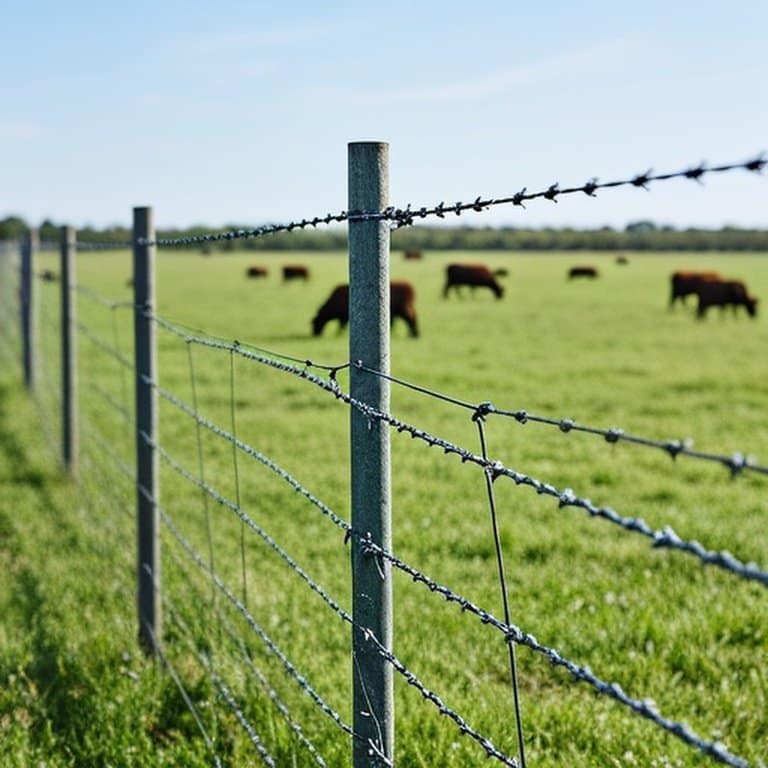
High-tensile wire fencing is often promoted as a “best-in-class” solution, yet many farms experience mixed results. The difference usually comes down to whether the system was appropriate for the operation. This question matters because high-tensile fencing is not a simple swap for traditional wire—it is a different approach to containment.
Understanding both benefits and limitations helps producers avoid underbuilding fences, overspending on unnecessary materials, or choosing a system that does not match their livestock behavior, terrain, or management style. A balanced view prevents costly mistakes.
Key Factors to Consider
- Installation precision: strong corners, proper tensioning, correct spacing
- Livestock behavior: calm grazing versus frequent testing or crowding
- Fence role: perimeter containment or interior/cross fencing
- Maintenance expectations: low routine work but high penalty for shortcuts
- Long-term planning: designed for decades, not short-term use
Detailed Explanation
The primary advantage of high-tensile wire fencing is durability. Made from high-carbon steel and installed under constant tension, the wire resists stretching and sagging for decades. This allows fewer strands to perform the same containment role as heavier traditional fencing, reducing material usage and long-term maintenance.
Another major benefit is efficiency. High-tensile systems are well suited for large properties where long fence runs are required. Once installed correctly, they maintain height and alignment with minimal adjustment. When paired with electric fencing, they shift containment from physical resistance to behavior control, further reducing wear and tear.
However, these advantages come with trade-offs. High-tensile fencing is less forgiving than traditional wire. Poor corner bracing, shallow posts, or incorrect tensioning can lead to sudden failures. Unlike regular wire, mistakes are not gradually revealed—they tend to fail decisively.
Safety is another consideration. While high-tensile wire itself is not inherently dangerous, stored energy in the system increases risk during installation and repair if proper procedures are not followed. Visibility is also lower than woven or board fencing, which can increase testing behavior if not addressed.
In short, high-tensile fencing excels when treated as an engineered system. When installed casually or mismatched to livestock behavior, its disadvantages become more pronounced than those of traditional fencing.
How Cattle Behavior Affects This Choice
Cattle behavior is often the deciding factor in whether high-tensile fencing succeeds. Calm, pasture-trained cattle typically respect boundaries and apply pressure slowly. High-tensile wire performs exceptionally well in these situations, as the fence maintains tension and discourages repeated contact.
Problems arise with crowded herds, stressed animals, or newly introduced cattle unfamiliar with fencing. Group pressure at feeding or watering points increases physical stress on the fence. In these cases, the advantages of high-tensile wire diminish unless electrification is used to modify behavior. The fence works best when it prevents pressure rather than absorbs it.
Calves vs Mature Cattle Considerations
Calves present a spacing and visibility challenge more than a strength challenge. Wide gaps between strands invite calves to attempt passage, even though the wire itself is strong enough. Proper spacing and visual aids are essential.
Mature cattle apply greater force but behave more predictably. High-tensile fencing resists adult pressure better than regular wire, provided posts and braces are designed for adult loads. Most failures with mature cattle trace back to underbuilt structural components, not weak wire.
Terrain, Visibility, and Pressure Zones
High-tensile fencing adapts well to rolling terrain but requires careful planning on slopes. Uneven ground concentrates tension in downhill sections, making post spacing and anchor strength critical.
Visibility influences behavior. Thin wires are harder for livestock to see, increasing accidental contact. Pressure zones—gates, corners, and feeding areas—amplify both pros and cons. Reinforcing these zones is essential for long-term success with high-tensile systems.
When This Works Well
- Large farms or ranches with long fence runs
- Electrified fencing systems
- Calm, pasture-trained livestock
- Long-term infrastructure planning
- Operations with proper installation capability
When This Is Not Recommended
- Temporary fencing needs
- Poor soil or weak corner support
- High-pressure containment without electrification
- Projects prioritizing speed over precision
- Livestock unfamiliar with boundary training
Alternatives or Better Options
Woven wire fencing provides strong physical barriers with less reliance on tension but uses more material and requires more maintenance.
Barbed wire fencing offers low upfront cost but stretches and degrades faster over time.
Hybrid systems combining high-tensile wire with electric offsets or woven wire in pressure zones often balance durability, safety, and flexibility.
Cost, Safety, and Practical Notes
High-tensile wire fencing typically costs more upfront due to materials and installation precision, but long-term ownership costs are often lower. Reduced sagging, fewer repairs, and long service life offset initial expense over time.
From a safety perspective, proper tensioning, visibility, and installation practices are critical. Stored energy in the wire requires respect during installation and repair. Practically, high-tensile fencing performs best when viewed as permanent infrastructure rather than a quick containment solution.
Quick Takeaway
High-tensile wire fencing offers exceptional durability and efficiency for farms and ranches, but its benefits depend on correct installation, appropriate livestock behavior, and a long-term planning mindset.