
Yes—PVC fencing can crack, warp, or fade over time, but how and how fast this happens depends on climate, installation quality, and livestock pressure. PVC does not rot or rust, but it is sensitive to temperature extremes, UV exposure, and impact forces. These issues are gradual and predictable when understood correctly.
Why This Question Matters
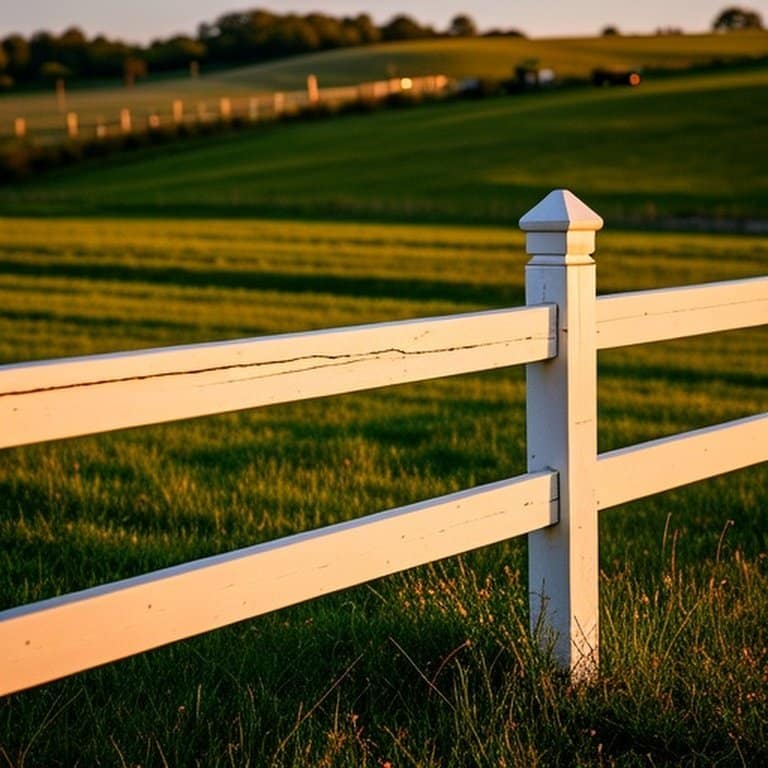
PVC fencing is often sold as “maintenance-free” and “long-lasting,” which leads many buyers to assume it will look and perform the same for decades. On farms, however, fencing faces harsher conditions than residential settings: livestock contact, equipment impact, intense sun, and seasonal temperature swings.
This question matters because cracking, warping, or fading usually does not indicate a defective product—it signals a mismatch between material behavior and real-world use. Understanding why PVC changes over time helps avoid unrealistic expectations and poor placement decisions.
Key Factors to Consider
- Temperature swings: cold increases brittleness, heat increases flexibility
- UV exposure: prolonged sun slowly alters surface color and strength
- Impact forces: livestock or equipment contact accelerates cracking
- Installation tolerance: tight joints limit thermal movement
- Fence location: pressure zones age faster than straight runs
Detailed Explanation
PVC fencing changes over time due to physical and environmental stress, not biological decay. Cracking typically occurs in cold weather, when PVC becomes less flexible and more brittle. Impacts that would merely dent wood or flex wire can cause PVC rails or joints to fracture, especially at connection points or fasteners.
Warping is most noticeable in hot climates or areas with prolonged sun exposure. PVC expands with heat and contracts when temperatures drop. When rails are installed without enough allowance for movement, this expansion can lead to bowing, joint stress, or visible misalignment. Warping is usually a sign of tight installation rather than material failure.
Fading is primarily cosmetic but often misunderstood. Most modern PVC fencing contains UV inhibitors that slow discoloration, but they do not stop it entirely. Over many years, bright white fencing may dull or yellow slightly, especially in high-UV regions. Unlike paint, the color is integral to the material, so fading happens gradually and uniformly rather than peeling or flaking.
Importantly, these changes do not occur evenly across the fence. Pressure zones—gates, corners, feeding areas—experience more stress and show problems sooner. Straight runs in low-contact areas may look nearly unchanged after decades, while high-impact sections require replacement.
PVC fencing does not “wear out” the way wood rots or metal corrodes. Instead, it reaches mechanical or aesthetic limits based on environment and use. When those limits are respected, aging remains predictable and manageable.
How Cattle Behavior Affects This Choice
Cattle behavior significantly accelerates cracking and deformation. Leaning, rubbing, and pushing apply repeated lateral force, especially in hot weather when PVC is more flexible. Over time, this cyclic loading weakens joints and increases the risk of cracking during colder periods.
Once cattle learn a fence flexes, contact increases. This creates a stress cycle—flex in heat, crack in cold—that shortens lifespan. Behavior management or electrification can dramatically slow this process by reducing physical interaction with the fence.
Calves vs Mature Cattle Considerations
Calves are less likely to crack or warp PVC fencing due to lower force, but they may bump or test rails out of curiosity. Visibility helps reduce accidental contact.
Mature cattle are the primary cause of cracking issues. Adult weight, scratching behavior, and herd pressure stress PVC beyond its comfort zone, particularly in cold weather. Most cracking incidents occur in mature-cattle environments, not with young stock.
Terrain, Visibility, and Pressure Zones
Uneven terrain increases warping risk because rigid rails cannot follow ground contours naturally. This creates localized stress at posts and joints.
Visibility is a benefit—animals see PVC clearly—but pressure zones override this advantage. Gates, corners, and congregation areas experience concentrated force, making them the most common locations for cracking and deformation over time.
When This Works Well
- Mild to moderate climates
- Flat terrain with stable soil
- Low-pressure livestock environments
- Decorative or visual boundary fencing
- Areas with minimal equipment contact
When This Is Not Recommended
- Cold climates with frequent impacts
- High-pressure livestock containment
- Sloped or uneven terrain
- Areas requiring frequent fence modification
- Locations with intense, direct sun exposure
Alternatives or Better Options
Wire fencing avoids cracking and warping by redistributing force.
Wood fencing may weather visually but allows flexible repair.
Hybrid systems using PVC for visibility with wire or electric fencing for strength reduce long-term material stress.
Cost, Safety, and Practical Notes
PVC fencing trades corrosion resistance for sensitivity to temperature and impact. While fading is usually cosmetic, cracking can create sudden containment risks. Repairs often require full section replacement rather than incremental fixes.
Practically, PVC fencing performs best when placed deliberately in low-stress roles. When cracking, warping, or fading appear, they are signals of environmental or mechanical mismatch—not premature failure.
Quick Takeaway
PVC fencing can crack, warp, or fade over time, but these changes are predictable and manageable when climate, livestock pressure, and installation practices are properly matched to the material.