Short Answer
The safest fencing for children and animals on a hobby farm is woven wire or mesh fencing with smooth edges, proper height, and secure gates, sometimes reinforced with low-voltage electric offsets out of reach. This type of fencing prevents entanglement, reduces injury risk, and provides reliable containment without relying on constant supervision.
Why This Question Matters
On hobby farms, fencing isn’t just about containment—it’s about safety. Children, pets, and livestock often share the same spaces, increasing the consequences of poor fence design. Sharp wire, large gaps, unstable posts, or poorly placed electric lines can cause injuries even when animals stay contained. Many farm owners focus on what keeps animals in, not what keeps people safe. This question matters because the safest fence is one that works even when children wander, animals panic, or supervision lapses.
Key Factors to Consider
- Fence openings must prevent heads, limbs, or hooves from getting trapped.
- Smooth wire and stable posts reduce injury risk.
- Gate design matters as much as fence material.
- Electric components must be positioned safely and visibly.
Detailed Explanation
The safest fencing systems prioritize physical barriers that block movement without causing harm. Woven wire and mesh fencing perform well because they distribute pressure evenly and eliminate large openings where animals or children can become trapped. Unlike barbed or high-tensile wire, these fences reduce the risk of cuts, punctures, and panic-related injuries.
Fence height and spacing also play a safety role. Fences that are too low invite climbing, while wide spacing encourages heads or limbs to push through. For children, climbability is a serious concern. Fences that cannot easily be climbed or squeezed through reduce the likelihood of unsupervised access to livestock areas.
Electric fencing introduces additional risk if poorly planned. While low-voltage electric offsets can improve safety by discouraging leaning or pushing, they should never be the primary barrier in areas children frequent. When used, electric lines must be clearly marked, placed out of reach, and backed by physical fencing.
Finally, gates are often the weakest safety point. Self-closing, well-latched gates prevent accidental entry and escapes. Many injuries and incidents occur not at fence lines but at gates left open or improperly secured. A safe fence system treats gates as integral safety components, not afterthoughts.
Safety Design Principles
Designing for Panic, Not Normal Behavior
Animals don’t always behave predictably. Loud noises, dogs, or sudden movement can cause panic. Safe fencing assumes animals may run into it at speed. Flexible mesh and properly set posts absorb impact better than rigid or sharp materials.
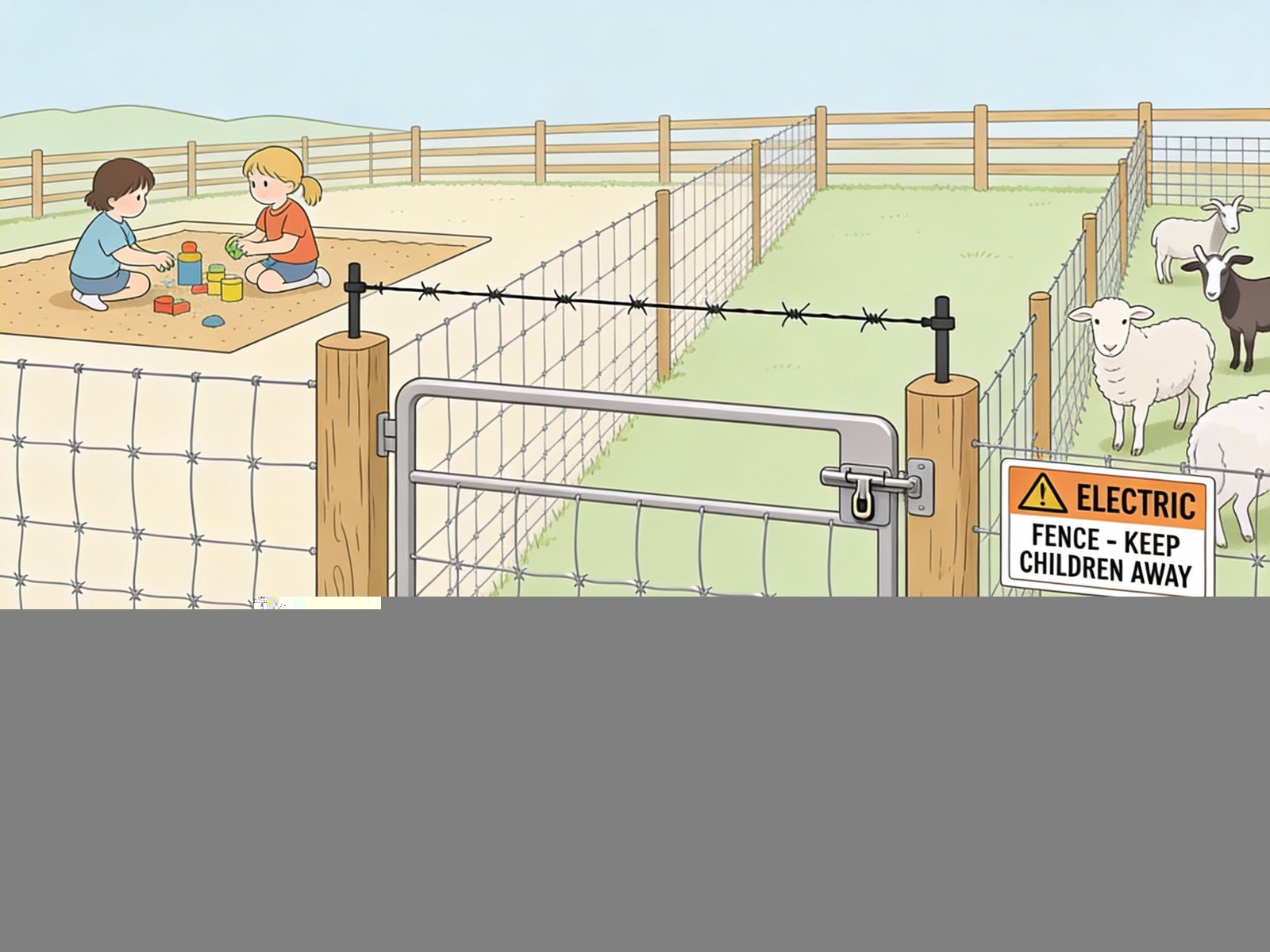
Separating Play Areas from Livestock Zones
On hobby farms with children, fencing should clearly separate play spaces from animal enclosures. Visual barriers and physical distance reduce accidental contact and lower risk even when fences are technically secure.
Visibility and Awareness
Highly visible fencing reduces accidental collisions by both animals and children. Poorly visible wire is a common contributor to injuries, especially in low light or high grass.
When This Works Well
- Hobby farms with children regularly present.
- Mixed livestock operations prioritizing injury prevention.
- Permanent fencing around high-traffic areas.
- Farms with visitors or guests unfamiliar with animals.
When This Is Not Recommended
- Using barbed wire near children or pets.
- Electric-only fencing in family-accessible areas.
- Temporary fencing as a permanent safety solution.
- Unmarked electric lines near walkways.
Alternatives or Better Options
Mesh fencing with reinforced posts offers maximum safety where children frequently interact with animals. Hybrid systems combine physical fencing with carefully placed electric offsets for added containment without increased injury risk. Double-fence layouts create buffer zones between people and livestock in high-risk areas.
Cost, Safety, and Practical Notes
Safer fencing often costs more upfront but reduces medical, veterinary, and liability risks. Smooth wire and mesh materials last longer and require fewer emergency repairs. From a practical standpoint, the safest fences are those that still work when rules are ignored or mistakes happen. Designing for worst-case scenarios is usually the most responsible and economical long-term choice.
Quick Takeaway
On hobby farms, the safest fence is one that prevents injuries—not just escapes. Physical barriers with smooth edges and secure gates are the foundation.