Short Answer
Fence posts can be set in either concrete or gravel, but for most farm and livestock fencing, compacted gravel is often the better choice. Gravel improves drainage, reduces wood rot risk, and makes future repairs easier. Concrete provides maximum rigidity, especially for heavy gate and corner posts, but may trap moisture if not installed correctly.
Why This Question Matters
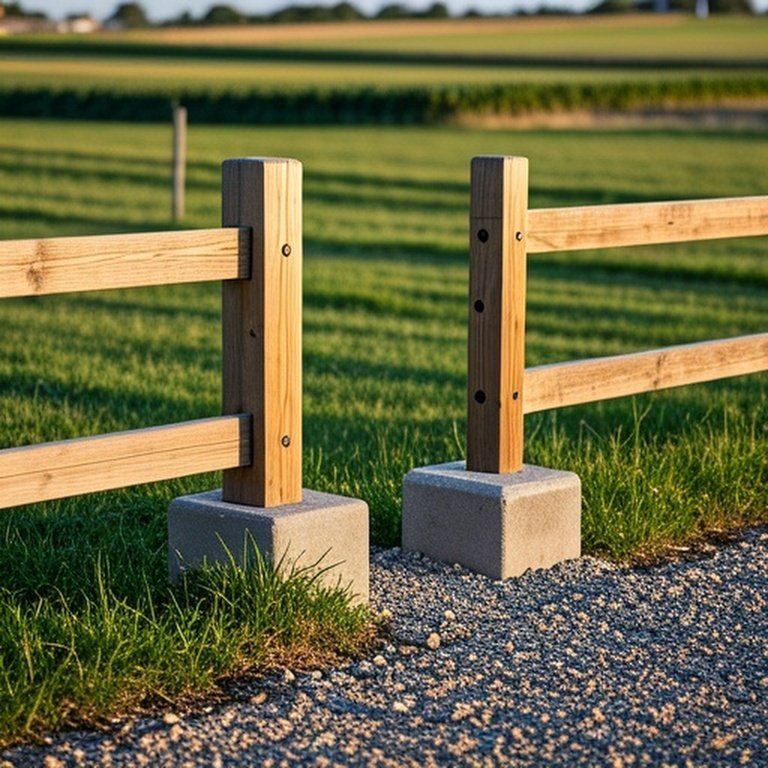
Fence posts are the structural foundation of any agricultural fence. If posts fail, the entire fence line weakens regardless of wire type or tension. Choosing between concrete and gravel directly impacts durability, drainage, maintenance frequency, and long-term cost.
Many property owners assume concrete is always stronger. While concrete does create rigidity, it can also trap water around wooden posts, accelerating decay over time. Gravel, when properly compacted, allows water to drain away and can extend post lifespan. The wrong choice for your soil type, livestock pressure, or climate can lead to leaning posts, frost heave issues, or premature replacement. Understanding the trade-offs ensures you build a fence that lasts rather than one that needs constant repair.
Key Factors to Consider
- Soil drainage and moisture retention levels
- Frost depth and seasonal ground movement
- Livestock pressure and fence tension
- Gate and corner load requirements
- Ease of future post replacement
Detailed Explanation
Concrete creates a rigid anchor by locking the post into a hardened footing. This method works well for heavy gate posts, end posts, and high-tension fence corners where structural load is concentrated. In sandy or extremely loose soil, concrete can significantly improve stability. However, concrete does not flex with the ground. In frost-prone climates, this rigidity can contribute to frost heave if posts are not installed below the frost line.
Gravel, on the other hand, relies on compaction and friction. When crushed stone is added in layers and tightly tamped, it holds the post firmly while still allowing slight movement with soil expansion and contraction. The biggest advantage of gravel is drainage. Water flows away from the base of the post rather than pooling around it. For wooden posts, this often results in longer lifespan compared to poorly drained concrete installations.
For most line posts in agricultural fencing, gravel provides sufficient strength and easier replacement. If a post fails, gravel can be removed without breaking hardened concrete.
The key distinction is load concentration. Posts carrying significant horizontal tension—such as corners and gates—may benefit from concrete or brace assemblies. In contrast, standard line posts across long pasture runs generally perform very well when set deep and compacted with gravel.
In many farm situations, a hybrid approach works best: gravel for line posts and concrete or heavy bracing for structural anchor points.
How Cattle Behavior Affects This Choice
Cattle lean, rub, and apply repeated side pressure. In high-traffic areas, this pressure increases lateral stress on posts.
Concrete resists immediate movement but may crack under extreme force. Gravel-set posts, when deep and properly compacted, distribute pressure more gradually and often perform well under normal livestock conditions. High-pressure zones benefit from reinforced bracing regardless of material choice.
Calves vs Mature Cattle Considerations
Young livestock apply relatively light force, but mature cattle exert substantial lateral pressure. Posts supporting woven or high-tension wire in mature cattle environments must be deeper and more stable.
Concrete can provide added rigidity for areas where herd size and animal weight increase structural demand. Gravel remains effective for lower-pressure areas when properly installed.
Terrain, Visibility, and Pressure Zones
Wet clay soils hold water and increase rot risk around concrete footings. Gravel improves drainage in these conditions.
In rocky terrain, gravel may be easier to install than forming and pouring concrete. On slopes or in wind-exposed areas, deeper installation is more important than the backfill material itself.
Posts near gates, feeding zones, and pasture entrances require stronger anchoring regardless of material.
When This Works Well (Gravel)
- Well-drained soil conditions
- Standard line posts across long fence runs
- Situations requiring easier future replacement
- Areas prone to moisture accumulation
- Cost-sensitive large-scale fencing projects
When This Is Not Recommended (Gravel)
- Extremely loose sandy soil without proper compaction
- Heavy gate posts supporting significant weight
- Severe frost regions with shallow installation
- High-tension corner assemblies without bracing
- Wind-exposed tall fence installations
Alternatives or Better Options
Hybrid Installation
Use gravel for line posts and concrete or brace systems for corners and gates. This balances drainage and structural strength.
Steel T-Posts with Wood Anchors
Steel line posts combined with braced wooden corners reduce reliance on concrete while maintaining strength.
Foam Post Setting Products
Lightweight alternative to concrete that expands to fill space, but more costly and less common in agricultural settings.
Cost, Safety, and Practical Notes
Concrete increases material cost, transport effort, and installation time. It also makes post replacement more labor-intensive. Gravel is cheaper, faster, and easier to remove if a post must be reset.
From a durability perspective, drainage is often the deciding factor. Posts rot from moisture, not lack of rigidity. In poorly drained environments, gravel often outperforms concrete long-term.
Safety considerations include stabilizing posts during setting and preventing collapse of deep holes. Concrete handling requires mixing and lifting heavy bags, while gravel requires careful tamping.
In practical farm fencing, gravel is usually sufficient for line posts, while concrete is best reserved for structural anchor points. The smartest solution is not choosing one universally—but matching the method to the load.
Quick Takeaway
Gravel is generally better for most farm fence posts because it improves drainage and simplifies maintenance. Concrete is best for heavy gate and corner posts that carry concentrated load. The strongest system often combines both methods strategically rather than relying on just one.