
Terrain & Soil Considerations Guide
Overview
Terrain and soil conditions directly affect fence stability, longevity, and long-term maintenance costs. Rocky ground, clay soil, sand, frost zones, and steep slopes all require different post depth, bracing techniques, and material choices for successful cattle, horse, sheep, and goat containment.
This guide explains how terrain impacts fence performance, which fencing systems work best in difficult ground conditions, and how to avoid common structural failures including post leaning, erosion damage, and tension loss. It is designed for farm owners, ranch managers, and DIY installers planning livestock fencing in challenging environments requiring specialized installation techniques beyond standard fence planning basics.
This page focuses on planning and structural design considerations—not specific livestock fence types. For material selection, see fencing material comparisons, and for layout strategy, review the Fence Planning Basics guide. Terrain challenges significantly impact total project costs and long-term maintenance requirements.
YouTube search query: “how to install fence posts in rocky soil and sloped terrain farm fencing”
What This Guide Covers
How Soil Type Affects Fence Post Stability
Soil type affects fence post stability through varying holding power, drainage characteristics, and seasonal movement patterns. Clay soils provide excellent holding power when dry but expand and contract with moisture cycles causing post heaving and leaning. Sandy soils drain well but offer poor lateral stability requiring deeper posts or concrete footings.
Loam provides optimal balance of drainage and stability, while rocky soil demands specialized installation techniques including core drilling or driven posts. Soft or wet soils require increased depth and enhanced drainage systems. Understanding soil composition before determining post depth prevents costly structural failures. For comprehensive soil-specific installation techniques, see the Soil Type and Fence Post Stability guide.
How Soil Type Affects Fence Post Stability
Best Fence Design for Rocky Ground
Best fence design for rocky ground addresses challenges including inability to drive posts to adequate depth, uneven rock distribution preventing consistent post spacing, and increased installation labor costs requiring specialized equipment. Solutions include driven steel posts wedged between rocks, core-drilled holes filled with concrete, surface-mounted anchor systems, and strategic layout following paths of least resistance.
Rocky terrain often benefits from high-tensile wire systems allowing wider post spacing where installation is possible, combined with reinforced bracing at achievable anchor points. Woven wire requires more consistent post placement proving challenging in rock. Equipment rental costs increase dramatically. For rocky ground installation strategies, see the Rocky Ground Fence Design guide.
Best Fence Design for Rocky Ground
Installing Fencing on Sloped or Hilly Terrain
Installing fencing on sloped or hilly terrain requires decisions between following natural contours versus running straight lines, stepped installation maintaining consistent fence height, managing increased tension on downhill sections, and addressing drainage patterns flowing across fence lines creating erosion risks.
Contour versus straight fence lines affects both installation complexity and long-term maintenance. Steeper slopes demand deeper post installation offsetting lateral forces, reinforced bracing preventing downhill creep, and potential terracing in extreme cases. Fence height consistency proves challenging on variable terrain. For slope-specific installation techniques, see the Sloped Terrain Fencing guide.
How to Install Fencing on Sloped or Hilly Terrain
Can Sandy Soil Support Permanent Fence Posts?
Sandy soil can support permanent fence posts when installation incorporates increased depth (typically 30-50% deeper than standard), concrete footings providing lateral stability, larger diameter posts distributing force, and proper tamping techniques maximizing soil contact. However, sandy soil provides inherently weaker holding power than clay or loam requiring design adjustments.
Coastal regions and arid areas commonly feature sandy soils presenting stability challenges exacerbated by drought-induced soil shrinkage or wind erosion. Perimeter fencing in sand demands premium installation while temporary interior divisions prove more economical. For sandy soil installation specifications, see the Sandy Soil Fence Posts guide.
Can Sandy Soil Support Permanent Fence Posts?
Post Depth in Soft or Wet Soil
Post depth in soft or wet soil requires increasing standard depths by 25-40% to compensate for reduced holding power, installing gravel footings improving drainage and stability, using concrete collars preventing lateral movement, and incorporating enhanced bracing systems distributing forces across multiple posts.
Wet soils common in high rainfall areas and poorly drained locations create ongoing stability challenges through saturation cycles. Flood-prone zones require elevated installation and erosion protection. Wood posts face accelerated rot in wet conditions. For soft soil depth specifications, see the Soft and Wet Soil Post Depth guide.
How Deep Should Fence Posts Be in Soft or Wet Soil?
Fencing in High Rainfall Areas
Fencing in high rainfall areas requires drainage planning preventing water accumulation around posts, erosion-resistant materials including galvanized components and rot-resistant posts, strategic placement avoiding natural drainage channels, and regular maintenance addressing water damage including flood-related structural stress.
High rainfall accelerates wood post deterioration, compromises electric fence grounding through oversaturation, and creates erosion undermining post stability. Clay soils in wet climates undergo severe expansion cycles. Consider regional climate factors during planning. For high rainfall fence design, see the High Rainfall Area Fencing guide.
What Fencing Works Best in High Rainfall Areas?
Preventing Fence Posts from Leaning in Clay Soil
Preventing fence posts from leaning in clay soil addresses expansive clay’s seasonal volume changes—expanding when wet and shrinking when dry—creating cyclical stress on posts. Prevention strategies include deeper installation below the active expansion zone (typically 36-48 inches), gravel backfill reducing expansion contact, concrete collars providing stability, and proper drainage preventing moisture accumulation.
Clay provides excellent holding power in stable conditions but creates the most challenging seasonal movement patterns. High-clay content soils common in prairie regions and certain river valleys require specialized techniques. Frost heave compounds clay movement in cold climates. For clay soil stability solutions, see the Clay Soil Fence Post Leaning Prevention guide.
How to Prevent Fence Posts from Leaning in Clay Soil
Frost Heave and Fence Installation
Frost heave affects fence installation by lifting posts vertically as soil moisture freezes, expands, and pushes posts upward over multiple winter cycles, eventually destabilizing fencing. Prevention requires installing posts below local frost line depth (varying 18-60+ inches by region), using gravel backfill promoting drainage and reducing frost pressure, proper soil compaction, and selecting larger diameter posts resisting movement.
Frost heave prevention techniques prove essential in cold climate regions where freeze-thaw cycles dominate. Clay soils retain moisture increasing heave susceptibility. Climate factors determine frost depth. For frost heave installation requirements, see the Frost Heave and Fence Installation guide.
How Frost Heave Affects Fence Installation
Contour vs Straight Fence Lines on Slopes
Contour versus straight fence lines on slopes involves tradeoffs between following natural terrain (reducing tension stress and erosion but increasing linear footage and installation complexity) versus running straight lines (minimizing materials and simplifying layout but creating concentrated stress points and potential erosion channels).
Moderate slopes typically benefit from contour-following designs maintaining consistent fence-to-ground spacing, while gentle slopes tolerate straight lines. Steep terrain demands careful evaluation of stepped installation techniques. Fence height consistency affects livestock containment. For slope design decisions, see the Contour vs Straight Fence Lines guide.
Should Fence Lines Follow Contours or Run Straight Across Slopes?
Common Fencing Mistakes on Uneven Ground
Common fencing mistakes on uneven ground include insufficient post depth failing to account for lateral forces on slopes, ignoring drainage patterns creating erosion damage, using standard flat-ground techniques on challenging terrain, inadequate corner bracing on hills, and poor material selection for specific soil conditions.
Additional errors include attempting to span depressions with excessive distance between posts, failing to account for frostheave in cold climates, underestimating cost implications of difficult terrain, and neglecting future maintenance accessibility. Learning from common mistakes saves substantial time and money. For mistake prevention strategies, see the Uneven Ground Fencing Mistakes guide.
What Are Common Fencing Mistakes on Uneven Ground?
Drainage Solutions for Fence Lines
Drainage solutions for fence lines prevent erosion undermining posts, water pooling accelerating rot, and seasonal flooding causing structural damage. Strategies include installing culverts or drainage pipes under fence lines crossing natural water flow, grading to divert water away from posts, gravel backfill promoting drainage, and strategic fence placement avoiding low-lying drainage areas.
High rainfall regions and properties with seasonal flooding require enhanced drainage planning. Slope-induced runoff creates concentrated flow patterns. For drainage design methodology, see the Fence Line Drainage Solutions guide.
Drainage Solutions for Fence Lines to Prevent Erosion
Equipment Requirements for Difficult Terrain
Equipment requirements for difficult terrain fencing include specialized post drivers for rocky ground, hydraulic augers reaching adequate depth in hard soil, skid steers accessing steep slopes, core drilling equipment for rock, and concrete mixing equipment for footings in unstable soils.
Equipment rental significantly increases project costs—budget accordingly. DIY installation may prove impractical in extreme terrain requiring professional contractors. For equipment selection guidance, see the Difficult Terrain Equipment guide.
Equipment Requirements for Difficult Terrain Fencing
Soil Testing Before Fence Installation
Soil testing before fence installation identifies composition, drainage characteristics, compaction potential, pH levels affecting metal corrosion, and bearing capacity determining appropriate post depth and footing requirements. Professional testing costs $200-$800 but prevents expensive failures from uninformed decisions.
Testing reveals hidden challenges including shallow bedrock, high clay content, poor drainage, and frost susceptibility. DIY testing provides basic information while professional analysis offers comprehensive data. For soil testing protocols, see the Soil Testing Before Fencing guide.
Soil Testing Before Fence Installation
Bracing Requirements by Terrain Type
Bracing requirements by terrain type increase with challenging conditions—flat stable ground requires minimal bracing while steep slopes, sandy soils, and high-wind areas demand reinforced corner assemblies, closer brace spacing, and stronger materials.
Inadequate bracing causes progressive fence failure as stress concentrates at weak points. Perimeter fencing requires superior bracing compared to interior divisions. For terrain-specific bracing specifications, see the Bracing Requirements by Terrain guide.
Bracing Requirements by Terrain Type
Common Decision Scenarios
If You Have Rocky or Hard Ground
Rocky or hard ground demands alternative approaches including shorter driven steel posts wedged between rocks, core-drilled anchor systems when deep installation is possible, surface-mounted brackets where drilling is impractical, and strategic layout following paths minimizing rock encounters. Equipment rental costs escalate significantly.
Consider high-tensile systems allowing wider post spacing where installation succeeds, reducing total posts needed. Budget increases of 40-100% versus standard installation. For comprehensive rocky ground strategies, see the Best Fence Design for Rocky Ground guide.
If You Are Fencing Steep Hills
Steep hills require step-down installation methods maintaining consistent fence height, deeper post installation offsetting lateral downhill forces, enhanced corner bracing preventing system creep, and careful evaluation of contour versus straight line approaches.
Drainage management proves critical preventing erosion undermining posts. Equipment access challenges increase labor costs. Consider electric systems offering easier slope installation. For slope-specific techniques, see the Sloped Terrain Installation guide.
If Soil Is Soft or Wet
Soft or wet soil demands increased post depth by 25-40% beyond standard specifications, concrete footings providing lateral stability, gravel backfill improving drainage, and enhanced bracing systems distributing forces across multiple posts preventing individual post failure.
Wet soils common in high rainfall areas require ongoing maintenance vigilance. Drainage planning prevents saturation cycles. Material selection favors rot-resistant options. For soft soil specifications, see the Soft and Wet Soil Post Depth guide.
Soft Soil Installation Requirements
If Frost Heave Is Common
Frost heave regions require installing posts below local frost line (varying 30-60+ inches by climate), using gravel backfill reducing expansion pressure, proper drainage preventing moisture accumulation, and reinforcing braces maintaining system integrity despite seasonal movement.
Prevention techniques prove more economical than ongoing repairs. Clay soils exacerbate heave susceptibility. Cold climate planning requires understanding frost depth. For comprehensive frost heave solutions, see the Frost Heave Installation guide.
Frost Heave Prevention Strategies
If Budget Is Limited
Limited budgets facing difficult terrain should prioritize secure perimeter fencing with proper installation over attempting complete systems with inadequate techniques. Phased approaches spread costs while maintaining critical containment. Consider temporary electric divisions for interior paddocks.
Cutting corners on post depth or bracing creates expensive failures. Strategic layout planning minimizes difficult terrain encounters. For budget planning, see the Fence Cost & Budgeting guide.
Budget-Conscious Terrain Solutions
Key Design & Planning Considerations
Fence Height & Structural Balance
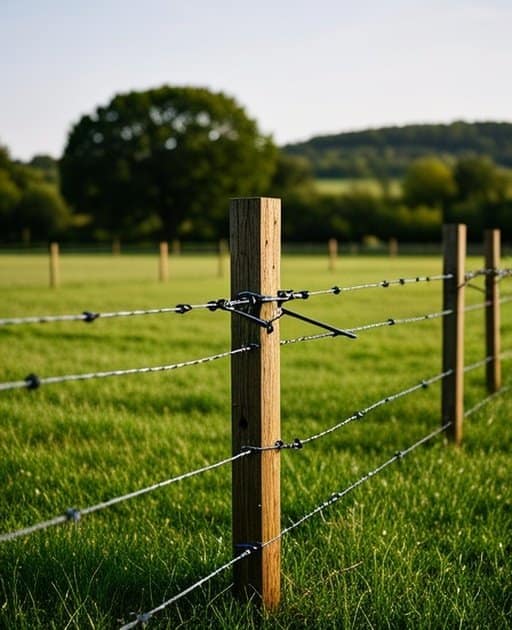
Height increases wind load pressure proportionally—taller fences on slopes require stronger bracing and corner reinforcement than equivalent flat-ground installations. Standard height recommendations by species assume stable terrain; challenging conditions demand structural adjustments.
Wind exposure varies dramatically with topography—ridge tops and open slopes face maximum pressure requiring wind-resistant designs. Balance containment needs with structural practicality. Snow accumulation in drift zones adds load stress.
Soil Compaction & Post Setting Method
Driven posts behave differently than concrete-set posts across various soil types. Clay accepts driven posts well with proper moisture content, while sand demands concrete for stability. Tamping strategies vary—clay requires firm compaction while sand benefits from moisture and gradual settling.
Post setting method affects long-term performance more than initial material cost. Wet soils require specialized approaches. Consider equipment availability and soil conditions when selecting installation method.
Drainage & Erosion Risk
Water flow under fence lines weakens foundations progressively through erosion undermining posts, saturation reducing soil bearing capacity, and seasonal flooding creating structural stress. Always evaluate runoff direction before layout planning.
High rainfall regions and properties with concentrated drainage patterns require enhanced protection including culverts, grading adjustments, and reinforced posts. Flood-prone areas need elevated design.
Long-Term Maintenance Impact
Unstable terrain increases inspection frequency significantly—challenging soil conditions and slopes require quarterly monitoring versus annual checks on flat stable ground. Sloped land often causes wire tension issues demanding seasonal adjustment, while poor soils create ongoing leaning and settlement problems.
Factor increased maintenance costs into planning—difficult terrain may require 2-4x standard maintenance investment. Seasonal maintenance schedules vary by terrain challenges. Accessibility affects maintenance efficiency and cost.
Legal & Boundary Implications
Terrain shifts can move fence alignment over time through erosion, soil movement, and settlement—particularly problematic near property boundaries where encroachment disputes arise. Check local property boundary regulations before installing, and maintain accurate survey documentation.
Slope-induced erosion can alter effective property lines. Setback requirements may apply differently on slopes. Document original installation locations protecting against future disputes caused by terrain changes.
Related Fence Systems
- Fence Planning Basics Hub – Comprehensive layout and design fundamentals
- Fence Height & Spacing Hub – Species-specific dimensions and structural requirements
- Climate & Weather Factors Hub – Environmental conditions affecting performance
- Fence Cost & Budgeting Hub – Financial planning including terrain cost factors
- Perimeter vs Interior Fencing Hub – Structural priorities by fence function
Frequently Asked Questions
What soil is worst for fence stability?
Loose sandy soil and expansive clay both increase leaning risk through different mechanisms—sand offers poor lateral stability while clay undergoes severe seasonal expansion cycles. Soft wet soils also create significant challenges.
How deep should fence posts be on a slope?
Typically deeper than flat ground to offset lateral downhill forces—add 20-30% to standard depth recommendations. Steep slopes may require 40-50% additional depth depending on angle and soil type.
Does rocky soil make fencing cheaper or more expensive?
Rocky ground increases labor and installation complexity significantly despite potentially reducing material needs—expect 40-100% cost increases from equipment rental, specialized techniques, and extended installation time. Overall more expensive than standard conditions.
Can electric fencing work on uneven terrain?
Yes, but electric fencing requires careful tension and grounding adjustment on uneven terrain. Grounding effectiveness varies by soil moisture and type. Slopes create tension management challenges.
Should fence lines follow land contours?
In most cases yes, following contours reduces tension stress and erosion while maintaining consistent fence-to-ground spacing. Straight lines work on gentle slopes but create problems on moderate to steep terrain.
How much does difficult terrain increase fencing costs?
Difficult terrain increases total fencing costs by 30-150% depending on severity—rocky ground and steep slopes impact most dramatically through specialized equipment needs and extended labor hours.
Final Recommendations
Terrain and soil conditions are often underestimated when planning livestock fencing. Poor soil preparation and inadequate terrain adaptation lead to leaning posts, tension loss, and expensive repairs within 2-5 years instead of achieving 20+ year fence lifespans.
Before selecting materials, evaluate soil composition, drainage patterns, frost depth, and slope angle. Consider professional soil testing for significant investments.
If you are early in planning, also review:
- Fence Planning Basics – Comprehensive layout methodology
- Climate & Weather Factors – Environmental conditions affecting durability
- Fence Height & Spacing – Species-specific structural requirements
If cost is your primary concern:
- Fence Cost & Budgeting – Financial planning including terrain factors
- Phased Installation Strategies – Spreading costs over time
Invest in proper site assessment, adequate post depth, appropriate bracing, and terrain-specific installation techniques. The premium for proper installation proves minimal compared to premature replacement costs from inadequate construction.
Terrain-Specific Resources: