Short Answer
Welded wire mesh fencing offers clear visibility, uniform openings, and good safety for smaller livestock, but it lacks flexibility under sustained pressure. It performs well in controlled farm settings, pens, and interior fencing, yet can fail in high-pressure perimeter applications. Whether it’s a good choice depends on livestock behavior, installation quality, and fence location.
Why This Question Matters
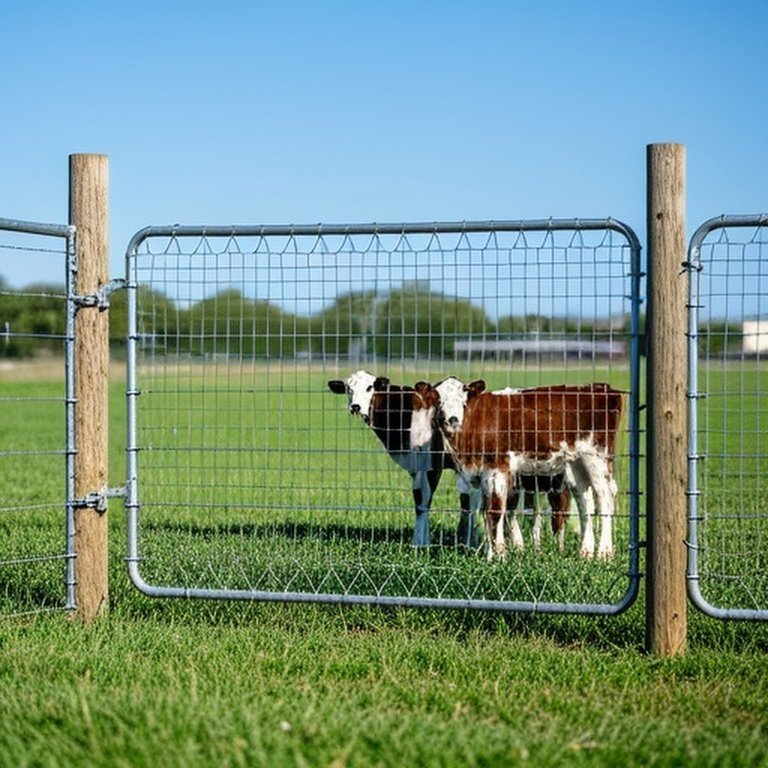
Fencing mistakes are expensive, time-consuming, and often dangerous for livestock. Welded wire mesh is frequently marketed as a strong, versatile solution, leading many farm and ranch owners to use it without understanding its limitations. The pros and cons matter because welded wire behaves very differently from woven wire or high-tensile systems. Its rigidity can be an advantage—or a liability—depending on pressure, terrain, and animal behavior. Evaluating both sides honestly helps prevent premature failures, repeated repairs, and safety issues that only appear after livestock begin interacting with the fence.
Key Factors to Consider
- Fence rigidity versus flexibility under livestock pressure
- Wire gauge, weld quality, and post spacing
- Livestock size, strength, and interaction patterns
- Intended use: perimeter fencing or interior containment
- Long-term maintenance expectations
Detailed Explanation
One of the main advantages of welded wire mesh is its uniform structure. Evenly spaced openings reduce the risk of animals getting heads or legs trapped, improving safety for young or small livestock. High visibility also helps animals recognize boundaries, which can reduce accidental impacts in pens and handling areas. For farms prioritizing clean layout and controlled movement, this predictability is valuable.
Another benefit is ease of use in smaller-scale or segmented fencing. Welded wire mesh works well for pens, corrals, and interior divisions where pressure is limited and predictable. When paired with proper post spacing and strong corner bracing, it can remain stable for years in low-stress environments.
However, the primary drawback is rigidity. Welded wire mesh does not flex under pressure. When livestock lean, rub, or crowd repeatedly, stress concentrates at weld points and posts. Over time, this can lead to broken welds, bent panels, or sagging sections—especially if lighter gauge wire or wide post spacing is used.
Because of this, welded wire mesh is far less forgiving than woven wire fencing. Installation errors that might be tolerated by flexible fencing often cause early failure with welded mesh. The short answer holds true because welded wire mesh performs very well within its limits—but those limits are narrower than many farm and ranch owners expect.
How Cattle Behavior Affects This Choice
Cattle apply pressure through body weight rather than quick impacts. They lean, scratch, and crowd along fence lines, especially near feed, water, or shade. These behaviors create sustained force over time. Welded wire mesh does not absorb this force; instead, it transfers stress directly to welds and posts.
As pressure repeats in the same locations, even heavy-gauge welded mesh can fatigue. This is why welded wire often performs acceptably at first but deteriorates after months of use with cattle. For operations with mature cattle, behavior alone can outweigh material strength ratings when evaluating fence suitability.
Calves vs Mature Cattle Considerations
For calves and young livestock, welded wire mesh offers meaningful advantages. Uniform openings improve safety, and lighter animals place less stress on the fence. In nursery areas or small paddocks, welded mesh can be a reliable and practical solution.
Problems arise when the same fence is expected to contain animals as they mature. Mature cattle generate far more force, quickly exceeding what many welded wire installations are designed to handle. Scalability is a major limitation—what works for calves may require replacement within a single season as animals grow.
Terrain, Visibility, and Pressure Zones
Welded wire mesh performs best on flat or gently sloped terrain where alignment and tension remain consistent. Uneven ground introduces stress points that rigid fencing struggles to accommodate. Visibility is a strong advantage, reducing panic-driven collisions.
Pressure zones—such as corners, gates, and feeding areas—are the most common failure points. Without reinforcement, welded wire mesh in these locations is prone to bending and weld failure regardless of overall fence quality.
When This Works Well
- Pens, corrals, and interior fencing with controlled livestock movement
- Goats, sheep, and young livestock
- Predator control using small opening mesh
- Flat terrain with close post spacing
- Operations with regular fence inspection
When This Is Not Recommended
- Perimeter fencing for mature cattle
- High-pressure feeding or watering zones
- Uneven terrain without reinforcement
- Wide post spacing or weak corner bracing
- Low-maintenance fencing systems
Alternatives or Better Options
Woven wire fencing offers flexibility that better handles sustained livestock pressure. High-tensile wire systems provide strength with controlled give and lower material costs when installed correctly. Electric fencing can reduce physical stress by modifying animal behavior rather than relying on fence rigidity. In many ranch settings, combination systems outperform welded wire mesh alone.
Cost, Safety, and Practical Notes
Welded wire mesh often costs more per foot than woven wire, especially when heavier gauges and closer post spacing are required. Installation precision increases labor costs. Safety advantages include reduced entanglement for small animals, but broken welds can create sharp edges if neglected. Practically, welded wire mesh delivers the best value when pressure is limited and maintenance access is reliable. Long-term success depends on matching fence behavior to livestock behavior—not just choosing a strong-looking material.
Quick Takeaway
Welded wire mesh fencing offers excellent safety and visibility in controlled farm settings but struggles under sustained pressure common on ranches. It is best used selectively, not as a universal fencing solution.