What Fence Height Do Goats Need?
Short Answer
Most goats require a fence height of at least 4 feet (1.2 m), but 5 feet (1.5 m) is recommended for many herds to prevent jumping, climbing, and leveraging terrain. Shorter fences often fail over time as goats learn to step, lean, or jump over them, especially on slopes or near objects that reduce effective height.
Why This Question Matters
Fence height is one of the most common points of failure in goat fencing. Many owners build fences that look tall enough on flat ground, only to experience escapes weeks or months later when goats start climbing, jumping, or using terrain to their advantage. Rebuilding a fence to add height is expensive and labor-intensive compared to building it correctly the first time. Choosing the wrong height can also increase injury risk if goats attempt to jump or get caught while trying to escape. This question matters because fence height affects long-term containment, safety, and total cost more than most people expect.
Key Factors to Consider
- Goat agility and willingness to jump or climb when motivated by food, companions, or curiosity
- Terrain effects that reduce effective fence height on slopes or uneven ground
- Objects near fences that provide stepping or jumping leverage (rocks, stumps, feed tubs)
- Social pressure near gates, feeders, and shelter areas where goats congregate
- Long-term behavior changes as goats learn fence limits and teach others escape routes
Detailed Explanation
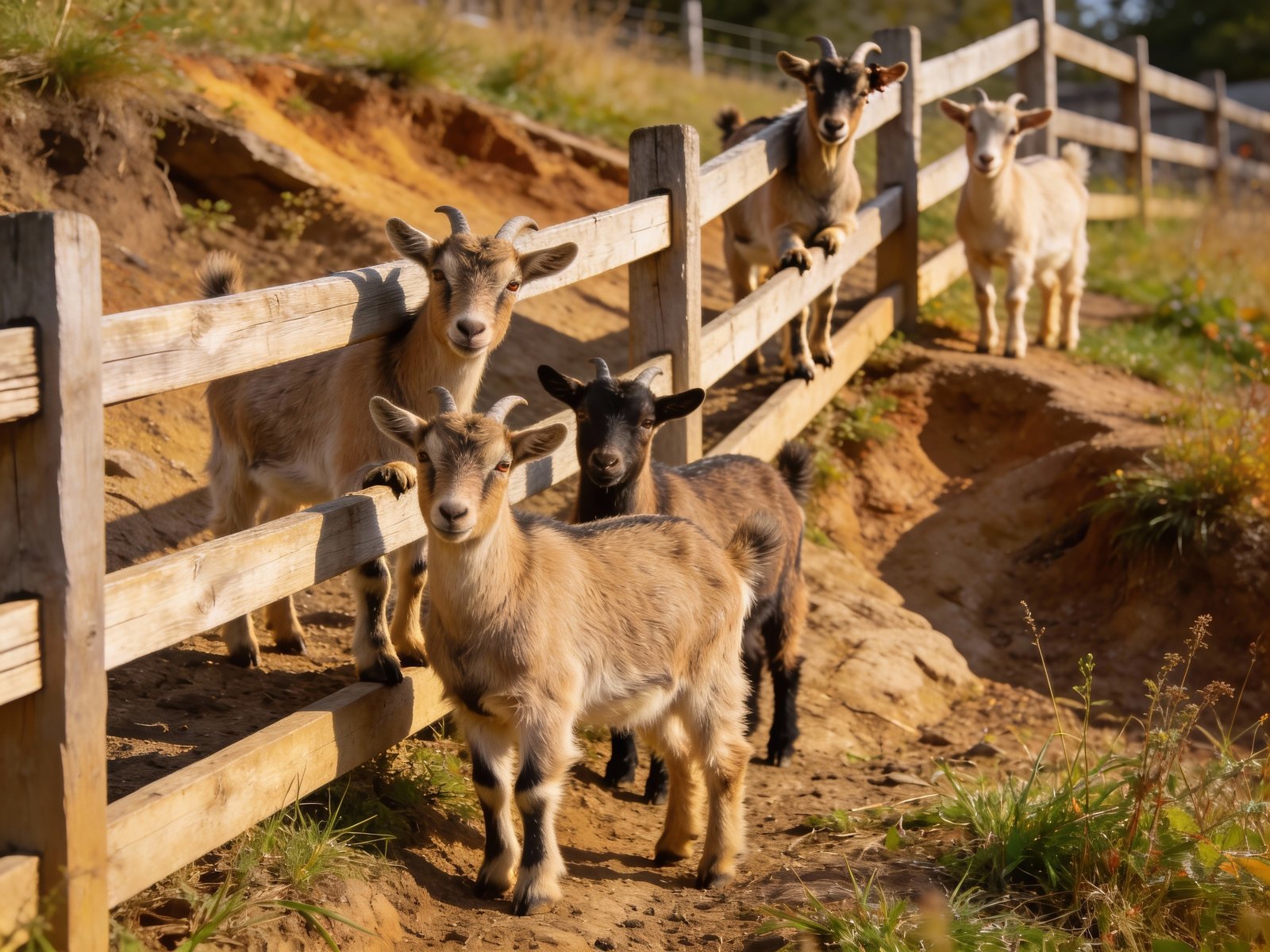
Goats are capable jumpers, but more importantly, they are opportunistic. A fence that is physically high enough today may not remain a barrier once goats learn how to use it. On level ground with no nearby objects, many goats will respect a 4-foot fence initially. However, this margin is small. Over time, goats test the boundary by standing on lower wires, leaning to compress fencing, or jumping when startled or motivated by food, companions, or curiosity.
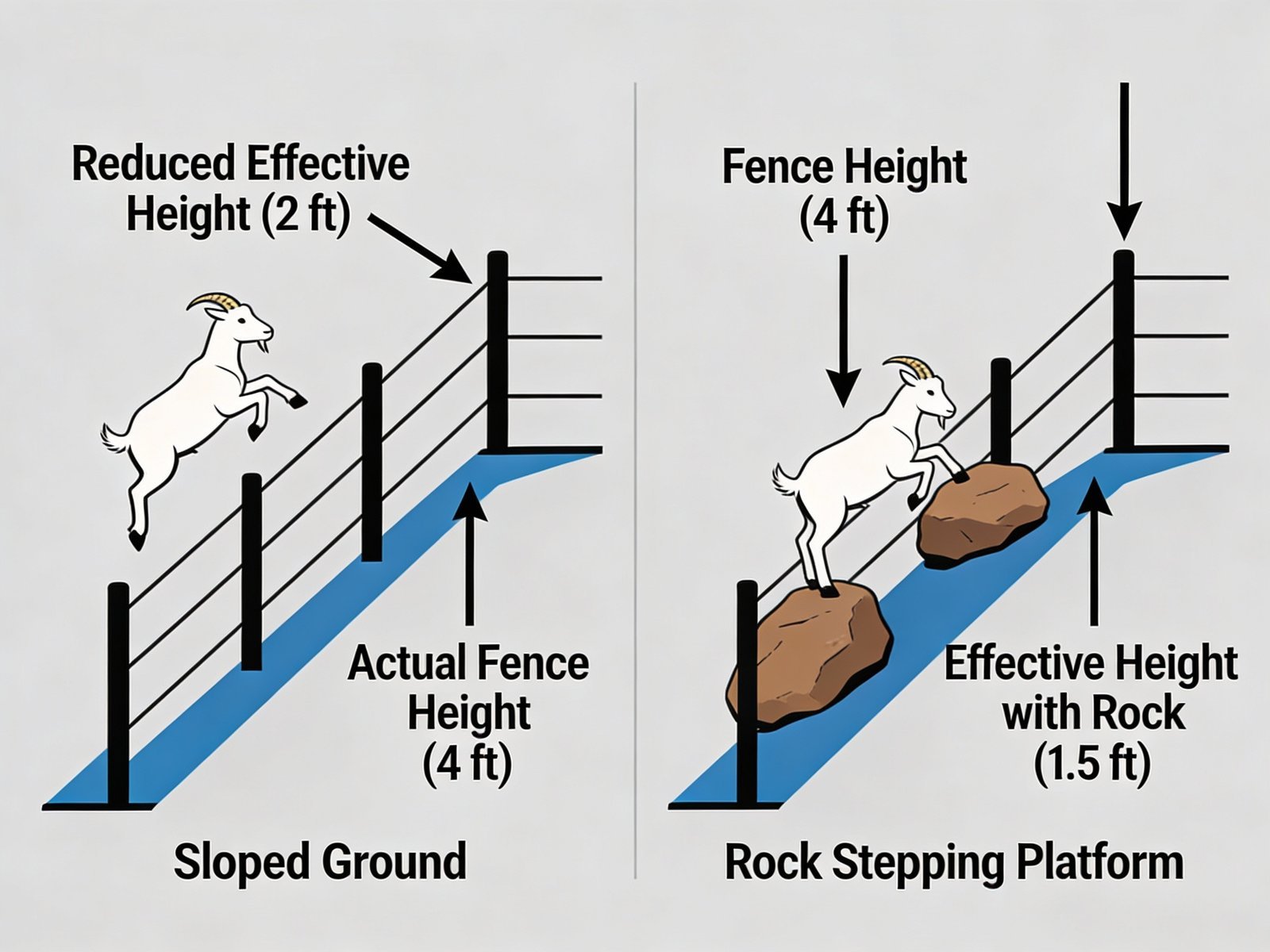
Effective fence height is often reduced by terrain. On sloped ground, the uphill side of a fence may function as if it were several inches shorter. Small changes in elevation, erosion under the fence, or uneven post placement can turn a 4-foot fence into a practical 3.5-foot barrier in places. Goats notice these differences quickly and exploit them.
Another issue is behavioral escalation. Once goats discover that jumping or climbing is possible, the fence effectively becomes “solved.” What begins as an occasional escape attempt can turn into routine behavior, with more goats following the same route. Taller fences provide a behavioral buffer that discourages experimentation before habits form.
For these reasons, many experienced goat keepers favor 5-foot fencing even when 4 feet appears adequate. The extra height compensates for terrain variation, fence compression, and long-term learning, making it harder for goats to gain confidence in jumping or climbing attempts.
Breed Size, Age, and Athletic Ability
Not all goats challenge fences in the same way. Smaller breeds and young goats may appear less capable of jumping, leading owners to underestimate required height. However, younger goats are often more active and experimental, increasing escape attempts despite their size. Larger breeds and mature animals may not jump as frequently, but they exert more force when leaning or standing against fencing, reducing effective height over time.
Horns also influence behavior. Horned goats are more likely to climb or hook fencing, creating deformation that lowers the barrier. Fence height should therefore account not just for jumping ability, but for how goats physically interact with the structure as they grow and mature.
Terrain, Objects, and Effective Height Loss
Fence height cannot be evaluated in isolation from its surroundings. Rocks, stumps, feed tubs, or stacked materials near a fence act as launch points that dramatically increase jumping success. Even a solid 5-foot fence can fail if goats can step onto an object that reduces the jump distance by several inches.
Slope plays a similar role. On uneven ground, goats naturally approach fences from the uphill side, where the top of the fence is closer to their shoulder height. This is why escapes often occur at specific sections rather than uniformly along the perimeter.
When This Height Recommendation Works Well
- Permanent perimeter fencing on mixed or uneven terrain
- Herds with active, curious, or previously escaping goats
- Properties with objects or structures near fence lines
- Long-term installations where future adjustments are costly
When This Height May Not Be Necessary
- Short-term holding pens with constant supervision
- Flat, open ground with no nearby jumping leverage
- Calm, low-density herds with no escape history
- Temporary systems backed by strong behavioral deterrents (electric wire)
Alternatives or Better Options
In some systems, fence height alone is not the primary control mechanism. Adding an inward-facing electric offset wire near the top of a physical fence can discourage goats from testing height limits, allowing a slightly shorter structure to perform effectively. Conversely, increasing height without addressing leaning or climbing behavior may not solve the problem. These alternatives exist because goats respond as much to deterrence and interaction limits as they do to raw height.
Cost, Safety, and Practical Notes
Increasing fence height after installation is one of the most expensive fencing mistakes. It often requires replacing posts, extending braces, or re-tensioning wire, rather than making a simple adjustment. From a safety perspective, fences that are too short encourage goats to jump, increasing the risk of entanglement or falls.
Building slightly taller than the minimum requirement provides long-term savings by reducing escapes, injuries, and labor. In practice, the most cost-effective fence height is often the one that goats never attempt to challenge.
Video Demonstration
The following video demonstrates how goats use terrain, objects, and fence compression to reduce effective fence height and successfully jump barriers that appear tall enough.
Quick Takeaway: While 4 feet may work temporarily, 5 feet is the more reliable fence height for goats because it accounts for terrain, behavior, and long-term learning that turn short fences into escape routes.