Predator-proof chicken fencing combines small-opening wire, secure ground-level protection, and deterrents that stop climbing and digging. Hardware cloth with openings no larger than ½ inch, reinforced at the bottom and paired with electric deterrents when needed, provides the most reliable protection against common chicken predators.
Why This Question Matters
Predator attacks are the leading cause of chicken loss in backyard and pasture systems. Many keepers assume that taller fencing or thicker wire will solve the problem, only to lose birds to predators that dig, squeeze through gaps, or climb. Others focus on keeping chickens in, not realizing that most fencing failures happen at night when predators test weak points. Choosing the wrong fencing leads to repeated losses, wasted upgrades, and a false sense of security. This question usually comes up after a first attack, when building a new coop, or when expanding into areas with raccoons, foxes, or aerial predators.
Key Factors to Consider
- Predator size and behavior determine whether climbing, digging, or squeezing is the main threat
- Wire opening size matters more than fence height for stopping most predators
- Ground-level reinforcement prevents digging and push-through attempts
- Nighttime pressure is higher than daytime pressure around coops
- Fence strength must match predator persistence, not chicken behavior
How Predator-Proof Fencing Works
Predator-proof chicken fencing works because it blocks access at the points predators actually attack, not where people expect them to. Most chicken predators do not attempt to jump over fences. Instead, they dig underneath, squeeze through openings, pry at loose edges, or climb and pull wire apart. For this reason, fencing that keeps predators out must focus on wire strength, opening size, and bottom security rather than height alone.
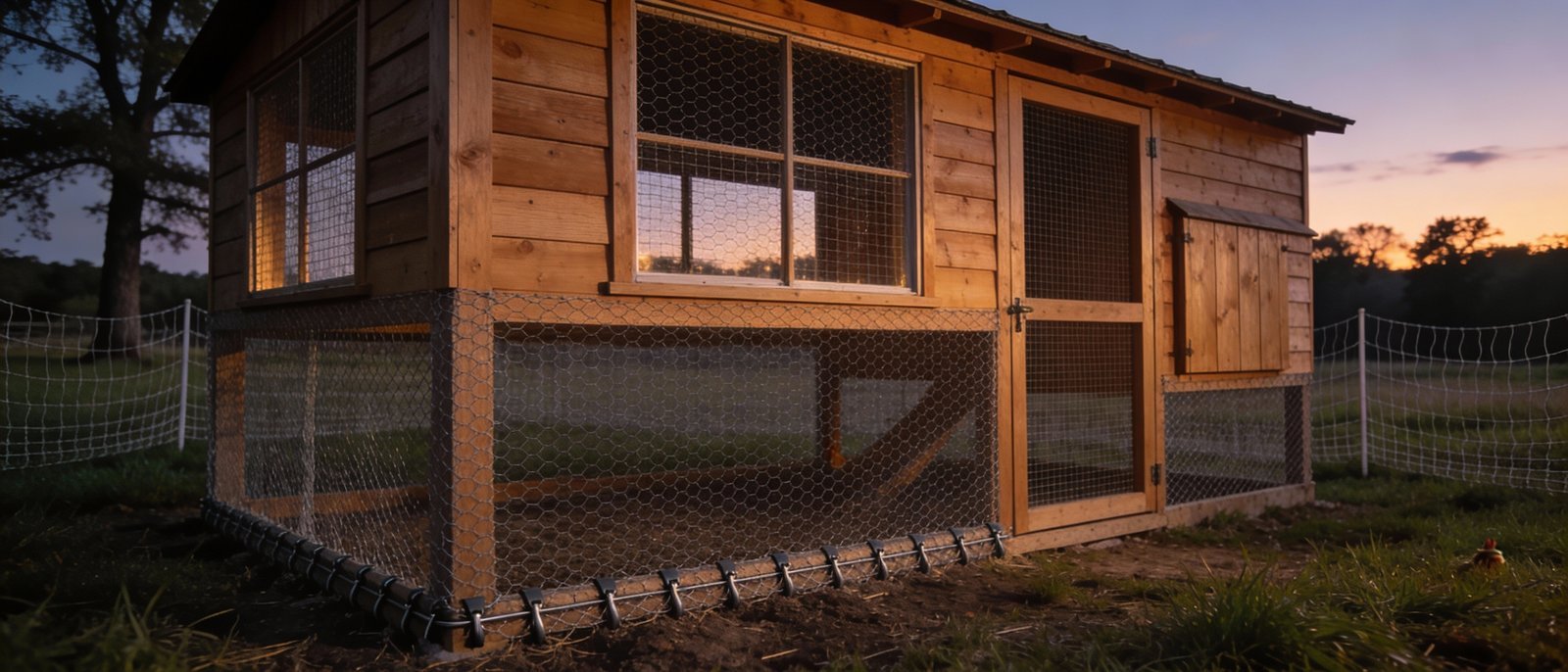
Small-opening wire is the foundation of effective predator control. Hardware cloth with openings no larger than ½ inch prevents raccoons from reaching through, stops weasels and rats from squeezing in, and resists bending under pressure. Larger mesh that works for chicken containment often fails against predators with hands, claws, or narrow skulls. Even strong welded wire can fail if the openings are large enough to allow partial entry.
Ground-level protection is equally critical. Predators quickly locate soft soil and dig under fences, especially near coop walls and corners. Effective systems extend wire outward as an apron, bury fencing shallowly, or reinforce the bottom edge so digging never creates a gap. Many successful coops are not tall or complex, but they are tight and secure at ground level.
In higher-pressure areas, electric deterrents dramatically improve results. A low electric wire placed outside the coop fence teaches predators that the enclosure is painful to approach, reducing repeated testing. This psychological barrier matters because predators learn quickly and return to successful locations. When fencing combines small openings, bottom reinforcement, and deterrents, it stops both first-time attacks and persistent repeat predators. The result is not just fewer losses, but predators abandoning the coop entirely.
How Predator Type Changes Fence Design
Different predators defeat fencing in different ways, which is why one-size-fits-all solutions fail. Raccoons use their paws to pull wire loose, reach through openings, and pry at doors. Foxes and coyotes focus on digging and pushing under weak spots. Weasels, rats, and snakes exploit surprisingly small gaps that larger predators cannot use. Hawks and owls attack from above, ignoring perimeter fences entirely.
Effective fencing accounts for the most capable predator in the area, not the most common one. A fence that stops foxes but allows raccoons to reach through is not predator-proof. Likewise, strong side fencing does nothing against aerial attacks if the run is open on top. Understanding which predators apply pressure to which parts of the fence explains why small openings, tight fastening, and full enclosure matter more than fence height alone.
Hardware Cloth vs Larger Wire Mesh
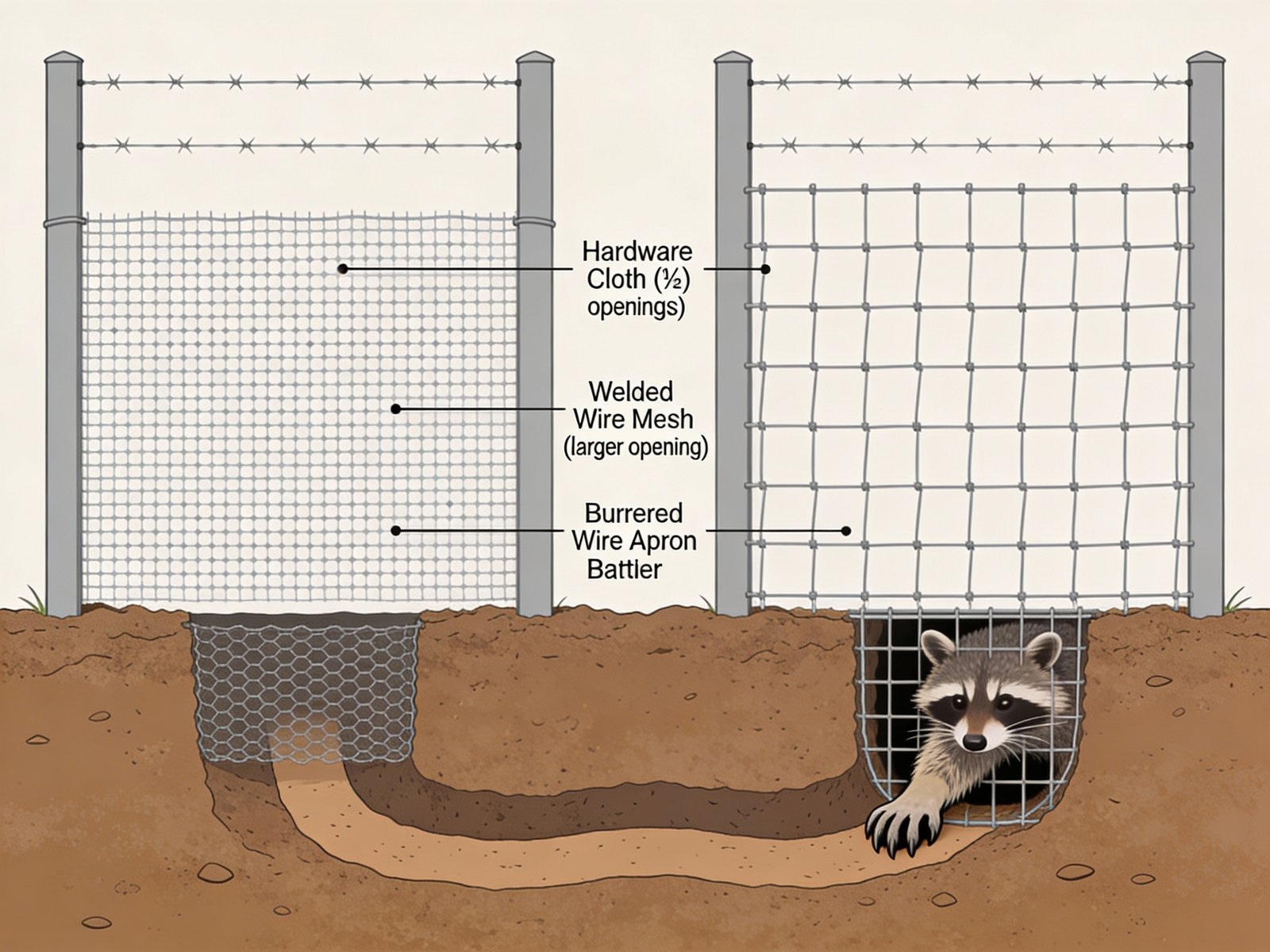
The difference between predator losses and long-term success often comes down to wire opening size. Hardware cloth resists bending and prevents access through the fence entirely. Larger welded or woven wire may look strong but allows predators to grab, bite, or squeeze through. Once a predator succeeds even once, it will return repeatedly.
Many keepers use larger wire for outer runs and reinforce only the coop itself with hardware cloth. This layered approach works because nighttime attacks focus on the coop, while daytime threats are lower. The key is understanding where predators apply pressure and using the strongest materials at those points.
When This Works Well
- Hardware cloth fully encloses the coop walls, doors, and vents
- Bottom edges are buried, pinned, or extended outward as an apron
- Predator pressure is consistent and known, not occasional
- Doors and access points are reinforced as strongly as walls
- Fence lines are inspected regularly after rain or freeze cycles
When This Is Not Recommended
- Large-opening wire is used alone in high-predator areas
- Fence bottoms are left loose or resting directly on soft soil
- Coop roofs or runs are open in areas with aerial predators
- Latches and corners are weaker than the fence itself
- Predator activity is ignored until after losses occur
Alternatives and Better Options
Electric Poultry Netting
Provides both physical and psychological protection in pasture systems. Effective where digging and repeated predator pressure are common, but requires maintenance and vegetation control.
Fully Enclosed Hardware-Cloth Runs
Best for permanent backyard setups with heavy predator pressure. Higher upfront cost, but lowest long-term loss rate.
Layered Defense Systems
Combining strong coop fencing with perimeter deterrents reduces stress on any single barrier and prevents learned attacks.
Cost, Safety, and Practical Notes
Predator-proof fencing costs more upfront, but it is almost always cheaper than replacing birds repeatedly. Hardware cloth is significantly more expensive than standard wire, yet it outlasts multiple failed upgrades. Many keepers report that the most expensive fencing systems are the ones built twice. From a safety standpoint, predator-resistant fencing protects both chickens and people by reducing aggressive wildlife encounters near homes. Practically, the best systems prioritize fewer weak points rather than more height or complexity. Tight construction, consistent inspection, and predator-aware design matter more than building the tallest fence on the property.
This video shows real-world predator-proof chicken coop fencing, including hardware cloth installation, bottom aprons, and electric deterrent placement.
Quick Takeaway
Predator-proof chicken fencing succeeds when it blocks access at the ground, through the wire, and around doors—not when it simply gets taller. Small openings, tight construction, and deterrents stop predators before they learn the coop is vulnerable.