What is the Best Fencing for Cattle?
Short Answer
High-tensile fixed-knot woven wire fencing is generally considered the best option for cattle, offering superior strength, durability, and longevity with minimal maintenance requirements. For perimeter fencing and high-pressure areas, four to five strands of high-tensile barbed wire also provide excellent containment at a lower initial cost.
Why This Question Matters
Choosing the right fencing for cattle directly impacts the safety of your livestock, the security of your operation, and your long-term investment returns. Poor fencing decisions lead to escaped cattle, increased injury risks, frequent repairs, and significant financial losses from damaged crops or liability issues when animals reach neighboring properties or roadways.
Many cattle owners face challenges including fence failures during high-pressure situations such as breeding season, inadequate containment leading to cattle wandering onto roads, and ongoing maintenance costs that exceed the initial savings from cheaper materials. Predator intrusion and feral hog damage also become serious concerns with insufficient fencing systems.
A common misconception is that one fence type fits all cattle operations. In reality, factors such as cattle temperament, property size, terrain, budget constraints, and management style all significantly influence which fencing solution provides the best value and performance. Additionally, many assume barbed wire is unsafe, but when properly installed with adequate visibility, modern high-tensile barbed wire remains a practical and humane option for mature cattle.
Key Factors to Consider
- Cattle Behavior and Pressure on Fences: Mature cattle weighing between 1,000 to 1,500 pounds exert substantial physical force on fencing, particularly during breeding season when bulls may challenge boundaries or when cattle test fences to reach better forage. The fence must withstand both direct impacts and consistent leaning pressure without sagging or breaking.
- Fence Durability and Strength: High-tensile steel wire with Class 3 galvanization lasts three times longer than traditional low-carbon wire with Class 1 coating. The wire gauge, knot type, and tensile strength directly determine how well the fence maintains structural integrity over decades of use in harsh weather conditions.
- Cost and Long-Term Maintenance: While initial material costs vary significantly, the total ownership cost includes installation labor, post spacing requirements, frequency of repairs, and eventual replacement needs. High-tensile systems allow 16 to 20-foot post spacing compared to 10 to 12-foot spacing for traditional barbed wire, reducing material and labor costs substantially.
- Safety for Cattle and Handlers: Fence design affects injury risk for both animals and humans. Sharp barbs can cause hide damage and veterinary expenses, while visibility plays a crucial role as cattle are less likely to challenge fences they can clearly see. Smooth wire options reduce injury potential while maintaining containment effectiveness.
- Perimeter Fencing vs Interior Cross Fencing: Perimeter fencing requires maximum strength and security to prevent escapes and exclude predators or feral hogs, typically demanding fixed-knot woven wire or five-strand barbed wire. Interior cross fencing for rotational grazing can utilize more economical options such as three to four-strand electric or portable systems since the containment requirements are less demanding.
Detailed Explanation
Modern cattle fencing has evolved significantly beyond traditional barbed wire to include high-performance materials that balance strength, safety, and economic value. Understanding how different fencing types function helps ranchers make informed decisions based on their specific operational needs and budget constraints.
High-Tensile Fixed-Knot Woven Wire
This next-generation fencing material represents the gold standard for cattle containment. High-tensile fixed-knot fence features horizontal line wires connected by vertical stay wires using a wrapped knot design that creates a rigid mesh structure. The fixed knots maintain fence shape and tension even under significant animal pressure. Professional-grade 12.5-gauge high-tensile wire delivers a breaking strength of 1,380 pounds per wire, approximately 175 percent stronger than traditional low-carbon field fence.
The Class 3 galvanization coating provides three times more zinc protection than standard Class 1 products, extending fence life to 20 years or more with minimal maintenance. Vertical stay wire spacing of 6 inches or tighter creates excellent resistance to penetration by cattle, feral hogs, and predators. Standard fence heights range from 48 to 54 inches for mature cattle, with 9 horizontal wires being the most common configuration for comprehensive coverage.

High-Tensile Barbed Wire
Modern high-tensile barbed wire differs substantially from the traditional low-carbon barbed wire that has been used for over a century. High-tensile versions utilize 14-gauge or 15.5-gauge wire with breaking strengths exceeding 1,200 pounds, making them approximately 30 percent stronger than conventional barbed wire. The enhanced tensile strength means the wire resists stretching and maintains tight fence lines with less sagging over time.
Installation typically requires four to five strands with specific spacing recommendations: for mature cattle, three wires at 20, 30, and 40 inches work for cross fencing, while four wires at 16, 26, 36, and 46 inches suit young cattle and perimeter applications. The barbs serve dual purposes as both visual and physical deterrents, preventing cattle from leaning on or pushing through fences. Properly tensioned high-tensile barbed wire on posts spaced 16 to 20 feet apart creates secure perimeters at lower material costs compared to woven wire options.
Electric Fencing Systems
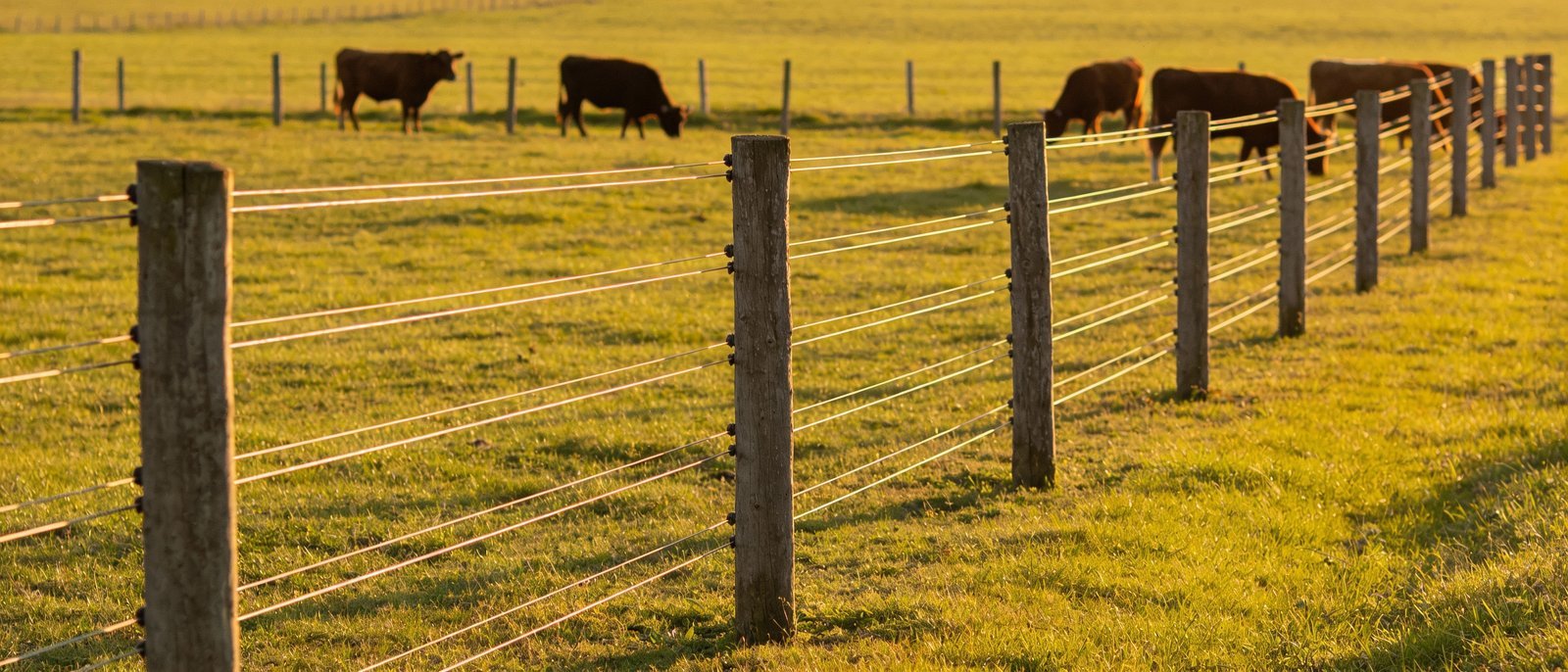
Electric fencing operates through psychological conditioning rather than physical barriers alone. The system delivers brief, high-voltage but low-amperage pulses that create an unpleasant but non-lethal shock when animals contact the charged wires. After one or two training contacts, cattle learn to avoid the fence boundary, making electric systems highly effective even with fewer physical wires.
High-tensile electric fence configurations use three to five smooth wire strands energized by either mains-powered or solar energizers. The absence of barbs eliminates injury risks while the electric charge provides strong deterrence. Electric fencing excels in rotational grazing systems because portable configurations using polywire or polytape on step-in posts can be quickly moved to create temporary paddocks. The flexibility allows ranchers to adjust grazing areas daily or weekly to match forage growth and optimize pasture utilization.
Traditional Woven Wire Field Fence
Conventional woven wire or field fence uses hinged joints where vertical stays connect to horizontal line wires. While this creates an effective mesh barrier for small animals and provides good visibility for cattle, the hinged joints allow more movement under pressure compared to fixed-knot designs. The lower-tensile wire construction requires closer post spacing, typically 10 to 12 feet, increasing installation costs. Traditional field fence works adequately for cattle containment but lacks the longevity and strength-to-cost ratio of modern high-tensile alternatives.
When This Works Well
- Large Open Pastures with Calm Cattle: High-tensile fixed-knot or barbed wire fencing performs excellently in extensive grazing operations where mature, well-trained cattle graze peacefully without aggressive fence-testing behavior. The strong perimeter containment provides reliable security across hundreds of acres with minimal intervention required.
- Perimeter Fencing on Established Farms: Properties with defined boundaries benefit from permanent high-tensile installations that provide decades of service. The initial investment in quality materials and proper installation pays dividends through reduced maintenance needs and dependable livestock containment year after year.
- Operations Focused on Cost Efficiency: High-tensile systems with wider post spacing deliver significant savings in both materials and labor compared to traditional alternatives. Ranchers managing tight budgets find that spending more initially on high-quality wire reduces long-term ownership costs through extended lifespan and fewer repairs.
- Areas with Low Predator Pressure: Where coyotes, wolves, or feral hogs pose minimal threats, standard cattle fencing configurations provide adequate security without requiring additional protective measures such as extra-low wires or electrified offset strands.
When This Is Not Recommended
- Areas with Young Cattle or Calves: Standard wire spacing may not contain small calves that can slip through larger gaps. Operations with calving activities require tighter vertical stay spacing, preferably 6 inches or less, or additional lower wires positioned closer to ground level to prevent escapes.
- High-Pressure Areas Such as Corners and Gates: Locations where cattle congregate or push against fences during feeding or sorting require reinforced fencing with closer vertical stay spacing, potentially 3-inch centers rather than standard 6 to 12-inch spacing. These high-traffic zones benefit from extra durability to withstand concentrated pressure.
- Mixed Livestock Operations: Facilities housing cattle alongside horses, goats, or sheep face complications with barbed wire, which poses increased injury risks to more delicate animals. Smooth wire or woven wire without barbs becomes necessary, though this may compromise cattle containment effectiveness unless combined with electric offset wires.
- Locations with Frequent Wildlife or Predator Activity: Properties experiencing significant pressure from feral hogs, deer, or predators require enhanced fencing solutions beyond standard cattle specifications. Additional measures such as electrified offset strands, buried wire to prevent digging, or taller fence heights become necessary to protect livestock adequately.
Alternatives or Better Options
High-Tensile Electric Fencing for Improved Control
Multi-strand high-tensile electric fence systems combine the strength of high-tensile wire with the psychological deterrence of electric charge. Using five to six energized smooth wires spaced appropriately for cattle size creates an extremely effective barrier that prevents fence damage from leaning or rubbing behavior. The electric component also deters predators and eliminates the injury potential of barbed wire. This option works particularly well for operations prioritizing animal safety while maintaining strong containment.
Electric systems shine in rotational grazing management where flexibility and adaptability matter most. Ranchers can quickly reconfigure paddock layouts, adjust grazing areas based on forage availability, and implement intensive management practices without permanent infrastructure commitments. The lower material costs and faster installation times make electric fencing ideal for young operations or rental properties.
Woven Wire Combined with Electric Offset Lines
Pairing permanent woven wire fencing with electrified offset strands placed 6 to 10 inches outside the main fence creates a comprehensive security system. The woven wire provides the physical barrier and visibility cattle need, while the electric strands prevent animals from leaning on or testing the primary fence. This combination dramatically extends fence lifespan by eliminating the constant pressure that causes premature wear and sagging.
This hybrid approach particularly benefits operations dealing with aggressive bulls, high animal densities, or properties requiring predator exclusion. The electric offset keeps cattle back from the main fence while simultaneously deterring coyotes, feral hogs, and other threats from approaching the perimeter. Though installation costs increase compared to standalone systems, the enhanced security and reduced maintenance deliver excellent long-term value.
Temporary or Portable Electric Fencing for Rotational Grazing
Portable electric fence systems using polywire, polytape, or turbowire on lightweight step-in posts revolutionize pasture management for intensive grazing operations. These temporary installations can be moved daily or weekly to create fresh paddocks, allowing precise control over forage utilization and rest periods. The high visibility of colored polytape helps cattle recognize boundaries quickly, reducing training time and accidental contact.
Mobile fencing excels when implementing adaptive multi-paddock grazing or mob grazing techniques focused on soil health and regenerative agriculture principles. Ranchers divide large permanent paddocks established with conventional fencing into smaller strips using temporary electric barriers, gaining management flexibility without permanent infrastructure investment. Solar-powered energizers eliminate the need for electrical connections, making these systems practical for remote pastures and rented ground where permanent improvements are not feasible.
Cost, Safety, or Practical Notes
Typical Cost Ranges for Cattle Fencing
Material costs vary significantly based on fence type and quality specifications. High-tensile fixed-knot woven wire typically costs between two to four dollars per linear foot for materials, with installation labor adding one to two dollars per foot depending on terrain and post spacing. Traditional five-strand barbed wire runs approximately one to two dollars per foot for materials with similar labor costs.
Electric fencing systems offer substantial savings, with permanent high-tensile electric installations costing 40 to 60 percent less than conventional fencing due to reduced material requirements and simpler installation. A five-acre property might require eight thousand to fifteen thousand dollars for traditional woven wire or barbed wire fencing, compared to three thousand to six thousand dollars for electric alternatives. Portable electric systems using polywire or polytape cost even less, with basic setups starting around five hundred to one thousand dollars for materials covering several acres.
Common Safety Considerations
Proper fence height prevents cattle from jumping or reaching over, with 48 to 54 inches being standard for mature cattle. The top wire should reach approximately shoulder height on adult animals. Bottom wire placement matters significantly, as gaps larger than 12 inches at ground level may allow calves to escape or predators to enter. Barbed wire safety improves when smooth wire is used for top and bottom strands, reducing wildlife entanglement risks.
Electric fence safety requires adequate signage warning humans of energized wires and proper grounding systems to ensure consistent, reliable shocks. Voltage should remain between four thousand to six thousand volts for effective cattle control. Regular testing with voltage meters prevents dangerous situations where inadequate charge allows cattle to push through or become tangled. Sharp corners and gate areas demand extra attention, as these high-traffic zones experience concentrated animal pressure that can lead to fence failures or injury situations.
Maintenance Requirements
High-tensile fixed-knot fence systems require minimal ongoing maintenance when properly installed, primarily consisting of annual inspections for wire tension, post stability, and any damage from falling trees or vehicle impacts. The Class 3 galvanization prevents rust-related deterioration for decades in most climates. Vegetation management around fence lines prevents shading that reduces electric fence effectiveness and reduces fire hazards during dry seasons.
Barbed wire fences demand periodic re-tensioning as wires stretch over time, typically every three to five years depending on animal pressure and climate conditions. Posts may need replacement on 10 to 20-year cycles, with wooden posts degrading faster than steel alternatives. Electric systems require the most active maintenance, including regular voltage testing, energizer battery replacement or solar panel cleaning, and vegetation control to prevent shorts that drain system effectiveness. However, the overall time investment remains modest compared to frequent repairs required by inferior fencing materials.
Visual Reference
Video Resource
Related Questions
- How tall should a fence be for cattle?
- Is barbed wire safe for cattle?
- How many strands of wire do cattle need?
- Electric fence vs barbed wire for cattle
- What is the best post spacing for cattle fencing?
- How to install high-tensile cattle fence?
- What wire gauge is best for cattle fencing?
- Can electric fence contain bulls?
Quick Takeaway
High-tensile fixed-knot woven wire fence provides the best overall combination of strength, durability, and long-term value for permanent cattle containment, while high-tensile electric fencing offers flexible, cost-effective solutions for rotational grazing management.
Disclaimer: Fencing practices, safety requirements, and regulations may vary by location. Always check local laws and consult professionals when necessary.